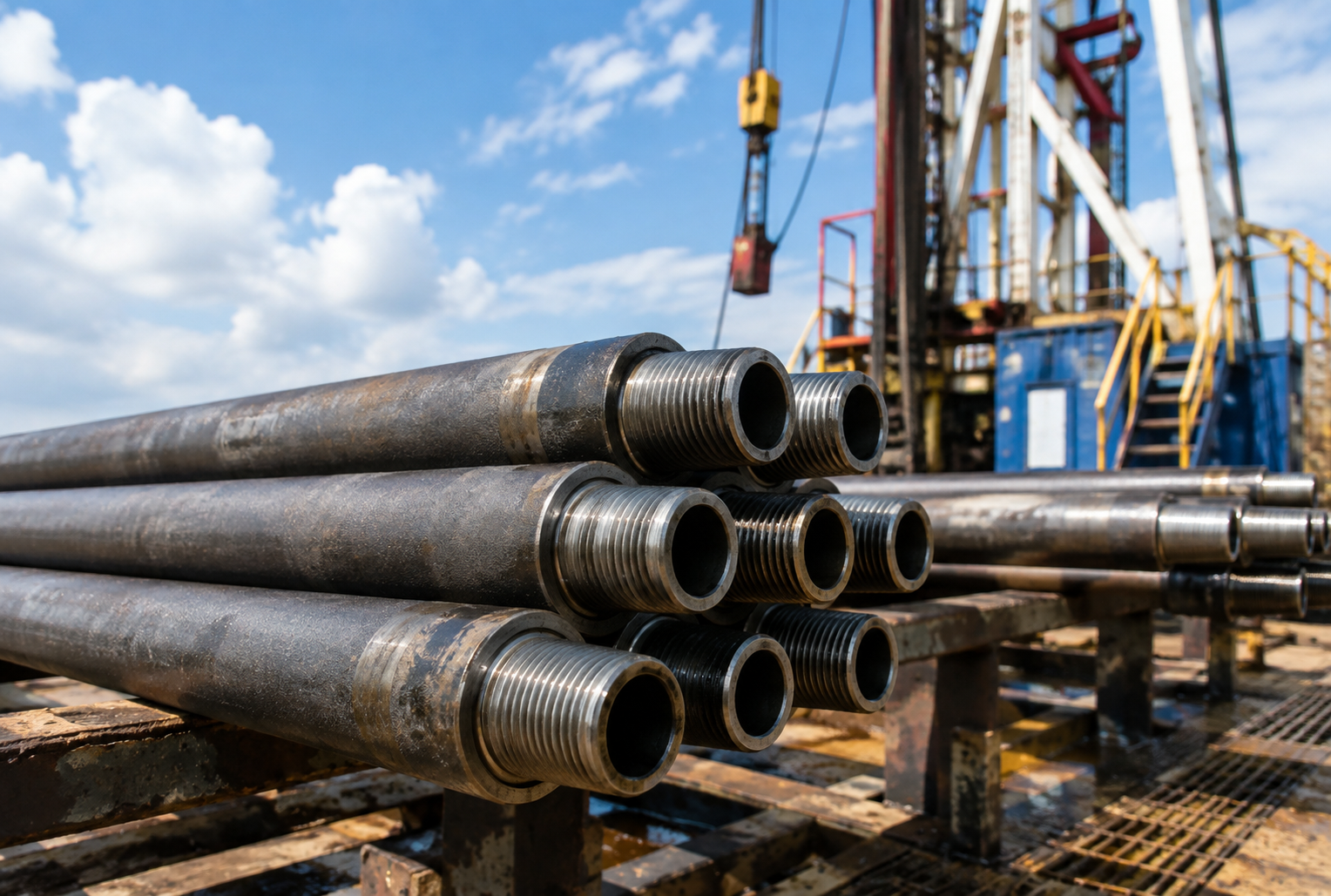
Tripping pipe moves the drill string repeatedly between the wellbore, rig floor, and setback area, exposing every drill pipe joint to lifting, gripping, connection breakout, racking, stabbing, and make-up. During tripping out, the string is pulled from the hole and stands are progressively disconnected and racked; when running back in, those stands return to the well center, are made up again, and are lowered into the well. OSHA describes the same operating sequence through slips, elevators, breakout, pipe racking, and repeated make-up as the string returns downhole.
For the أنبوب الحفر itself, a trip involves much more than رأسي movement. The الأنابيب body is repeatedly supported and released, the الوصلة is gripped during breakout and make-up, and the pin, box and shoulder pass through another الوصلة cycle before returning downالبئر. أنبوب الحفر handling therefore depends not only on the حفارة الحفر procedure, but also on الأنابيب size, الوصلة الوزن, tool-الوصلة geometry and الوصلة condition throughout the trip.
What Does عمليات الرفع والنزول Mean in الحفر?
A trip removes part or all of the ساق الحفر from the البئر and, when required, returns it downالبئر. A complete pull-out followed by running the الساق back in is commonly called a round trip.
The الساق may be pulled for a bit change, BHA work, inspection, logging, or another operation that requires access to the ساق الحفر or bottom-البئر assembly.
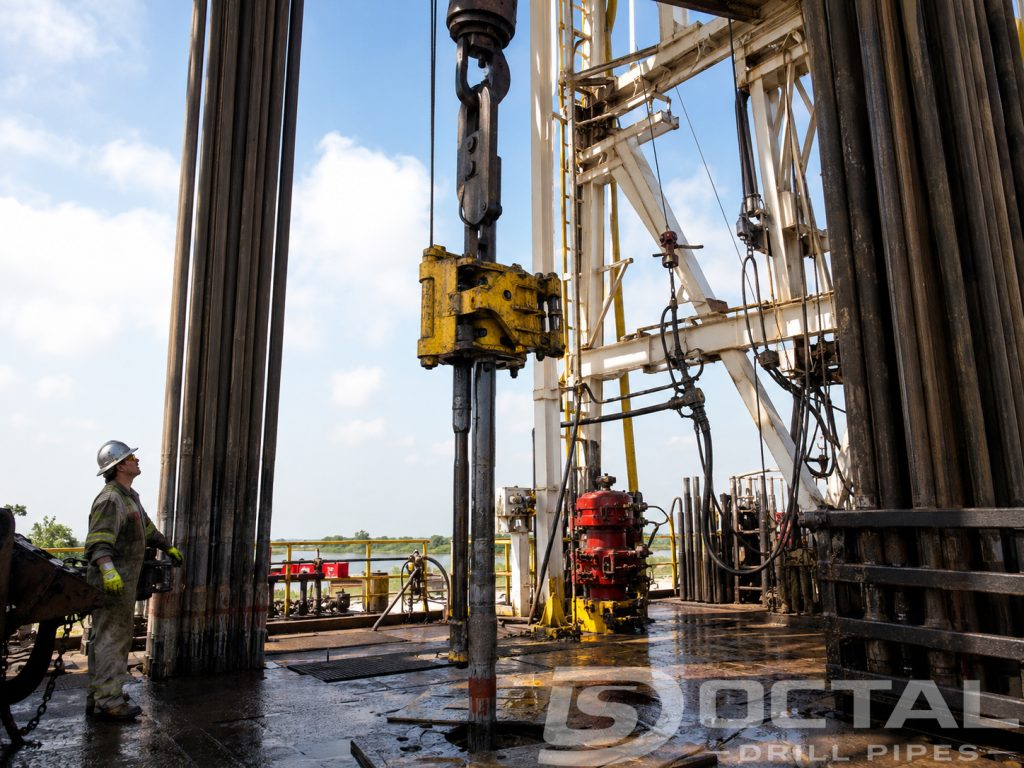
During رفع الساق, each الشعلة reaches the أرضية الحفارة in sequence. The suspended الساق is supported, the الوصلة is broken, and the الشعلة is moved into the racking area. When نزول الساق, the process reverses: the الشعلة returns to البئر center, the الوصلة is stabbed and made up, and the الساق is lowered farther into the البئر.
This repeated cycle matters because different parts of the أنبوب الحفر are loaded and contacted in different ways. The الأنابيب body may be held by slips, the الوصلة may be gripped during breakout, and the pin, box, and shoulder pass through another الوصلة cycle before the الساق returns downالبئر.
What Happens to أنبوب الحفر During رفع الساق and نزول الساق?
The حفارة الحفر design may vary, but the أنبوب الحفر passes through a similar sequence of lifting, supporting, breakout, racking and make-up during most الأنابيب tripping operations.
| Tripping Stage | Main Action | أنبوب الحفر Area Involved |
|---|---|---|
| Raise the الساق | الرافعةs lift the ساق الحفر or الشعلة | الوصلة / الرافعة contact area |
| Set the الساق | Slips support the suspended الساق | الأنابيب body / slip contact area |
| Break the الوصلة | Tongs or powered equipment apply breakout عزم الدوران | الوصلة OD, pin and box |
| Move and rack the الشعلة | The disconnected الشعلة is transferred to the setback or fingerboard | الأنابيب body, الوصلةs and الأنابيب ends |
| Return the الشعلة | The الشعلة is moved back to the البئر center | الأنابيب body and الوصلة ends |
| Stab and الربط | The pin is aligned with the box and the الوصلة is tightened | الخيطs, shoulder faces and الوصلة |
| Run in البئر | The connected ساق الحفر is lowered into the البئر | Complete ساق الحفر |
OSHA’s tripping guidance identifies الرافعةs, slips and tongs as key equipment used to lift, support and connect the ساق الحفر during a trip. Because each tool transfers load through a different part of the أنبوب الحفر, the resulting contact marks and damage patterns also appear in different locations.
During الأنابيب tripping operations, tong marks are more likely to appear on the الوصلة, slip marks develop on the الأنابيب-body contact area, while the pin, box and shoulder surfaces are repeatedly exposed during breakout and make-up. These indications should therefore be evaluated according to where they occur and how the load was applied, rather than being treated as the same type of handling damage.
Why أنبوب الحفر Size and الوزن Matter During Tripping
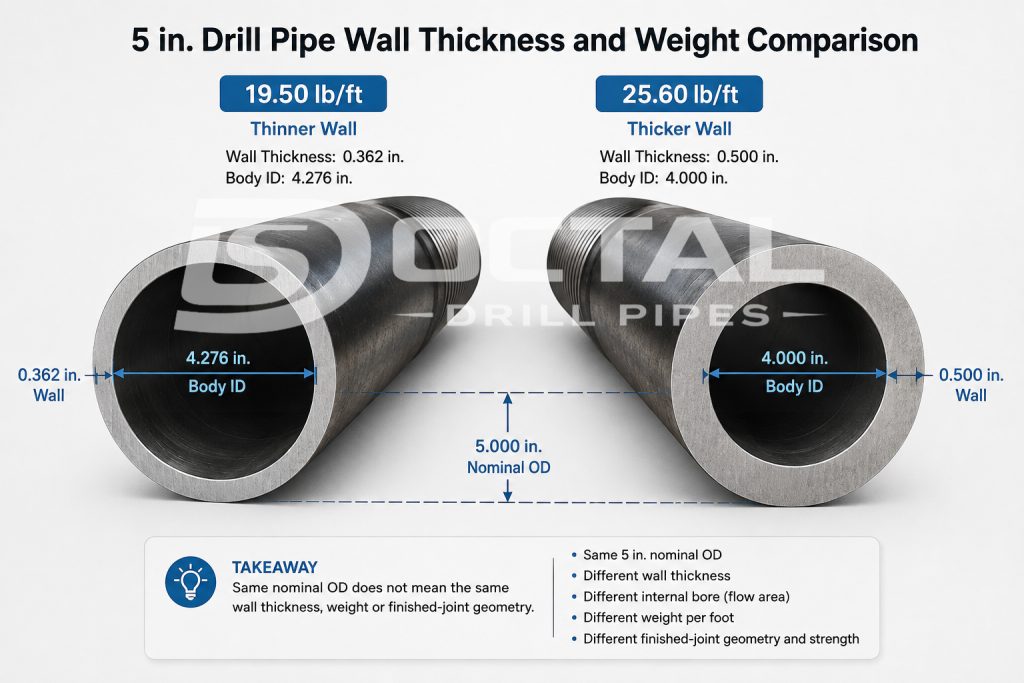
Nominal أنبوب الحفر size does not fully describe what the حفارة الحفر is actually handling. سماكة الجدار, الأنابيب الوزن and internal diaمتر can change while the nominal القطر الخارجي remains the same, and the الوصلة introduces another set of dimensions.
Published TMK أنبوب الحفر data provide a useful example for 5 in. أنبوب الحفر. Their dimensional table lists both 19.50 lb/ft and 25.60 lb/ft configurations at the same 5.000 in. nominal OD.
| 5 in. أنبوب الحفر Data | 19.50 lb/ft Configuration | 25.60 lb/ft Configuration |
|---|---|---|
| Nominal OD | 5.000 in. / 127.0 mm | 5.000 in. / 127.0 mm |
| Nominal الوزن | 19.50 lb/ft / 29.05 kg/m | 25.60 lb/ft / 38.13 kg/m |
| سماكة الجدار | 0.362 in. / 9.19 mm | 0.500 in. / 12.70 mm |
| الأنابيب-body ID | 4.276 in. / 108.62 mm | 4.000 in. / 101.60 mm |
| Upset | IEU | IEU |
The published dimensions show why two الوصلةs described simply as “5-بوصة أنبوب الحفر” should not automatically be treated as identical. The 25.60 lb/ft configuration has a wall approximately 38% thicker than the 19.50 lb/ft configuration—0.500 in. coMPared with 0.362 in.—while its الأنابيب-body ID is correspondingly smaller. The upset configuration is another part of the finished الوصلة that should be confirmed together with body size and tool-الوصلة dimensions. IEU, EU and IU أنبوب الحفر upset types change the الأنابيب-end geometry before the الوصلة is welded.
The difference is relevant to tripping for more than one reason. Increased nominal الأنابيب الوزن changes the steel الوزن being moved, while different body and tool-الوصلة geometry can affect the interfaces used by slips, الرافعةs, and tongs.
The same TMK product range lists E75, X95, G105, and S135 أنبوب الحفر الدرجةs and 4½–5½ in. أنبوب الحفر with سماكة الجدارes extending up to 0.500 in.
الدرجة, however, should not be confused with handling geometry. E75, X95, G105, and S135 describe different strength classes; those الدرجة names do not tell the حفارة الحفر crew the tool-الوصلة OD, tong area, الرافعة profile, or the exact finished dimensions of the الوصلة.
That is why الأنابيب selection should consider the complete API 5DP أنبوب الحفر sizes, الدرجةs and الوصلةs rather than using nominal OD or الدرجة alone.
Where Handling Equipment Contacts the أنبوب الحفر
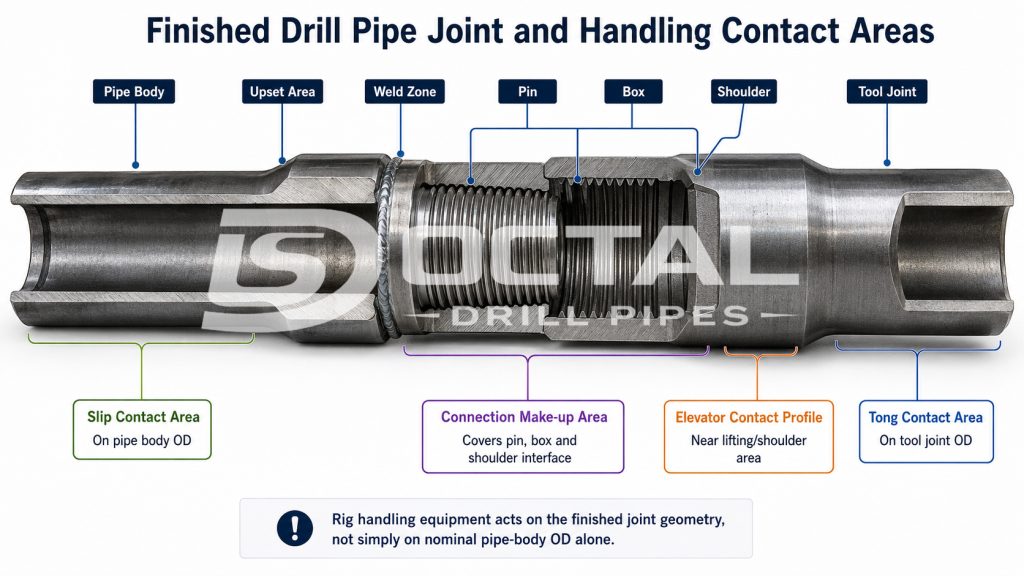
During أنبوب الحفر handling, different tools act on different parts of the الأنابيب. That sounds obvious, but it matters when a الوصلة comes back from a trip with new marks or surface damage.
الرافعةs carry the الشعلة as it moves through the أرضية الحفارة, while slips hold the suspended الساق when a الوصلة is being worked. Tongs act farther out on the الوصلة, where they provide the grip needed for breakout and make-up. Once the الوصلة is broken, the الشعلة is moved into the setback area, introducing another round of contact with racking and transfer equipment.
The result is that handling marks tend to have a location as البئر as a cause. Slip marks normally appear on the الأنابيب-body gripping area, while tong marks are associated with the الوصلة. Damage around the pin, box or shoulder is more closely related to الوصلة handling, stabbing and repeated make-up or breakout.
This is also why nominal أنبوب الحفر size is not enough when checking handling coMPatibility. The حفارة الحفر actually handles the finished الوصلة, including the الأنابيب body, upset and الوصلة. Tool-الوصلة OD, available tong area and the profile used by the الرافعة can all matter even when two الأنابيبs share the same nominal body OD.
Mechanical Loads and بئر البئر Effects During Tripping
A ساق الحفر behaves differently on the way out of the البئر than it does simply hanging still.
While رفع الساق, the hoisting system has to lift the suspended الساق and overcome resistance where the الأنابيب contacts the بئر البئر. In a relatively straight البئر this may be modest. In a directional or long أفقي section, السحب can become much more noticeable, so the الخطاف load seen while pulling upward may differ considerably from the apparent الساق الوزن.
Curved sections of the البئر add another effect. أنبوب الحفر passing through a dogleg bends as it moves, while still carrying the الوزن of the الساق below. The الأنابيب is therefore seeing more than simple tension, particularly in البئرs with significant الميل or repeated changes in trajectory.
الأنابيب movement also affects the fluid around it. Pulling the الساق can reduce bottom-البئر pressure through swab effects, while running it back down can increase pressure through surge. How large those changes become depends on the actual البئر—not just the أنبوب الحفر. البئر size, BHA geometry, clearance around the الساق, الحفر-fluid properties and الأنابيب movement all play a part.
For that reason, a أنبوب الحفر specification cannot provide one tripping speed that is suitable for every job. The الأنابيب supplier can confirm dimensions, الدرجة, الوصلة and mechanical properties, but the operating limits for الأنابيب tripping operations have to be determined from the actual البئر and حفارة الحفر conditions.
For the أنبوب الحفر itself, the useful question is simpler: whether the body and الوصلة have enough capacity for the expected service and whether the finished الوصلة matches the equipment that will lift, grip and الربط the الأنابيب.
Where أنبوب الحفر Damage Occurs During Tripping
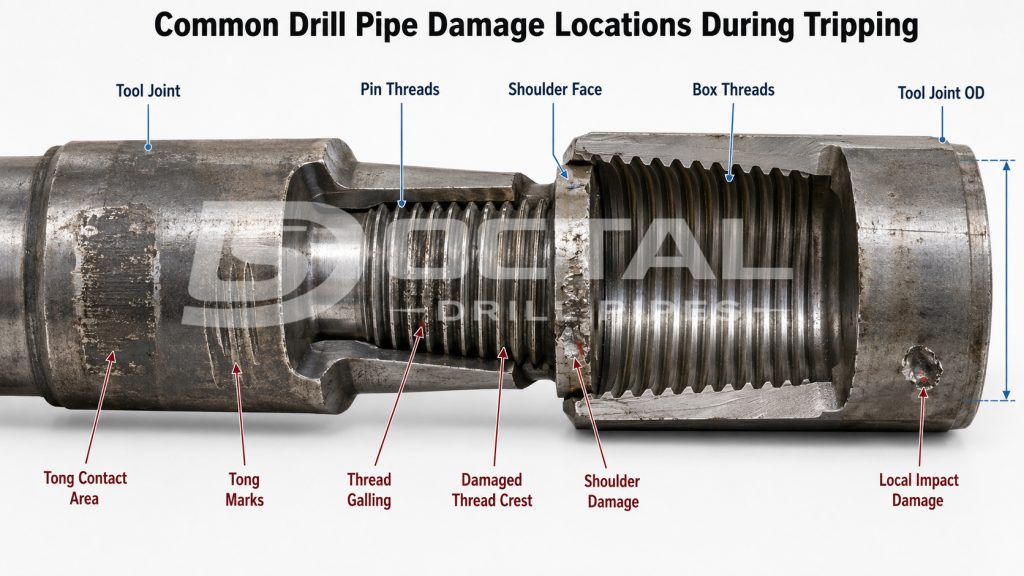
Drill pipe damage during tripping usually appears at the same places where the pipe is repeatedly gripped, supported, broken out, made up, or moved around the rig floor. The type of damage often gives a clue to how it was produced.
Pin and box threads go through another connection cycle every time a stand is broken out and later made up again. Poor stabbing alignment can bring the threads into contact before the pin is properly centered, while dirt, drilling-fluid solids, metal particles or impact damage can interfere with smooth make-up. Galling, damaged thread crests or visible deformation deserve more attention than ordinary residual thread compound.
Shoulder faces are easier to overlook because most attention naturally goes to the threads. A dent, raised metal or trapped debris on the shoulder can prevent the connection from seating correctly even when the thread profile still appears acceptable.
The الوصلة OD sees a different type of contact. Tongs and breakout equipment grip this area directly, so handling marks commonly appear here. Light impressions are not the same as deep die marks, localized crushing or damage close to the الوصلة.
The الأنابيب body and slip area experience concentrated support while the الساق is suspended. Repeated setting and releasing can leave characteristic marks in this zone. Deeper slip cuts, gouges, iMPact dents or local deformation deserve closer attention because the الأنابيب will return downالبئر and carry الحفر load again.
A visible mark alone does not determine whether a الوصلة remains suitable for service. Its location, depth, shape and the inspection criteria being applied matter more than appearance alone.
Why the Finished أنبوب الحفر الوصلة Matters During a Trip
A أنبوب الحفر purchase description often starts with body OD, nominal الوزن and الدرجة, but those values do not describe every interface used during a trip. The حفارة الحفر actually works with the complete الوصلة: الأنابيب body, upset, الوصلة and الوصلة.
A 5-بوصة body may therefore require different handling considerations when tool-الوصلة OD, tong space or الوصلة geometry changes. الدرجة works the same way. E75, X95, G105 and S135 describe الأنابيب-body strength levels, but they do not identify the الرافعة profile or tong area of the finished الوصلة.
This is why أنبوب الحفر selection should consider the complete API 5DP أنبوب الحفر sizes, الدرجةs and الوصلةs, rather than body OD or الدرجة alone.
What أنبوب الحفر Conditions Matter Before Running Back In?
Running the الساق back downالبئر starts with the الوصلة that is about to be made, not with a generic checklist applied equally to every surface mark.
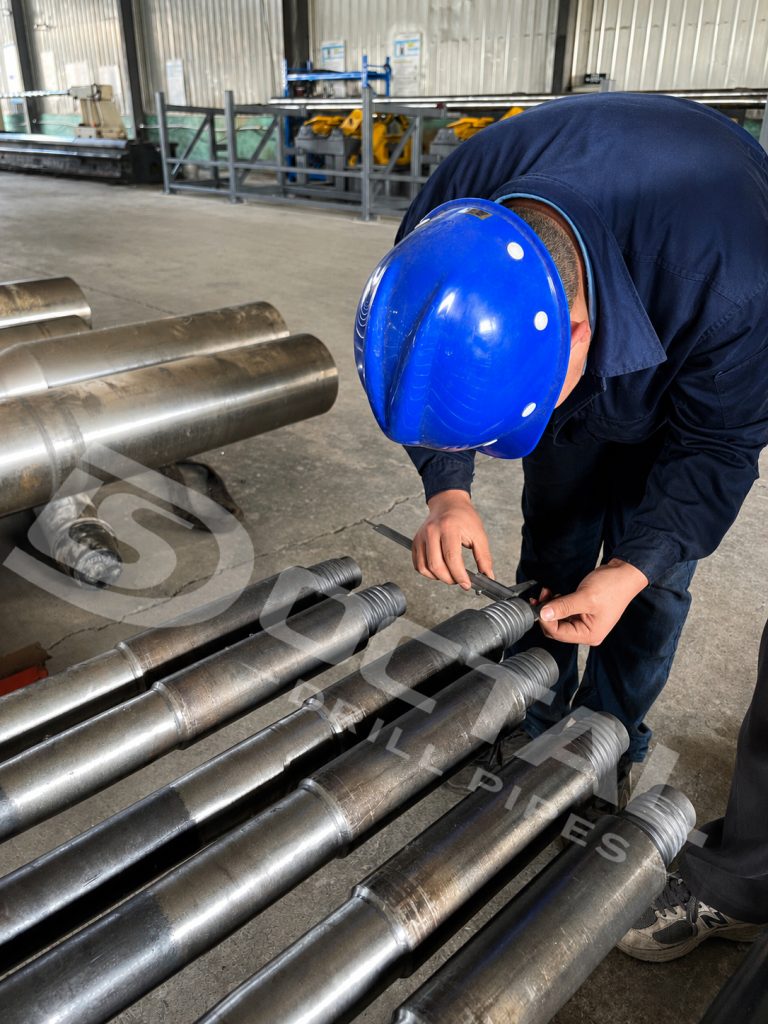
الوصلة identity should be clear so that the correct pin and box are being paired. The الخيطed surfaces should be checked for obvious contamination, iMPact damage, or conditions that could prevent normal engagement.
Shoulder faces also need attention. Dirt or newly created mechanical damage at the shoulder can affect how a الدوار-shouldered الوصلة seats during make-up.
The tool-الوصلة OD can show what happened during breakout and handling. Fresh heavy tong impressions, iMPact damage, or unusual deformation should not simply be ignored because the الخيطs themselves look clean.
The slip-contact region of the الأنابيب body provides another useful coMParison point. New cuts or gouges that appeared during رفع الساق should be distinguished from pre-existing surface التآكل.
IADC’s tripping guidance similarly emphasizes the condition of tong jaws, tong dies, الرافعةs, and slips before and during a trip, reflecting the direct relationship between equipment condition and the surfaces being handled.
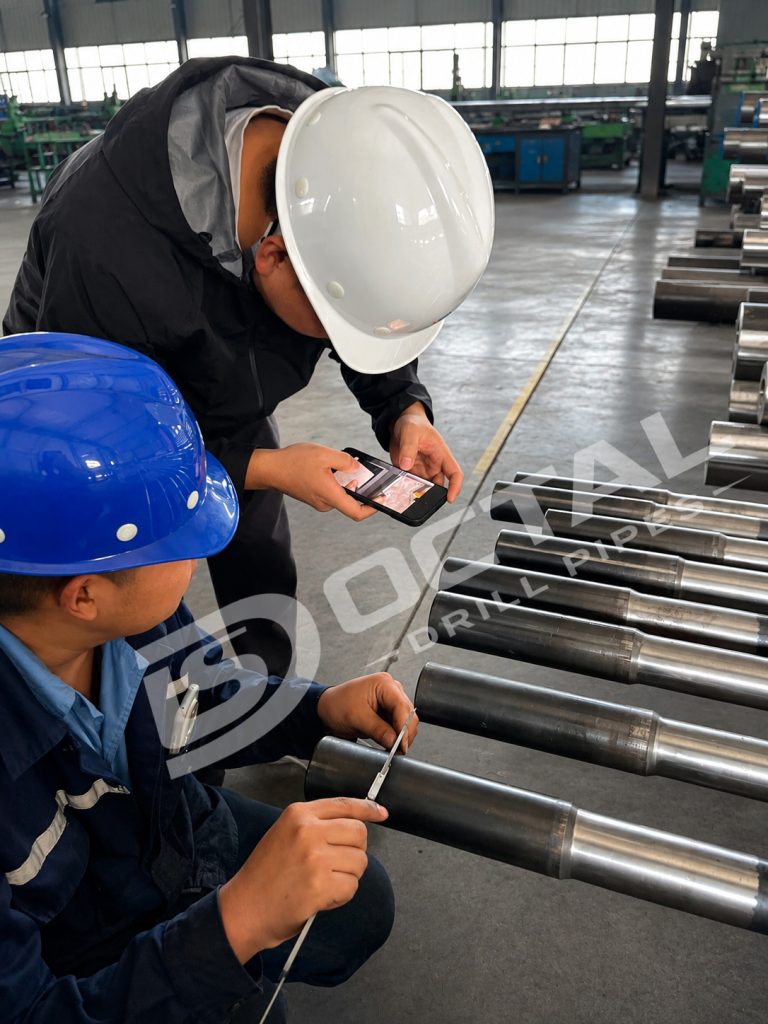
These checks are not a substitute for formal الحفر stem inspection. A حفارة الحفر-floor observation can identify a condition that needs attention, but it should not create an arbitrary acceptance limit. Continued service depends on the applicable inspection program, الحفر requirements, and qualified evaluation.
FAQ
Q: What does tripping pipe mean in drilling?
A: Tripping pipe means moving drill pipe or the drill string out of the well, back into the well, or completing both movements as a round trip. The operation repeatedly involves hoisting, slips, elevators, breakout, racking, stabbing, and connection make-up.
Q: What is the difference between tripping in and tripping out?
A: Tripping out pulls the drill string from the hole and progressively removes or racks stands. Tripping in returns those stands to the well center, makes up the connections, and lowers the string back downhole.
Q: Why does drill pipe handling depend on the finished-joint dimensions?
A: Nominal pipe OD does not define wall thickness, pipe-body ID, nominal weight, tool-joint geometry, or connection dimensions. Published 5 in. drill pipe, for example, includes 19.50 lb/ft and 25.60 lb/ft configurations with different wall thicknesses and internal diameters.
Q: Where does drill pipe damage during tripping usually need the most attention?
A: Pin and box threads, shoulder faces, tool-joint tong areas, and pipe-body slip-contact areas deserve particular attention because they repeatedly interact with connection and handling equipment during a trip. The significance of any indication depends on its location, severity, and applicable inspection criteria.