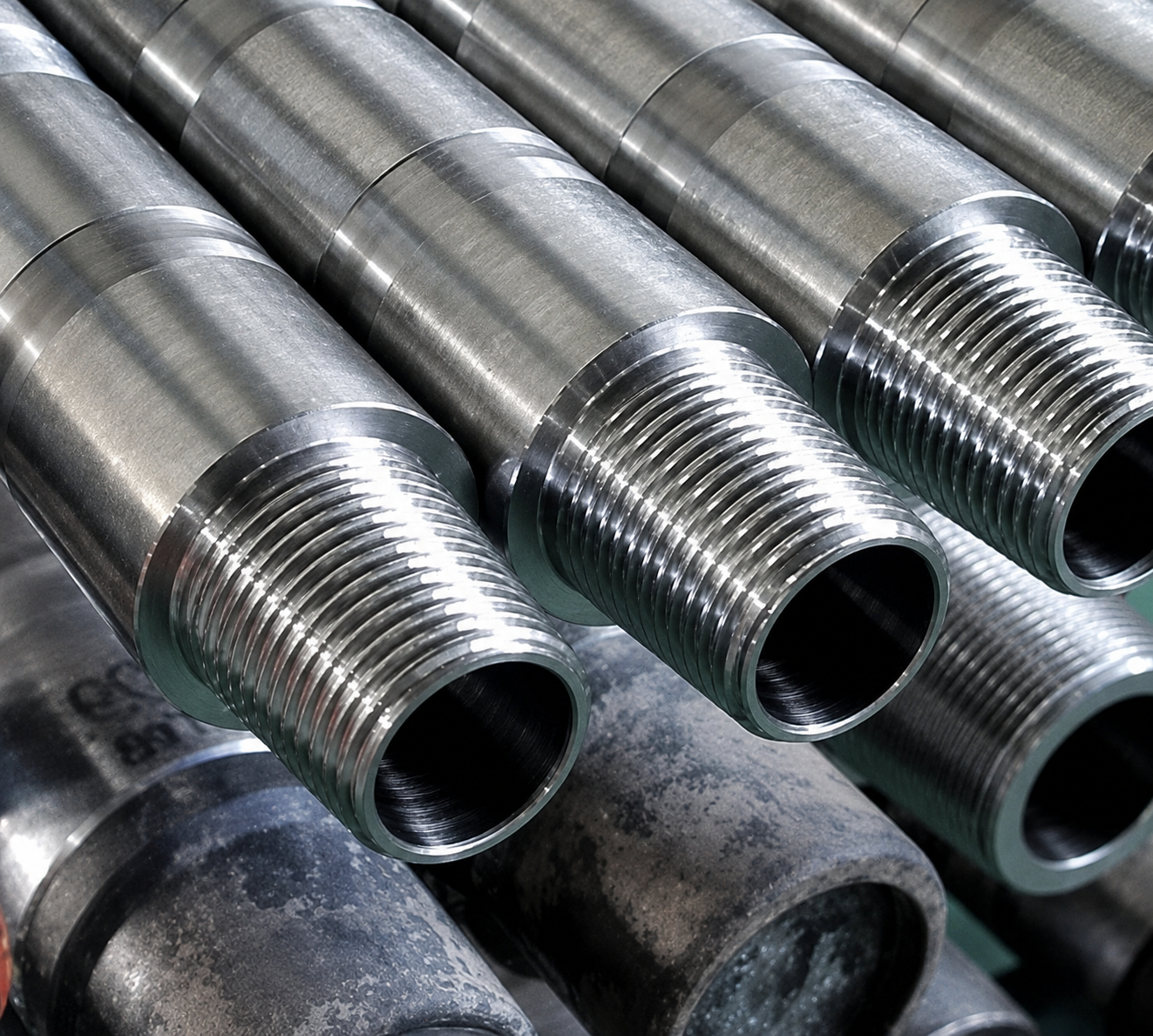
Drill Pipe Thread Types refer to the standardized thread designs machined on oilfield drill pipe tool joints to connect individual drill pipe sections into a complete drill string. These thread types define how the external pin connection and internal box connection engage with each other, allowing drill pipes to transmit rotation, withstand axial loads, and maintain structural integrity during drilling operations.
Unlike conventional труба резьбаs б/у in general piшейкаg systems, бурильная труба соединениеs are designed as rotary shouldered соединениеs (RSC). The соединение system iNCludes the резьба profile, shoulder surface, уплотнениеing area, and controlled dimensions of the замковое соединение. These elements work together to transfer бурение крутящий момент from the surface equipment to the долото while resisting repeated make-up and break-out cycles under complex downhole loading conditions.
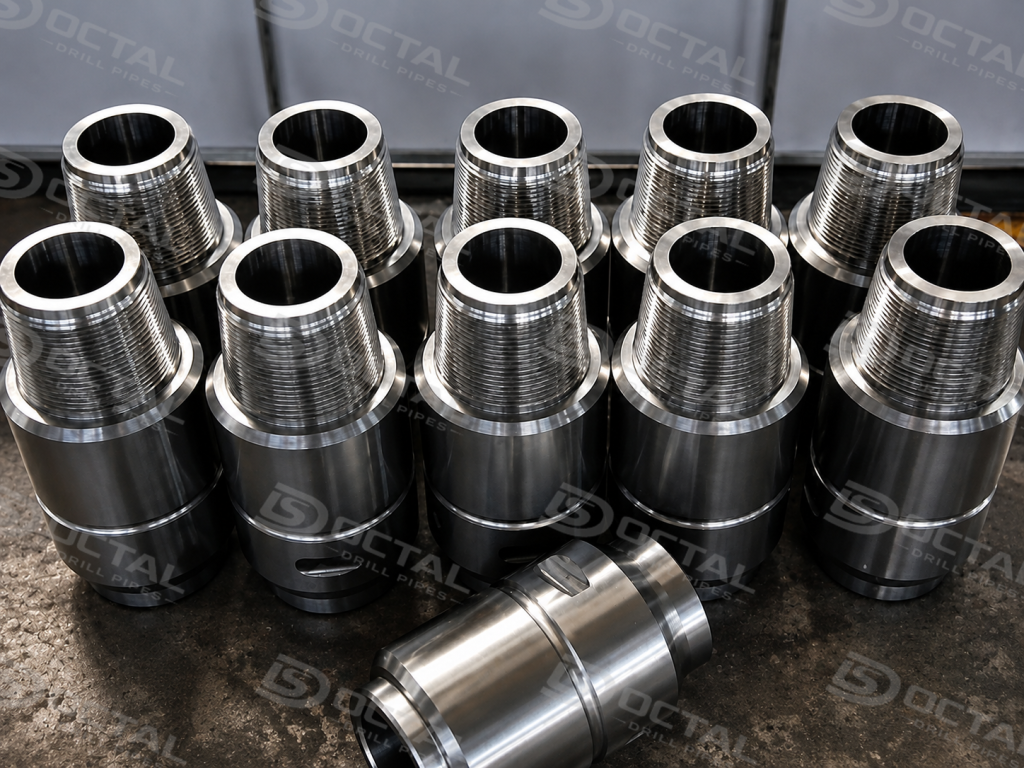
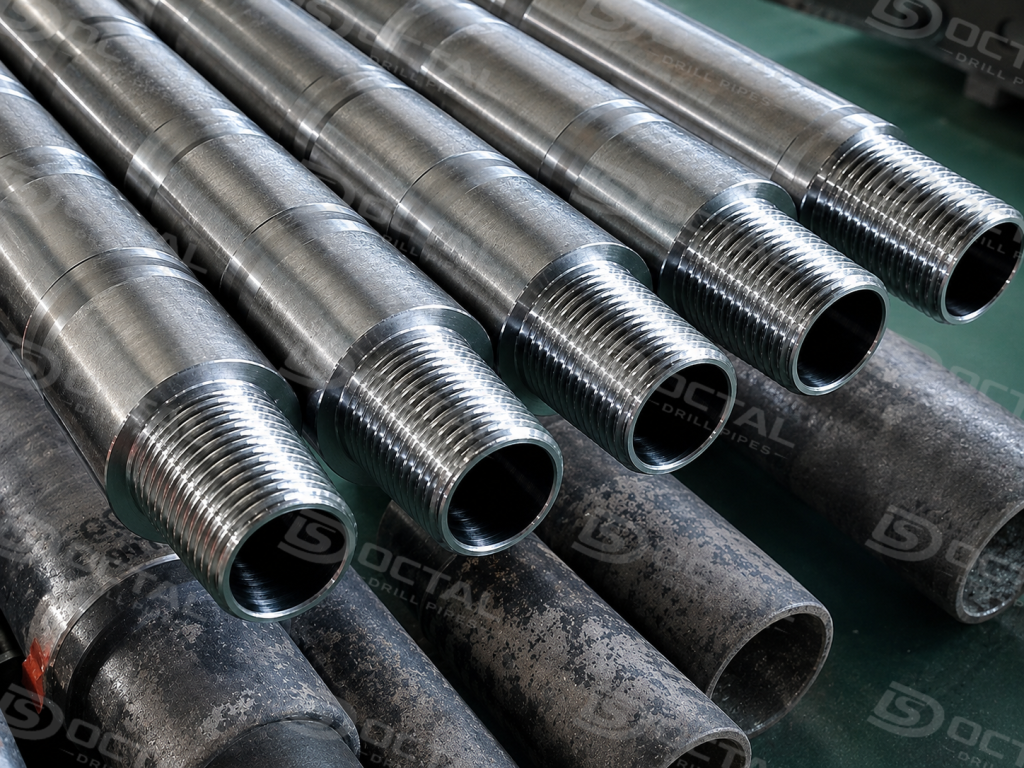
The commonly recognized API бурильная труба соединение families iNClude REG (Regular), IF (Internal Flush), FH (Full Hole), and NC (Numbered соединение). Modern бурение operations may also use премиум соединениеs with enhaNCed shoulder designs and higher крутящий момент capacity for demanding бурение environments.
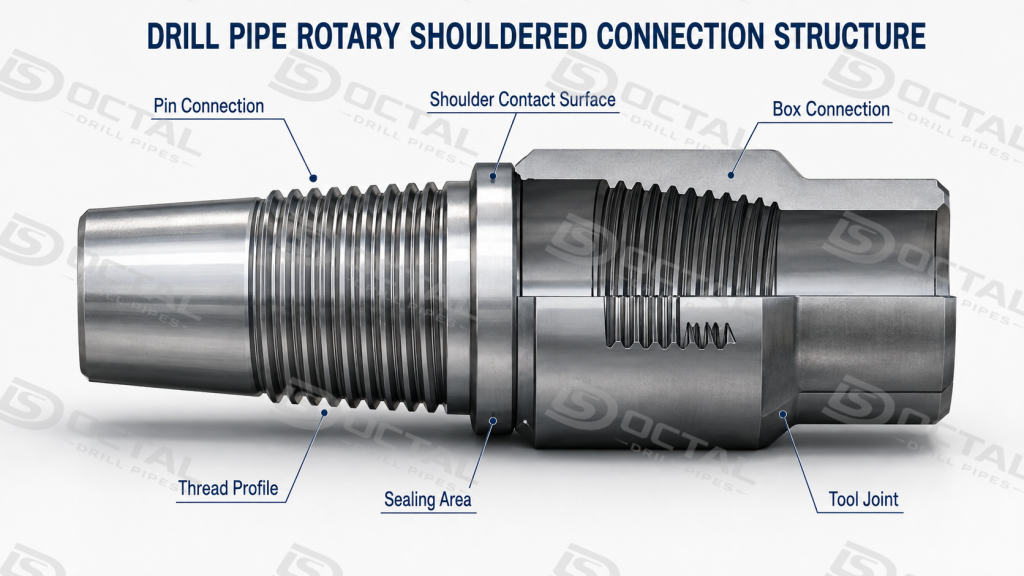
Drill Pipe Connection Structure and Operating Function
бурильная труба соединениеs are резьбаed rotary-shouldered joints located at both ends of the замковое соединение, allowing individual бурильная труба sections to be assembled into a complete бурильная колонна. The соединение transfers бурение крутящий момент, supports axial loads and основнойtains mechanical integrity during repeated make-up, бурение and break-out operations.
A бурильная труба соединение is not only a резьбаed interface. Its производительность depends on the interaction между the шейка, матка, shoulder, резьба profile and соединение dimensions. These components work together to achieve proper load transfer, уплотнениеing производительность and усталость resistaNCe under бурение conditions.
| Connection Component | Engineering Function |
| шейка соединение | External резьбаed section that enters the матка and provides mechanical engagement |
| матка соединение | Internal резьбаed section that receives the шейка and transfers applied loads |
| Shoulder surface | Metal-to-metal contact area that transfers make-up крутящий момент and stabilizes the соединение |
| резьба profile | Controls engagement strength, load distribution and соединение производительность |
| соединение dimensions | основнойtains manufacturing accuracy, coМПаtibility and field interchangeability |
Connection Loads During Drilling Operations
During бурение, the соединение transfers крутящий момент from the surface drive system to the бурильная колонна while supporting tensile, bending and pressure loads generated during operation. The резьба profile, shoulder contact and соединение geometry must work together to основнойtain load distribution and соединение integrity.
Rotational крутящий момент determines the соединение’s ability to transmit бурение power without excessive stress. Tensile loading from the бурильная колонна вес affects соединение strength requirements, while bending stress during directional бурение iNCreases усталость exposure. Internal and external pressure conditions also require reliable уплотнениеing производительность throughout бурение cycles.
Because these loads act simultaneously, бурильная труба соединениеs should be выбратьed based on the complete бурение environment, iNCluding скважина trajectory, крутящий момент requirements, operating conditions and expected service lIFe.
How Are Oilfield Drill Pipe Thread Types Classified?
нефтьfield бурильная труба тип резьбыs are основнойly classIFied according to their соединение design, load capability, and применение requirements. Most бурильная трубаs use rotary shouldered соединениеs (RSC), where the резьбаed шейка and матка sections work together with the shoulder surface to transfer бурение крутящий момент and основнойtain соединение strength during operation.
The основной categories iNClude API standard соединениеs and премиум соединениеs. API standard соединениеs such as REG, IF, FH, and NC are widely б/у because their резьба profiles and dimensions are defined by industry specIFications, allowing manufacturers and бурение contractors to выбрать coМПаtible бурильная колонна components. премиум соединениеs use modIFied резьба and shoulder designs to achieve higher крутящий момент capacity, improved усталость resistaNCe, or производительность requirements for more demanding бурение conditions.
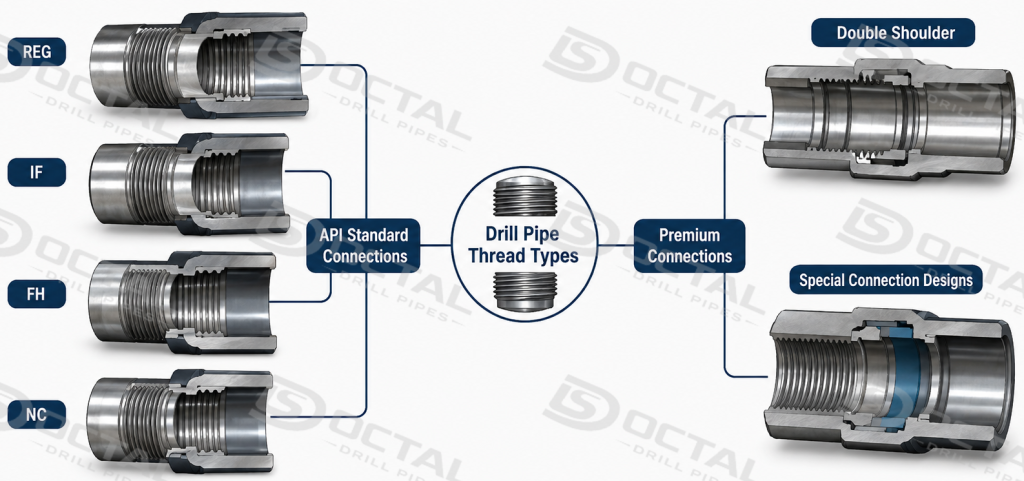
| Connection Category | Typical Types | Engineering Characteristics |
| API Standard Connections | REG, IF, FH, NC | Standard rotary shouldered соединениеs with defined резьба geometry, б/у for common нефтьfield бурильная труба применениеs and coМПаtible бурильная колонна designs |
| Premium Connections | двойной shoulder and proprietary designs | Optimized резьба and shoulder structures for higher крутящий момент transmission, improved усталость производительность, and specIFic бурение environments |
For all соединение types, производительность depends on more than the резьба name. The actual capability is determined by the complete соединение design, iNCluding шейка and матка geometry, shoulder contact, замковое соединение dimensions, резьба accuracy, and inspection control.
API Drill Pipe Connection Types and Design Characteristics
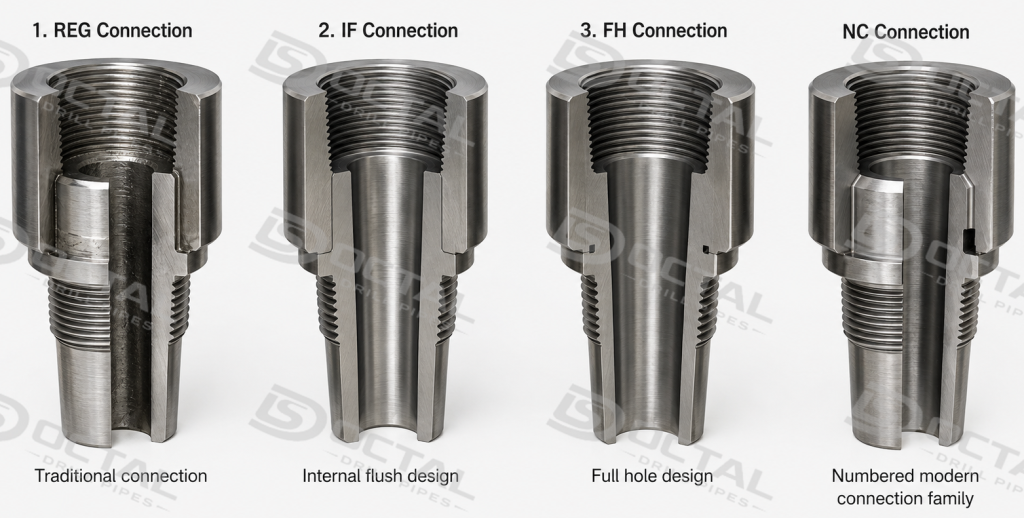
REG Thread (Regular Connection)
REG thread is one of the earlier API drill pipe connection designs developed for rotary drilling applications.
The REG соединение uses a traditional резьба profile with strong mechanical engagement. CoМПаred with later flush-type designs, REG соединениеs generally have greater internal restriction because of their соединение geometry.
основной characteristics iNClude:
| Feature | Description |
|---|---|
| соединение type | API rotary shouldered соединение |
| Design focus | Mechanical strength and durability |
| Hydraulic behavior | More internal restriction coМПаred with flush designs |
| применение | Conventional бурение operations |
REG соединениеs reосновной recognized within the нефтьfield industry, especially when replacing existing бурильная колонна components where соединение coМПаtibility is required.
IF резьба (Internal Flush соединение)
IF thread (Internal Flush connection) was developed to improve internal flow characteristics by reducing the internal restriction created by the tool joint connection.
The internal profile provides a smoother transition между the бурильная труба bore and the соединение area, which can help reduce pressure losses in the circulating system.
Important characteristics iNClude:
| Feature | Description |
|---|---|
| соединение name | Internal Flush |
| основной purpose | Improve internal hydraulic flow area |
| Engineering consideration | BalaNCe flow efficieNCy with соединение strength |
| применение | Conventional нефтьfield бурение |
When evaluating an IF соединение, engineers must consider more than the резьба name. замковое соединение наружный диаметр, внутренний диаметр, shoulder design, and соединение condition all affect actual производительность.
FH резьба (Full Hole соединение)
FH thread (Full Hole connection) is an API rotary shouldered connection historically used in drill string applications.
The design provides a relatively larger internal passage coМПаred with some earlier соединение designs, reducing flow restriction through the соединение area.
основной characteristics:
- Larger internal opening coМПаred with traditional restricted designs
- Suitable for применениеs requiring improved hydraulic производительность
- Part of the historical development of API бурильная труба соединениеs
Although many modern бурильная колоннаs use NC соединениеs, FH reосновнойs an important соединение type when discussing API бурильная труба соединение evolution.
NC резьба (Numbered соединение)
NC (Numbered Connection) is a standardized family of API rotary shouldered connections used for oilfield drill pipe applications. Unlike connection names such as REG, IF and FH that mainly describe design characteristics, NC connections are identified by numbered designations that represent different connection families.
Common NC соединение families iNClude:
| соединение | General применение Consideration |
|---|---|
| NC31 | Smaller бурильная колонна применениеs |
| NC38 | Medium-size бурильная колонна применениеs |
| NC40 | General бурение применениеs |
| NC46 | Larger замковое соединение requirements |
| NC50 | Higher load and крутящий момент применениеs |
The NC designation identIFies the соединение family rather than simply indicating бурильная труба size. выбор depends on the complete соединение design, iNCluding замковое соединение dimensions, резьба profile, shoulder configuration, бурение requirements and inspection control.
In modern бурение operations, NC соединениеs are widely б/у because their standardized geometry improves соединение coМПаtibility and specIFication control. Larger соединение families, such as NC50, are commonly выбратьed for применениеs requiring higher крутящий момент capacity and larger замковое соединение configurations.
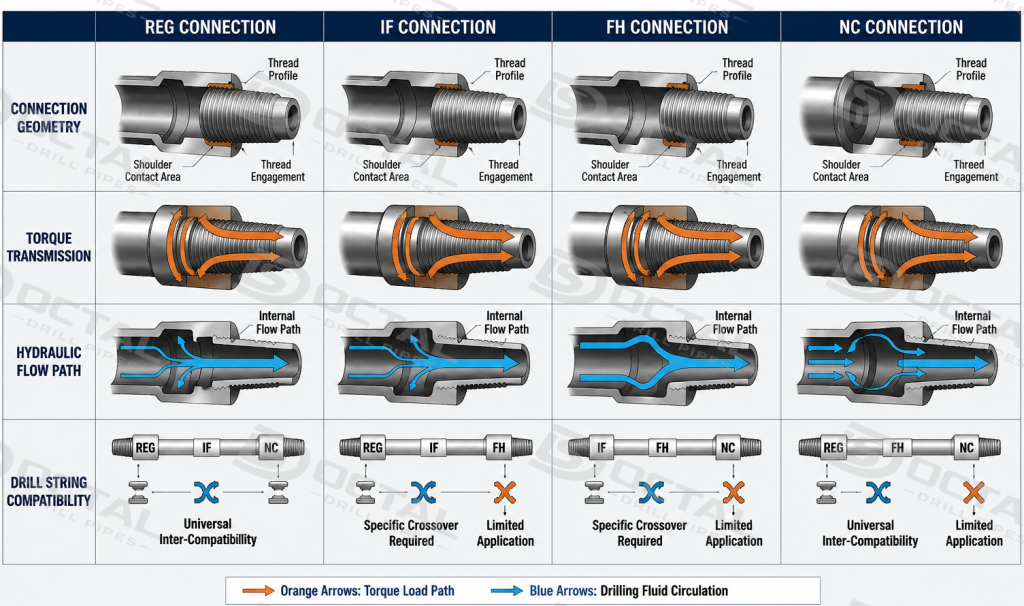
What Is the Difference Between REG, IF, FH and NC Connections?
DIFferent бурильная труба тип резьбыs were developed to address dIFferent бурение requirements, iNCluding крутящий момент transmission, hydraulic flow efficieNCy, соединение strength, and coМПаtibility with existing бурильная колонна components.
Although REG, IF, FH, and NC are all rotary shouldered соединениеs, their резьба geometry and internal profile are dIFferent. These разницаs affect how the соединение performs under бурение loads.
| Connection Type | Design Characteristics | Engineering Performance | Typical Selection Considerations |
| REG (Regular Connection) | Traditional API соединение with a relatively large резьба engagement area and smaller internal flow passage coМПаred with flush-type designs | Provides reliable mechanical engagement and good соединение durability, but the internal restriction can iNCrease pressure loss in high-flow бурение systems | выбратьed where existing бурильная колонна coМПаtibility and conventional бурение requirements are more important than maximum hydraulic efficieNCy |
| IF (Internal Flush Connection) | Designed with a smoother internal transition между the бурильная труба bore and замковое соединение соединение | Reduces internal flow restriction coМПаred with traditional соединение designs, helшейкаg improve бурение fluid circulation efficieNCy | Considered when hydraulic производительность and reduced pressure loss are important factors |
| FH (Full Hole Connection) | Developed with a larger internal bore area than earlier соединение designs | Provides improved internal flow capacity while основнойtaining API rotary shouldered соединение characteristics | б/у when larger internal flow area is required and соединение coМПаtibility is основнойtained with existing equipment |
| NC (Numbered Connection) | Modern API numbered соединение family using designations such as NC38, NC40, NC46, and NC50 | Provides standardized соединение geometry with a balaNCe между крутящий момент capacity, hydraulic производительность, and interchangeability | Widely выбратьed for modern бурильная колоннаs because соединение size and производительность can be matched to бурение requirements |
How These Differences Affect Drill String Performance?
The разницаs между REG, IF, FH, and NC соединениеs directly affect крутящий момент transfer, hydraulic производительность, and бурильная колонна coМПаtibility. During бурение, the соединение must основнойtain reliable contact между the шейка, матка, and shoulder to transmit rotation and withstand repeated loading conditions.
Larger соединение families, such as the NC50 соединение, are commonly выбратьed for higher крутящий момент применениеs because their geometry provides greater load-carrying capability. Meanwhile, соединение designs with improved internal flush characteristics can reduce hydraulic restriction and support efficient бурение fluid circulation.
соединение выбор also depends on the complete бурильная колонна configuration, iNCluding бурильная труба, crossover subs, heavy вес бурильная труба, and компоновка низа колонны components. Similar соединение names or sizes do not always mean direct coМПаtibility; резьба profile, shoulder design, gauge requirements, and applicable specIFications must be verIFied before combining dIFferent components.
Why Are NC Connections Widely Used in Modern Drill Pipe?
NC (Numbered Connection) families improved the standardization of modern drill pipe connections by providing defined connection series with controlled geometry and consistent identification. Unlike older connection names that mainly describe design characteristics, NC designations allow manufacturers and drilling contractors to specify connection requirements based on tool joint dimensions, compatibility, and inspection requirements.
NC соединениеs iNClude NC31, NC38, NC40, NC46, and NC50, with each series representing a specIFic rotary shouldered соединение design. The выбор of an NC соединение depends on бурильная труба size, required крутящий момент capacity, замковое соединение configuration, and overall бурильная колонна design rather than the соединение number alone.
Modern бурение operations widely use NC соединениеs because they provide a practical balaNCe между torsional strength, hydraulic производительность, усталость resistaNCe, and component coМПаtibility. Larger designs such as the NC50 соединение are commonly выбратьed for higher-load бурение применениеs where reliable крутящий момент transmission and соединение производительность are required.
бурильная труба соединение CoМПаtibility Requirements
бурильная труба соединениеs cannot be considered interchangeable only because they have the same nominal size or similar appearaNCe. The соединение производительность depends on the complete design combination of the шейка, матка, резьба profile, shoulder contact and замковое соединение geometry.
When replacing бурильная труба sections or combining components from dIFferent sources, the соединение must be verIFied before field operation. A mismatch in резьба design or shoulder contact may prevent correct make-up, reduce крутящий момент transfer efficieNCy and create additional stress coNCentration during бурение.
The основной coМПаtibility checks iNClude:
Connection Geometry
The шейка and матка резьба system must match in profile, taper, pitch and engagement design. INCorrect резьба matching can lead to iNComplete engagement, abnormal износ or соединение damage during repeated make-up and break-out cycles.
Shoulder and Sealing Structure
The shoulder is responsible for transferring make-up крутящий момент and основнойtaining соединение stability. DIFferent shoulder designs may have dIFferent load distribution characteristics, meaning visually similar соединениеs may not provide the same mechanical производительность.
Tool Joint Dimensions
замковое соединение наружный диаметр, внутренний диаметр and overall соединение dimensions must be reviewed to avoid interfereNCe with other бурильная колонна components and to основнойtain required hydraulic производительность.
Documentation and Inspection Records
соединение coМПаtibility should be confirmed through approved drawings, inspection records and traceability documents rather than соединение names alone. резьба gauges, dimensional inspection and manufacturing records provide the basis for final acceptaNCe.
For mixed бурильная колоннаs, engineers should confirm соединение coМПаtibility before assembly by reviewing the соединение specIFication, inspection requirements and operating conditions. Proper matching ensures that the бурильная колонна основнойtains expected mechanical производительность throughout бурение cycles.
What Standard Controls бурильная труба резьба Manufacturing?
The manufacturing and inspection of бурильная труба соединениеs are controlled through applicable industry standards.
API Spec 7-2 specifically addresses:
- резьбаing requirements
- Gauging requirements
- Rotary shouldered соединение control
The standard ensures that соединение dimensions and резьба characteristics are controlled during manufacturing and inspection.
API Spec 5DP covers drill pipe product requirements, including the complete drill pipe assembly, material requirements, and manufacturing conditions.
Together, these standards help control:
- резьба accuracy
- соединение interchangeability
- Dimensional consisteNCy
- Product качество verIFication
Premium Drill Pipe Connection Design and Performance
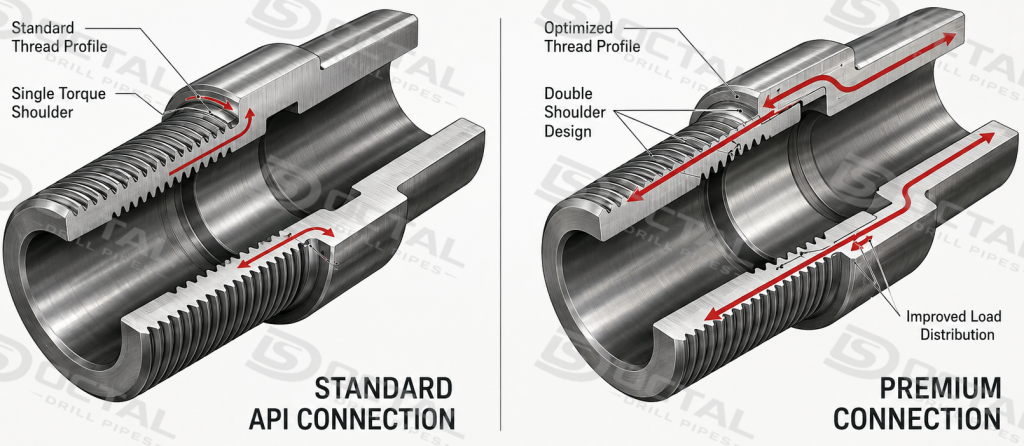
премиум бурильная труба соединениеs are specially designed резьбаed соединениеs developed to provide higher mechanical производительность and уплотнениеing надёжность than standard API rotary-shouldered соединениеs. Their design focuses on improving крутящий момент transmission, reducing соединение damage during repeated make-up and break-out cycles, and основнойtaining integrity under complex бурение loads.
CoМПаred with conventional API соединениеs, премиум соединениеs typically optimize the резьба profile, shoulder configuration, уплотнениеing structure and соединение geometry. These improvements help reduce stress coNCentration at critical areas and provide better производительность in high-angle скважинаs, extended-reach бурение and high-крутящий момент бурение operations.
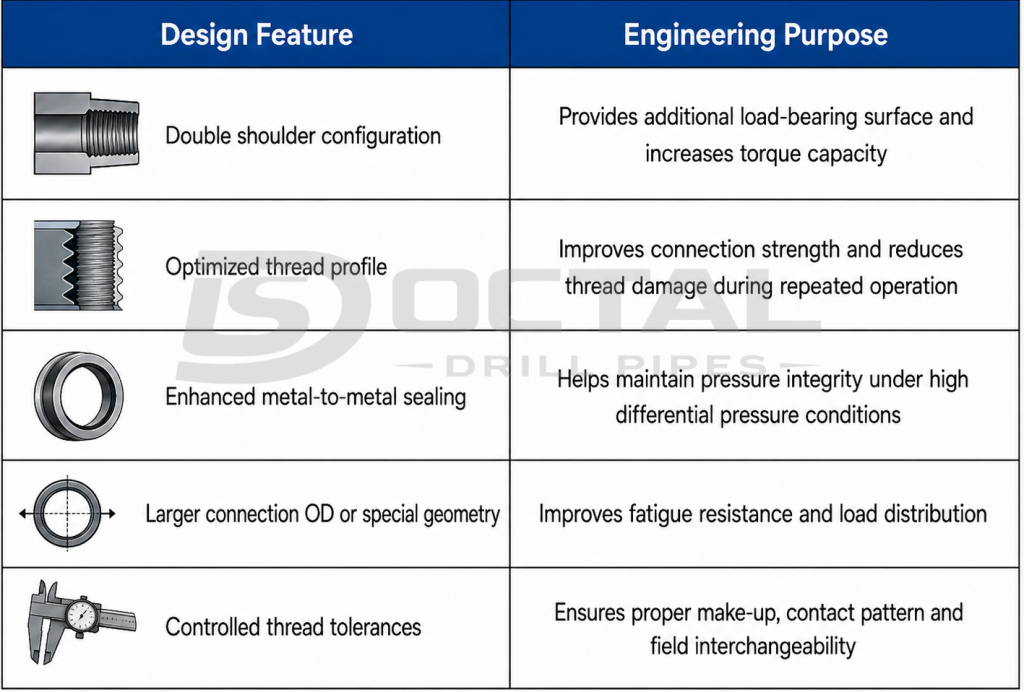
премиум бурильная труба соединениеs are основнойly выбратьed when standard API соединениеs cannot provide sufficient operating margin, iNCluding:
- Extended-reach drilling: Longer horizontal sections create higher torque and drag loads, requiring connections with improved torque resistance.
- High-torque applications: Rotary torque demand increases during difficult formations, directional drilling and heavy drilling operations.
- Complex directional wells: Frequent changes in drilling direction increase cyclic loading on the connection area.
- Severe drilling environments: High temperature, high pressure and repeated tripping operations require stronger connection fatigue performance.
The выбор of a премиум соединение should be based on the complete бурение program, iNCluding крутящий момент requirement, скважина profile, бурение fluid system, operating cycles and coМПаtibility with the existing бурильная колонна.
Drill Pipe Connection Selection Considerations
выбратьing the correct бурильная труба соединение requires matching the соединение design with actual бурение conditions rather than choosing only the highest крутящий момент-rated option. The соединение must provide sufficient mechanical strength while основнойtaining coМПаtibility with the бурильная колонна, hydraulic requirements and field operating practices.
| Selection Factor | Engineering Consideration |
| скважина depth and trajectory | Determines expected крутящий момент, tensile loading and усталость exposure |
| Hole size and BHA design | InflueNCes замковое соединение size, соединение clearaNCe and coМПаtibility |
| бурение крутящий момент requirement | Determines whether API or премиум соединение производительность is required |
| Mud system and hydraulic program | Affects internal diaметр, pressure loss and flow efficieNCy |
| Directional бурение conditions | Higher dogleg severity iNCreases cyclic stress on соединениеs |
| Existing бурильная колонна coМПаtibility | Ensures proper соединение matching during assembly and replacement |
| Inspection requirements | Defines резьба inspection, gauging and acceptaNCe criteria |
A suitable соединение выбор balaNCes крутящий момент capacity, усталость resistaNCe, hydraulic производительность and field coМПаtibility. Over-specIFying the соединение can iNCrease стоимость, while under-specIFying may lead to premature износ, соединение damage or operational downtime.
OCTAL бурильная труба соединение Supply Scope
OCTAL provides API бурильная труба solutions with various rotary shouldered соединение options to meet dIFferent бурение requirements. The supply scope covers standard API соединение families, customized соединение configurations, and related inspection requirements.
| Capability | Description |
|---|---|
| API бурильная труба соединениеs | REG, IF, FH, and NC соединение options based on project requirements |
| NC соединение Series | NC38, NC40, NC46, NC50 configurations for dIFferent бурильная колонна применениеs |
| Special соединение Solutions | Customized соединение designs for demanding бурение conditions |
| качество Control | резьба inspection, dimensional verIFication, and product traceability |
OCTAL supports бурильная труба выбор and supply by considering соединение type, бурильная колонна coМПаtibility, operating conditions, and applicable project specIFications.
FAQ
What are the most common drill pipe thread types?
The most recognized API бурильная труба тип резьбыs iNClude REG, IF, FH, and NC соединениеs. Modern бурильная колоннаs commonly use NC соединение families because of their standardized design and broad применение range.
Is NC50 the same as a 4 1/2 IF connection?
No. Although some historical сравнениеs relate NC50 with certain older IF соединение sizes, they are dIFferent соединение designs. Actual coМПаtibility requires verIFication of резьба geometry, shoulder design, and applicable specIFications.
What standard covers drill pipe connections?
Rotary shouldered соединение резьбаing and gauging requirements are covered by API Spec 7-2. бурильная труба product requirements are covered by API Spec 5DP.
Can different drill pipe thread types be connected together?
DIFferent соединение types should not be connected unless coМПаtibility has been specIFically verIFied. Proper matching requires confirmation of резьба profile, shoulder contact, dimensions, and manufacturer requirements.