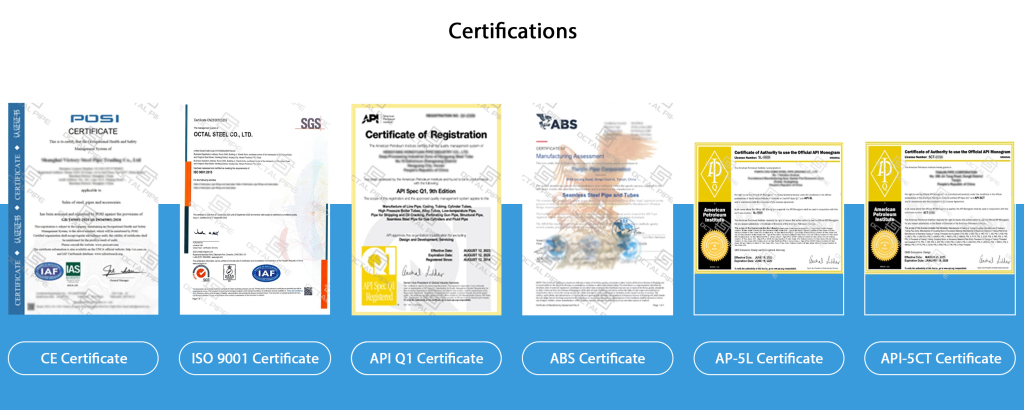
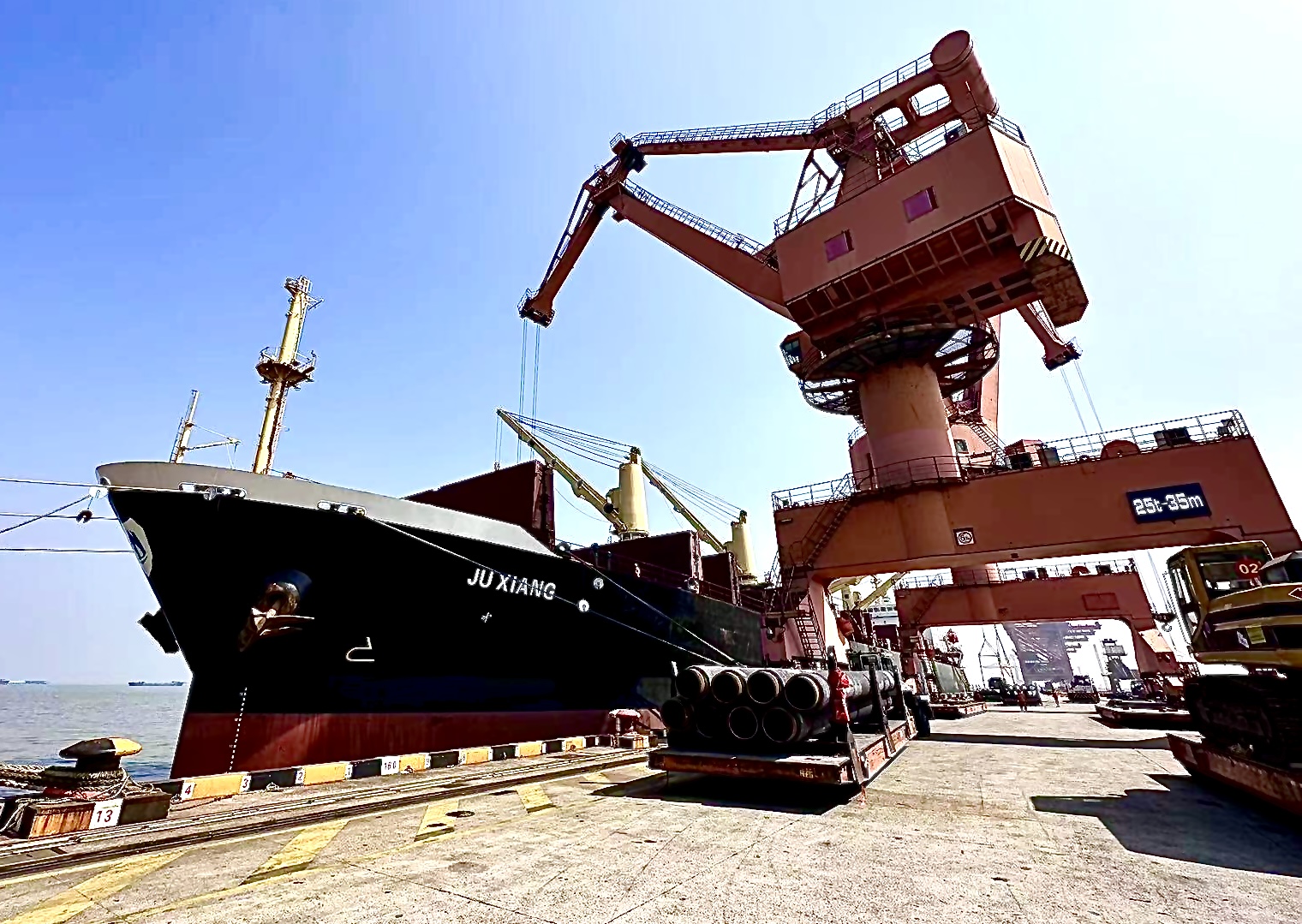
The API 5DP drill pipe inspection was completed before shipment release, with pipe body, tool joint, dimensional condition, marking, and document consistency checked against the purchase order and inspection requirements.
For drill pipe orders, pre-shipment inspection is not only a final visual check. It is the last control point before cargo leaves the mill, where the supplier must prove that the delivered pipe matches the ordered grade, size, connection, inspection scope, and traceability documents. Once the shipment is loaded, any mismatch in marking, heat number, tool joint records, or inspection reports becomes much harder to correct.
API 5DP drill pipe is used under repeated torque, tension, bending, rotation, and downhole vibration. This makes shipment release more sensitive than ordinary steel pipe delivery. The pipe body must carry the mechanical load, while the tool joint, weld zone, upset area, and connection shoulder must remain consistent under field operation. A complete inspection before release helps reduce rig-site rejection, document disputes, and delayed customs or client acceptance.
Why Pre-Shipment Inspection Matters for Drill Pipe
Drill pipe failure risk is rarely caused by one visible defect alone. More often, it comes from a weak link between material condition, heat treatment, tool joint quality, connection preparation, and traceability records.
A proper pre-shipment inspection checks whether the physical pipe and the document package describe the same product. The grade on the pipe body should match the MTC. The connection and tool joint information should match the purchase order. The heat number and lot reference should be traceable through inspection records and packing lists. If third-party inspection is involved, the witnessed items should be closed before loading.
In project delivery, this sequence matters. Inspection first, shipment release second. That is the safest rhythm for drill pipe exports.
Key Inspection Items Before Shipment Release
More Than Checking the Pipe Surface
A drill pipe may look acceptable from the outside, but shipment release cannot rely on appearance only. The more important question is whether each pipe can be identified, traced, and verified.
For API 5DP drill pipe, the inspection team pays attention to several points:
- whether the packing list can be matched back to heat / lot records and inspection documents.
- whether the pipe size, grade, weight, upset type, and connection match the PO;
- whether pipe body and tool joint markings are readable and consistent;
- whether dimensions and straightness are within the required range;
- whether the tool joint shoulder and thread area are properly protected;
- whether NDT, mechanical test, hardness, or heat treatment records are complete where required;
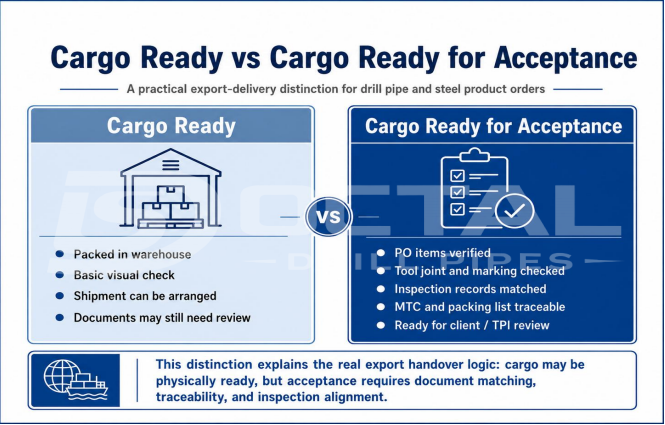
This is the difference between “cargo ready” and “cargo ready for acceptance.” For drill pipe, both are not the same thing.
Tool Joint and Connection Review Are Critical
The tool joint is one of the most important areas in drill pipe inspection. During drilling, it carries repeated torque, axial load, bending stress, and connection make-up cycles. Even when the pipe body meets strength requirements, poor connection control can still create field problems.
Before shipment release, the inspection should confirm tool joint type, connection marking, shoulder surface condition, thread protection, and packing method. If hardbanding, special connection, sour-service review, or higher inspection level is required by the order, these points should be checked against the agreed inspection plan.
For buyers, this step is especially important because connection mismatch is not a small paperwork issue. It can stop pipe running at site, create rig downtime, or require urgent replacement.
Document Consistency Decides Final Release
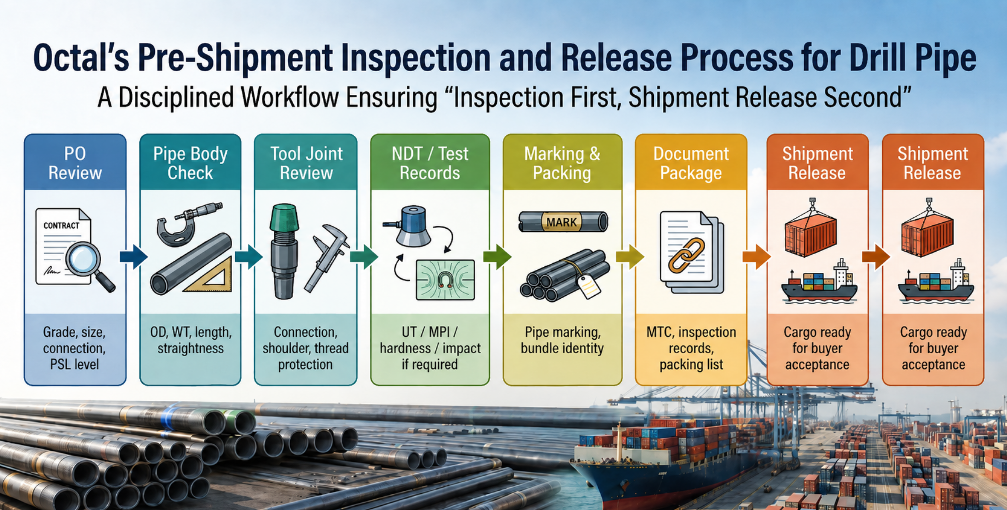
In drill pipe exports, documents are part of the product. A complete shipment release package usually includes MTC, inspection records, NDT reports where required, dimensional inspection results, heat treatment or hardness records where applicable, packing list, marking photos, and shipment documents.
The most common delivery risk is not that a document is completely missing. It is that the document exists but does not match the cargo. For example, the pipe marking, MTC, packing list, and inspection report may show different wording for grade, size, connection, heat number, or lot reference. These small inconsistencies can delay client approval.
Before shipment release, Octal checks the document chain together with the physical cargo. The goal is simple: the buyer should be able to follow one pipe from marking to MTC, inspection record, packing list, and final shipment file without needing extra explanation.
What API 5DP Drill Pipe Inspection Means for Shipment Acceptance
- For buyers, completed pre-shipment inspection means the order has passed the final technical and document review before cargo movement. It gives procurement teams a clearer basis for payment release, shipping arrangement, third-party review, and receiving inspection.
- For engineering teams, it means the critical control points are not left to site discovery. Dimensions, grade records, NDT status, tool joint information, and traceability are reviewed before the pipe enters the logistics chain.
- For exporters, it also reduces after-loading corrections. When inspection, packing, and documentation are closed together, shipment release becomes more predictable.
API 5DP Drill Pipe Shipment Release: Final Review
API 5DP drill pipe is not a simple commodity pipe. It is a load-bearing drilling component working under repeated stress and connection cycles. That is why final inspection before shipment release must be treated as a technical release process, not a routine warehouse step.
A reliable drill pipe delivery should prove three things before loading: the pipe matches the order, the inspection records support the product, and the document package can be checked without broken traceability. This is the practical value of completing inspection before shipment release.
FAQ
F:Why is API 5DP drill pipe inspected before shipment release?
Q:Pre-shipment inspection confirms that the drill pipe matches the purchase order, API 5DP requirements, inspection records, marking, packing and document package before cargo leaves the mill.
F:What are the key inspection items for drill pipe shipment?
Q:Key items include pipe body dimensions, tool joint condition, connection type, thread protection, NDT records, hardness or mechanical test records when required, marking and packing consistency.
F:Why is tool joint inspection important?
Q:The tool joint carries repeated torque, tension and bending during drilling. Before shipment, the connection, shoulder area, marking and thread protection should be checked to reduce rig-site makeup problems.
F:What documents should be reviewed before release?
Q:Important documents include MTC, dimensional inspection report, NDT records, hardness or heat treatment records if required, tool joint inspection records, packing list and shipment documents.
F:What does shipment release mean for drill pipe orders?
Q:Shipment release means the pipe, inspection records, marking, packing and documents have been reviewed together, so the cargo is ready for buyer acceptance and export delivery.