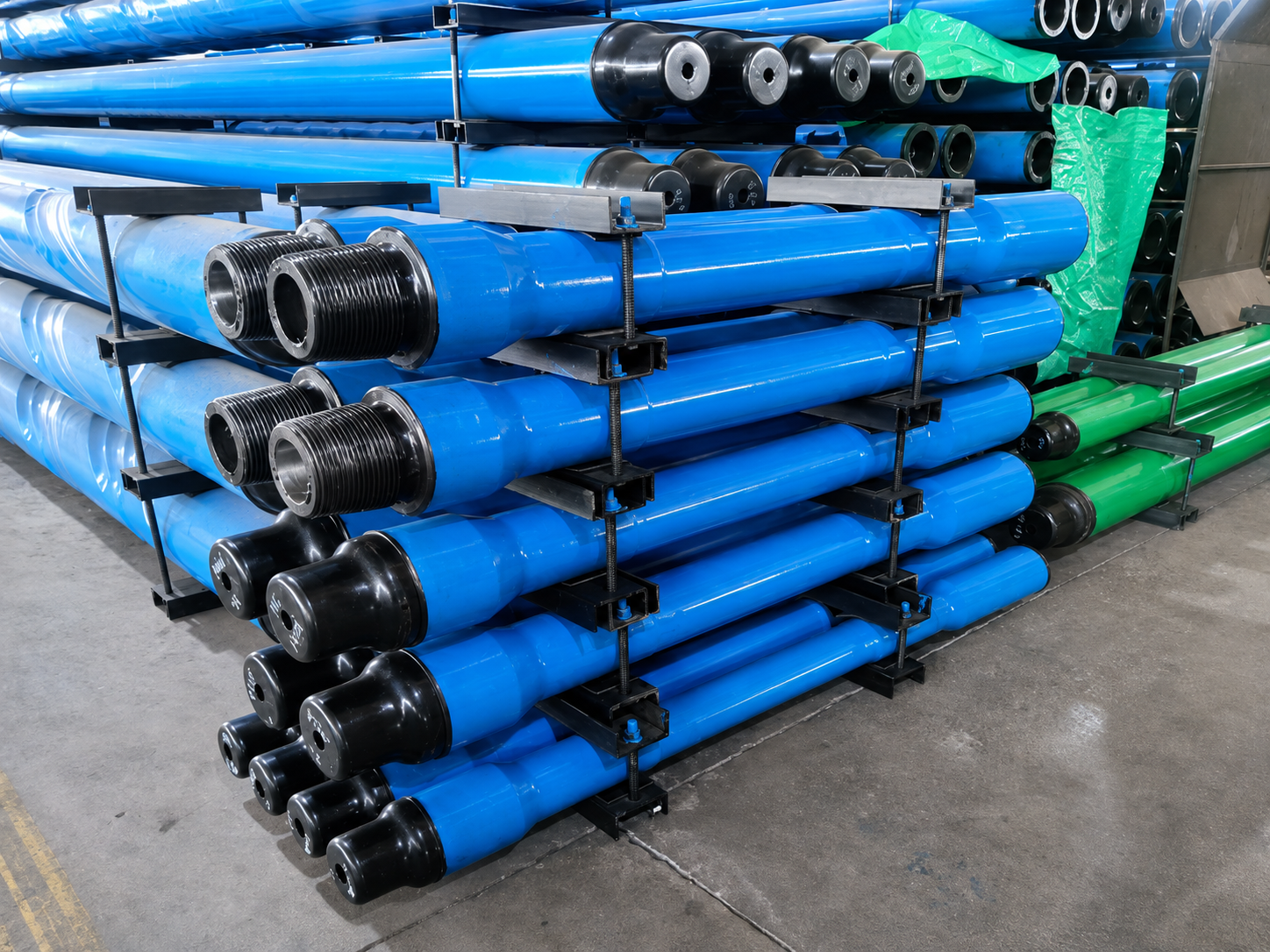
Pup joint provides a controlled short section within a tubular string when a standard-length component cannot achieve the required spacing. In drill-string applications, a drill pipe pup joint adjusts the overall string length while maintaining the required connection, bore and dimensional relationship with the adjoining drill pipe.
Unlike tubing or casing pup joints used in other tubular systems, drill pipe pup joints are designed specifically for drilling applications and rotary shouldered connection systems. Their configuration is determined by the required length, connection type, pin/box arrangement, tool joint dimensions, bore, construction route, and material or drill-pipe grade to ensure compatibility with the existing drill string.
Integral and Welded Drill Pipe Pup Joint Construction
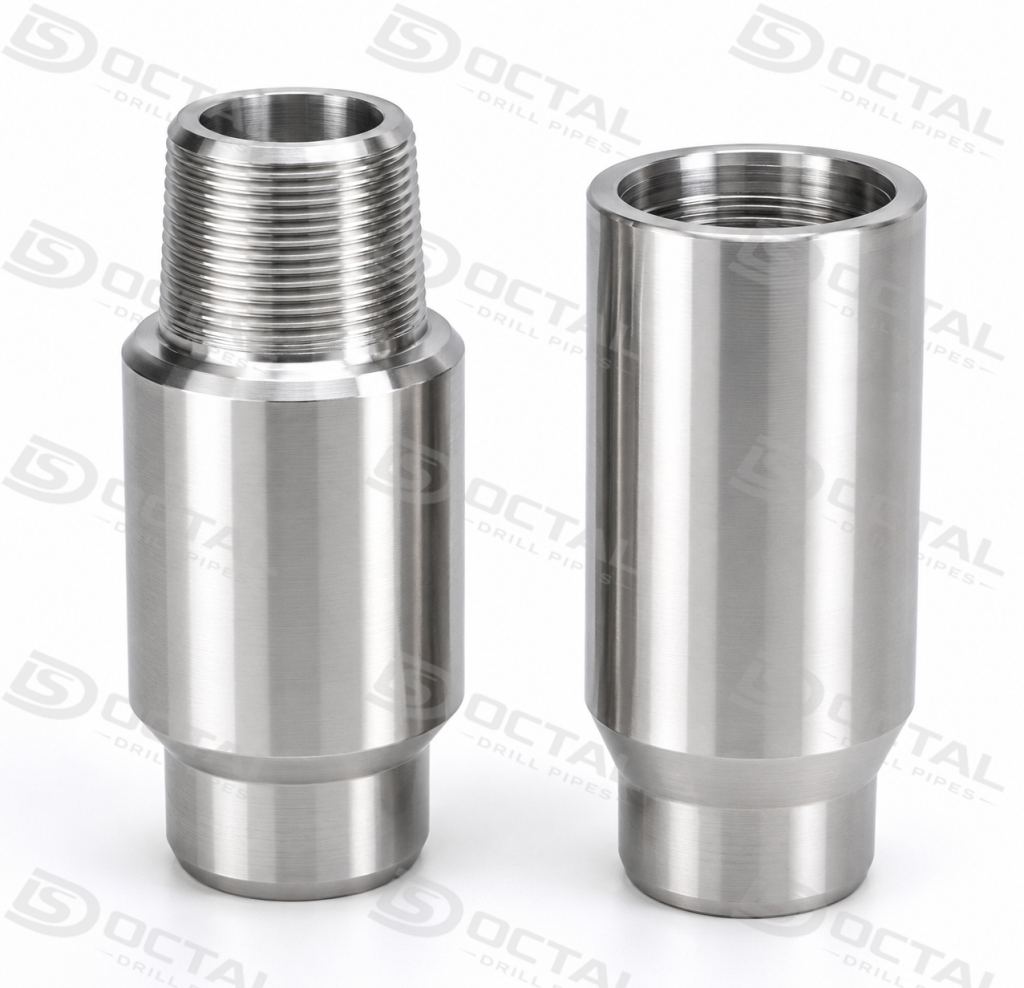
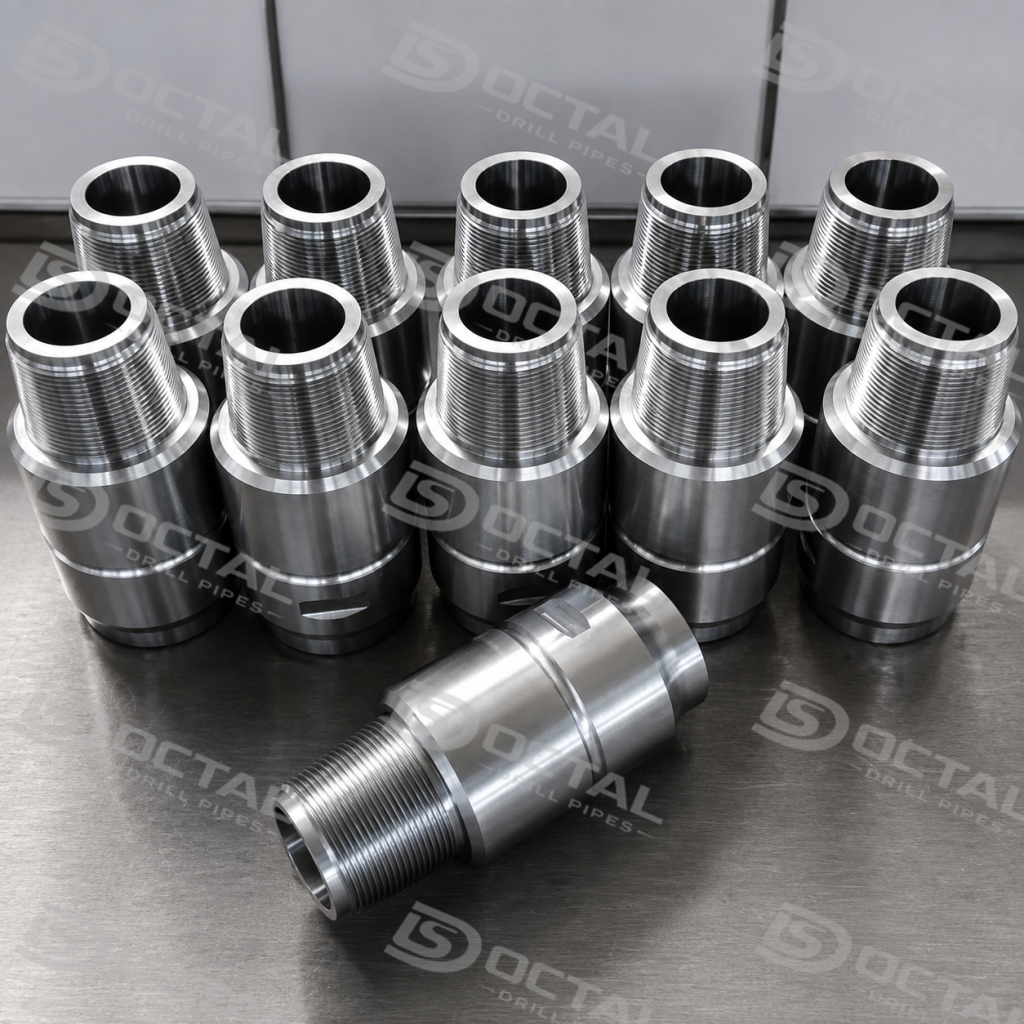
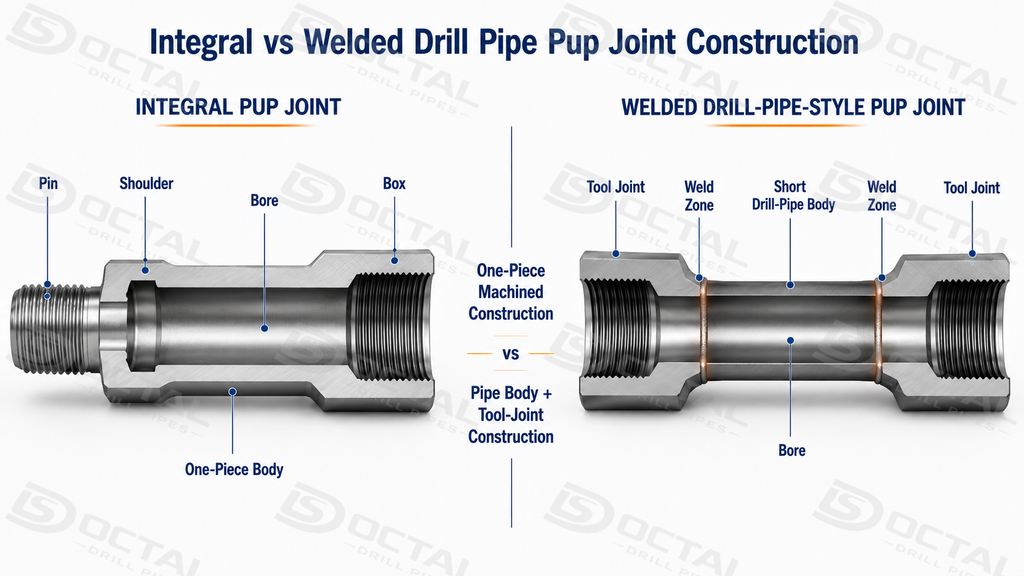
Drill pipe pup joints are supplied in two main construction routes: integral and welded drill-pipe-style construction. The difference is structural, not simply a difference in material.
An integral drill pipe pup joint is produced as a one-piece component, commonly from alloy-steel bar or heavy-wall material. The body, bore and end connections are machined into the same basic component. AISI 4145H, including 4145H Modified alloy steel, is widely used for this construction route. Because there is no pipe-body-to-tool-joint weld, control is concentrated on material condition, heat treatment, body and bore dimensions, and the machined threads and shoulders.
A welded drill pipe pup joint is constructed from a shortened drill-pipe body fitted with welded tool-joint ends, following the same basic structural concept as conventional drill pipe. The specification therefore needs to define the drill-pipe body grade, tool-joint requirements, connection designation, finished OD, bore, and overall length as a complete assembly. For this construction, designations such as G105 or S135 refer to the drill-pipe body grade, while the tool-joint material and connection requirements are specified separately.
| Item | Integral Construction | Welded Drill-Pipe-Style Construction |
|---|---|---|
| Basic structure | One-piece machined body | Short drill-pipe body with tool-joint ends |
| Common material/grade logic | Alloy-steel material such as AISI 4145H Modified | Drill-pipe body grade plus tool-joint material requirements |
| Main structural zones | Body, bore, pin/box threads and shoulders | Pipe body, upset/end area, weld zone, tool joints and connections |
| Connection manufacture | Machined directly into the integral component | Finished on the tool-joint ends |
| Key Specification Focus | Material condition, OD, bore, connection and length | Pipe-body grade, tool-joint dimensions, connection, weld-related requirements and length |
Neither construction should be selected by product name alone. The appropriate configuration depends on the existing drill-pipe system, required dimensions, connection requirements, service conditions, and applicable project specification.
Materials and Grade Logic
Material and grade terminology depends on the construction of the drill pipe pup joint. Integral drill pipe pup joints commonly use alloy steel such as AISI 4145H or 4145H Modified, while G105 and S135 are drill-pipe body grade designations associated with welded drill-pipe-style construction. These terms describe different material or product systems and are not interchangeable.
| Construction | Material / Grade Logic |
|---|---|
| Integral Pup Joint | Commonly AISI 4145H or 4145H Modified alloy steel |
| Welded Drill-Pipe-Style Pup Joint | Drill-pipe body grade such as G105 or S135, with tool-joint requirements defined separately |
For integral construction, the alloy steel is normally heat treated to achieve the required mechanical condition before final machining. For welded construction, the drill-pipe body grade and tool-joint requirements follow their respective product specifications.
Drill Pipe Pup Joint Sizes, Lengths and Connection Compatibility
Drill pipe pup joint sizes cannot be determined by nominal drill-pipe OD alone. Two pup joints of the same nominal size may still be incompatible if the connection designation, shoulder interface, tool joint OD, or bore/ID differs. Compatibility should therefore be checked against the actual parent drill pipe in sequence: exact connection → pin/box orientation → shoulder interface → tool joint OD → bore/ID.
The drill pipe pup joint length is then selected according to the required drill string spacing rather than treated as an independent catalog dimension. Common commercial lengths include 5 ft, 10 ft, 15 ft, and 20 ft, while other lengths may be specified to suit the required string configuration.
| Common Commercial Length | Typical Use in Specification |
| 5 ft | Small drill-string spacing correction |
| 10 ft | Intermediate short-length adjustment |
| 15 ft | Larger spacing adjustment without adding a full drill-pipe joint |
| 20 ft | Extended pup length where a full drill-pipe joint is still longer than required |
| Project-specified length | Used when the assembly requires a defined non-standard spacing |
Connection compatibility depends on the exact connection used on the adjoining drill pipe. The connection designation, pin/box orientation, shoulder interface, tool joint OD, and bore should be considered together, because matching the nominal drill-pipe size alone does not ensure that the pup joint can be correctly assembled into the drill string.
| Specification Parameter | What Must Be Confirmed | Why It Matters |
| Nominal drill-pipe size | Size of the parent drill pipe | Establishes the basic drill-string system |
| Connection designation | Exact type and size of connection | Determines whether the components can make up correctly |
| Pin / box orientation | End configuration required at each side | Ensures the pup joint mates with the adjacent component |
| Shoulder interface | Connection shoulder geometry | Required for correct make-up and load transfer |
| Tool joint OD | External diameter at the connection end | Must suit the adjoining drill string and handling envelope |
| Tool joint ID / bore | Internal flow diameter | Prevents an unintended restriction through the drill string |
| Overall length | Required assembled length | Controls final drill string spacing |
A nominal size match is therefore not proof of compatibility. The exact rotary shouldered connection and mating dimensions should always be confirmed before the pup joint is released for the string.
Where Drill Pipe Pup Joints Are Used
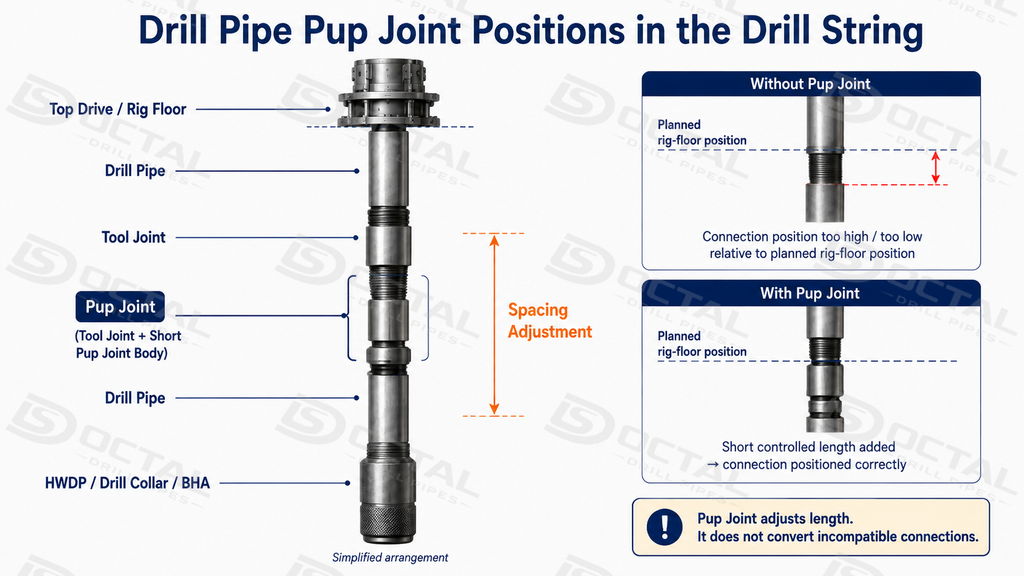
Drill pipe pup joints are used when the drill string requires a shorter, controlled length than a standard full-length drill pipe can provide. Their function is to adjust drill string length and component spacing while retaining the required connection and bore relationship with the adjoining drill pipe.
| Application | When the Pup Joint Is Used | Function in the Drill String |
|---|---|---|
| Drill String Length Adjustment | A full-length drill pipe would make the assembled string longer than required. | Adds a defined short section to achieve the required overall string length. |
| Rig Floor Spacing | A tool joint or connection needs to be positioned at a more suitable height relative to the rig floor. | Adjusts the vertical position of the connection for planned make-up, break-out or handling operations. |
| Drilling and Testing String Configuration | A drilling or testing assembly requires a specific overall length or spacing between components. | Provides a controlled length increment without adding another full drill-pipe joint. |
| Component Positioning | The relative position of drill-string components needs fine adjustment while the existing connections already match. | Changes drill string spacing without changing the connection system. |
A drill pipe pup joint changes length by adding a controlled short section to the drill string. A crossover sub serves a different purpose: it is used when two adjacent components cannot directly mate because their connection systems are different. Similar short-length components are also used in casing and tubing strings, where pup joints serve different tubular-system requirements.
Manufacturing of Drill Pipe Pup Joints
The manufacturing route depends on the pup-joint construction. An integral drill pipe pup joint is produced as a one-piece machined component, while a welded drill pipe pup joint follows the basic construction of drill pipe, using a shortened pipe body joined to tool-joint ends. In both cases, the finished bore, connection and overall dimensions must remain consistent with the adjoining drill pipe.
| Construction | Main Manufacturing Route | Key Manufacturing Control |
|---|---|---|
| Integral Pup Joint | Alloy-steel blank → heat treatment → body and bore machining → pin/box connection machining → thread and shoulder finishing | Bore concentricity, body dimensions, connection geometry and shoulder condition |
| Welded Drill-Pipe-Style Pup Joint | Shortened drill-pipe body → tool-joint preparation → friction welding → weld-area processing → connection finishing | Pipe-body/tool-joint alignment, weld transition, bore continuity and finished connection dimensions |
For integral construction, machining establishes the body, bore and both end connections from the same material section, so dimensional alignment between these features is especially important. Welded construction adds the pipe-body-to-tool-joint interface as another controlled area. After machining and assembly, the finished connection is verified for thread and shoulder geometry, with thread gauging applied where required by the applicable connection specification.
How to Select a Drill Pipe Pup Joint
A drill pipe pup joint should be selected from the existing drill-string interface and required spacing, not from nominal size or length alone. The adjoining drill pipe first establishes the connection and dimensional envelope; the required string position then determines the pup-joint length. Construction type and material or grade are confirmed only after these interface conditions are defined.
| Selection Step | Required Decision | Information to Confirm |
| 1 | Identify the parent drill pipe | Drill-pipe size, grade and existing tool-joint configuration |
| 2 | Confirm the actual requirement | Length adjustment or connection adaptation |
| 3 | Define the connection | Exact connection designation and pin/box arrangement |
| 4 | Match the dimensional envelope | Tool joint OD, tool joint ID/bore and shoulder interface |
| 5 | Set the required length | Actual drill string spacing or rig-floor positioning requirement |
| 6 | Choose the construction route | Integral or welded drill-pipe-style construction |
| 7 | Define material or grade | AISI 4145H route, G105/S135 drill-pipe route, or project-specific requirement |
| 8 | Confirm applicable specification | API/ISO reference, connection requirements and any additional project conditions |
The first check is whether the string actually requires a pup joint. If the adjacent components already use compatible connections and only the overall string length or connection position needs adjustment, a pup joint provides the required short length. If the two ends use different connection systems, the issue is connection adaptation, and a crossover sub should be evaluated instead.
For a true pup-joint application, the exact connection, pin/box orientation, shoulder interface, tool joint OD and bore should remain compatible with the adjoining drill pipe. Length is then selected to achieve the required drill string spacing or rig-floor position without introducing an unnecessary change in internal bore or external connection geometry. The final construction—integral or welded drill-pipe-style—and the corresponding material or drill-pipe grade should follow the defined string configuration.
OCTAL Drill Pipe and Pup Joint Supply Capabilities
OCTAL supplies drill pipe in multiple sizes, grades and connection configurations, together with matching tool joints, drill pipe pup joints, crossover subs and other drill-string connection components. This allows the pup joint to be specified as part of the actual drill-pipe system rather than as an isolated short section.
For drill pipe pup joints, the main configuration can be matched to the adjoining drill pipe, including:
- Construction: Integral or welded drill-pipe-style pup joint
- Connection: Matching pin/box configuration and rotary connection
- Dimensions: Tool joint OD, bore and required overall length
- Material / Grade: AISI 4145H Modified for applicable integral construction, or drill-pipe grades such as G105 and S135 for welded configurations
- String Configuration: Length and connection arrangement matched to the required drill string spacing and operating position
Where drill pipe, pup joints and related connection components are supplied together, the connection, bore and dimensional interface can be coordinated across the string. This reduces mismatched components and keeps the pup joint consistent with the drill pipe and tool-joint configuration used in the assembly.
FAQ
Q1: Does drill pipe pup joint length determine whether it should be integral or welded?
A1: No. Length alone does not determine the construction. Integral or welded construction should be selected according to the required drill-string configuration, dimensions, connection design and applicable product requirements.
Q2: Should the bore of a drill pipe pup joint match the drill-pipe body ID?
A2: Not necessarily. The bore should maintain the required flow path and match the adjoining tool-joint and connection geometry; an integral pup joint may use a through-bore closer to the tool-joint ID rather than the larger drill-pipe body ID.
Q3: Can an integral drill pipe pup joint be used with G105 or S135 drill pipe?
A3: It can when the connection, bore, tool-joint dimensions and required mechanical performance are compatible with the adjoining drill pipe. G105 and S135 are drill-pipe body grades, while AISI 4145H or 4145H Modified commonly describes the alloy-steel material used for integral pup-joint construction; the designations are not equivalent grades.
Q4: When is a custom drill pipe pup joint length required?
A4: A custom length is used when commonly supplied pup lengths do not achieve the required drill string space-out, tool-joint position or rig-floor position. The final length should follow the actual string configuration rather than nominal drill-pipe size alone.