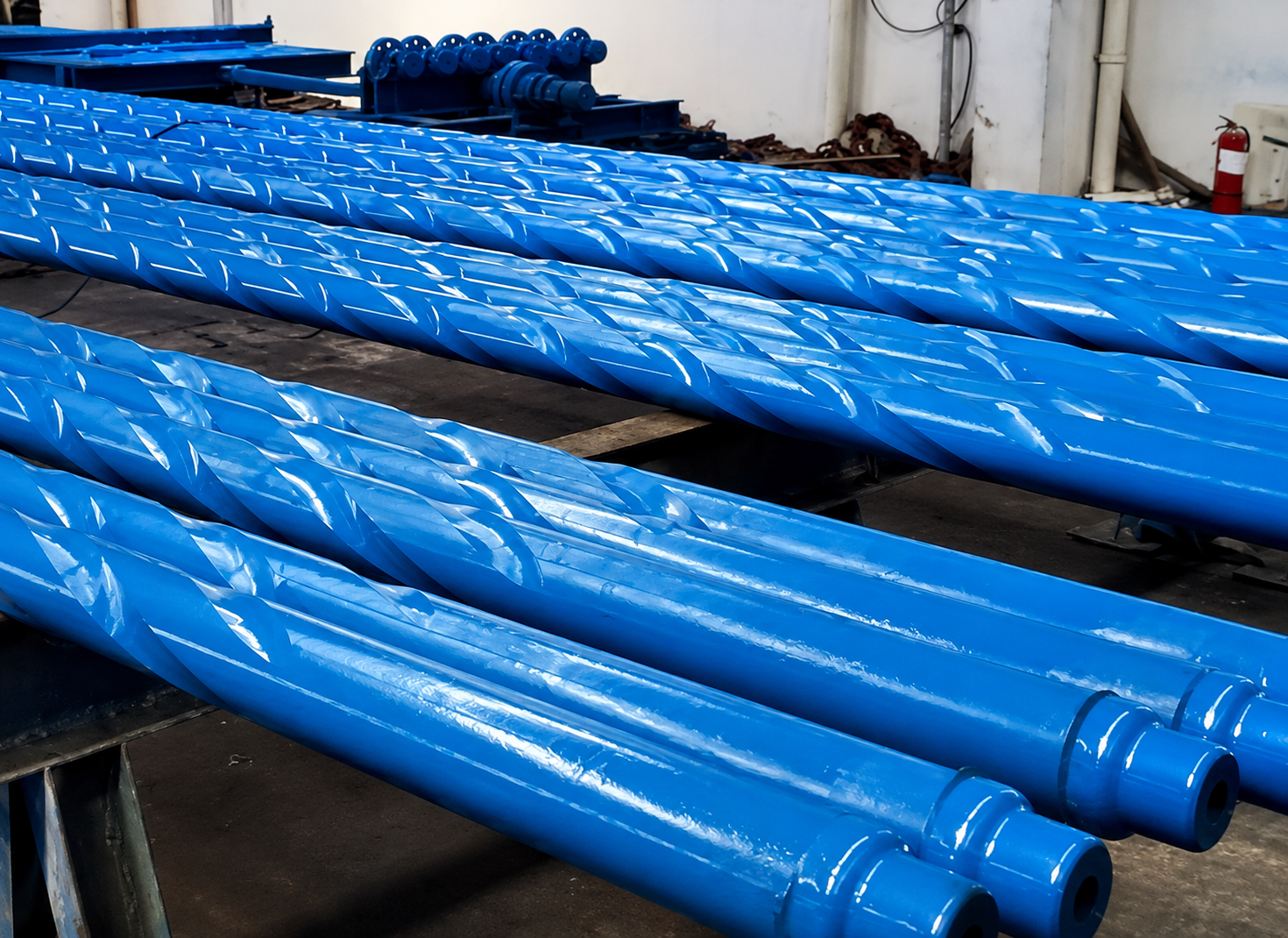
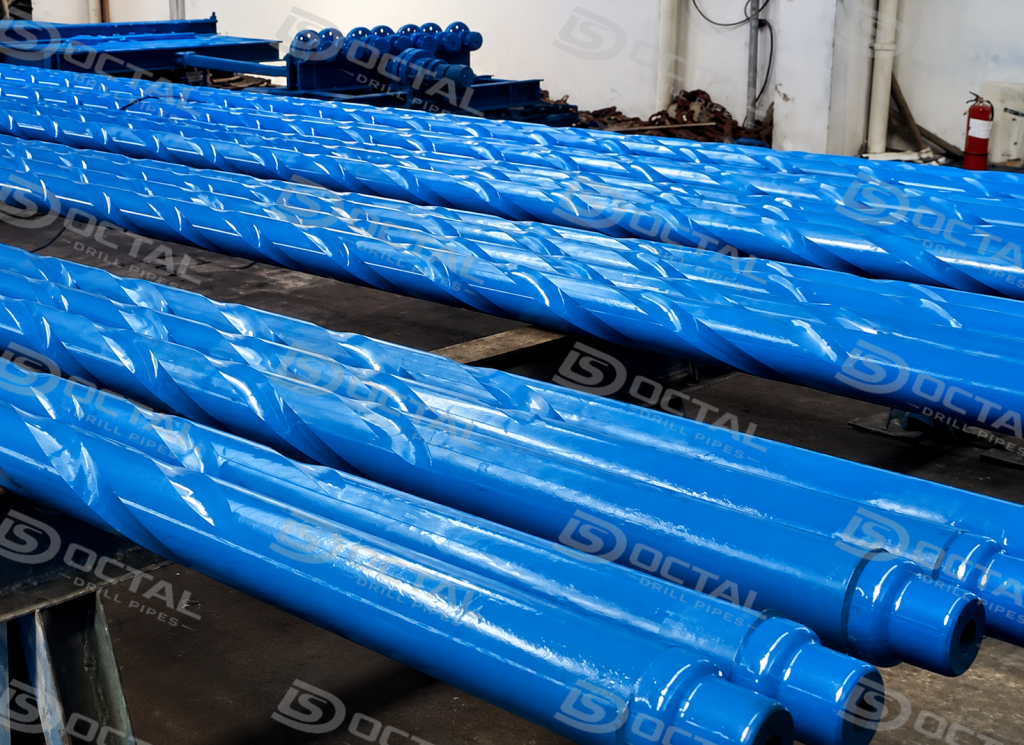
Drill String is a complete drilling assembly composed of multiple alloy steel drilling components, including drill pipe, tool joints, heavy weight drill pipe, drill collars, stabilizers, and connection subs. The main tubular components are manufactured from high-strength steel materials suitable for repeated tensile, torque, bending, and fatigue loading, while threaded connection areas are precision machined to provide reliable mechanical engagement and sealing during drilling operations.
The assembled drill string connects the surface drilling system with the bottom hole assembly (BHA), transmitting rotation and axial loads to the drill bit while providing a continuous flow path for drilling fluid circulation. During operation, each component performs a specific function: drill pipe provides the primary length and circulation channel, tool joints provide reinforced connection sections, and BHA components help control drilling direction and weight transfer.
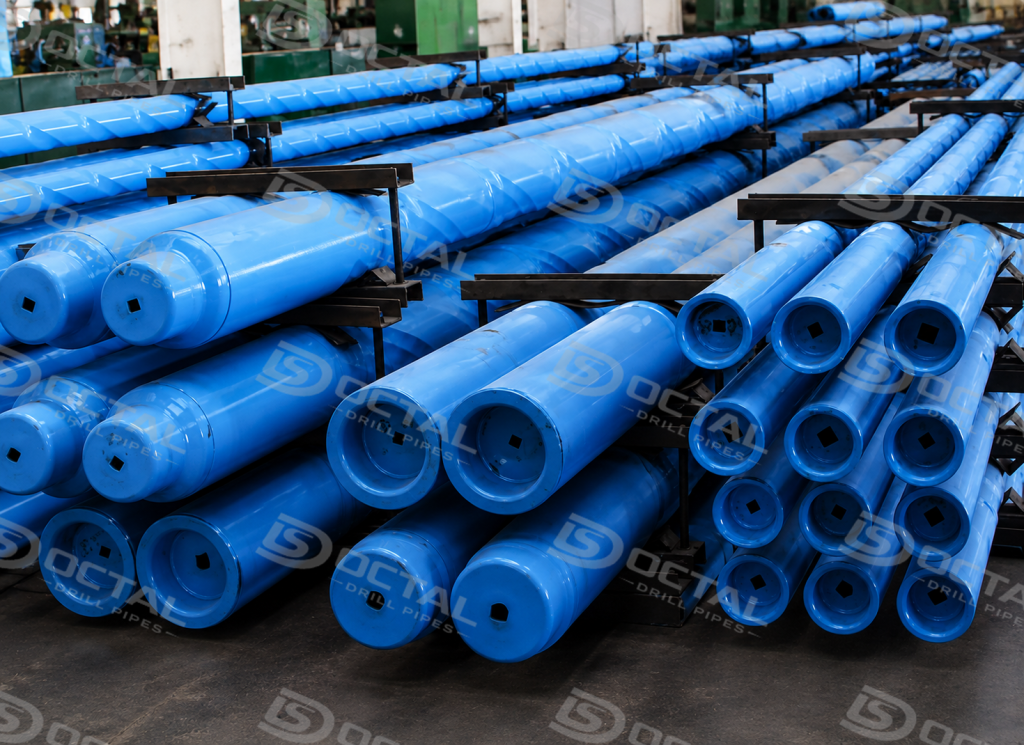
Because a drill string operates under combined mechanical and hydraulic conditions, proper component selection requires consideration of drilling depth, well trajectory, connection compatibility, hydraulic requirements, and inspection control. Material traceability, connection geometry, and manufacturing consistency are key factors affecting field reliability and service performance.
Drill String Specifications
The configuration of a drill string varies according to drilling conditions and project requirements. Drill String components can be supplied with different connection types, materials, and designs according to applicable specifications and customer requirements.
| Item | Description |
| Product Type | Drill String Assembly |
| Main Components | Drill Pipe, Tool Joint, Heavy Weight Drill Pipe, Drill Collar, Stabilizer, Subs |
| Connection Type | API and Rotary Shouldered Connections according to applicable requirements |
| Connection Components | Pin, Box, Shoulder, Thread Profile, Sealing Area |
| Application | Oil and gas drilling, directional drilling, deep well drilling, and related drilling operations |
| Configuration | Customized according to well conditions, BHA requirements, and drilling parameters |
| Documentation | Material certificates, inspection records, and traceability documents according to project requirements |
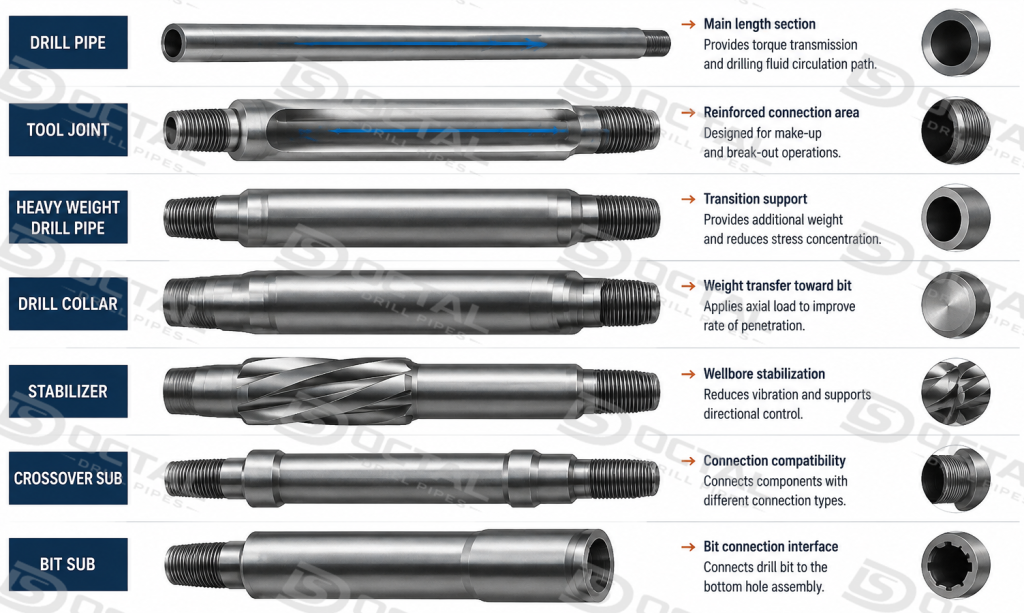
Drill String Components and Functions
A complete Drill String Assembly consists of several components with different mechanical functions. Proper configuration ensures efficient load transmission, drilling stability, and connection reliability.
| Component | Function in Drill String |
| Drill Pipe | Provides the main length of the drill string and transfers torque and drilling fluid |
| Tool Joint | Provides reinforced connection areas for repeated make-up and break-out operations |
| Heavy Weight Drill Pipe | Provides transition support between drill pipe and bottom hole assembly |
| Drill Collar | Adds weight to the lower assembly and contributes to weight transfer toward the bit |
| Stabilizer | Controls lateral movement and supports wellbore directional control |
| Crossover Sub | Connects components with different connection types |
| Bit Sub | Provides the connection interface for drilling bits |
The performance of a drill string depends on how these components interact as a complete system. A mismatch between components can affect connection performance, load distribution, and operational reliability.
Drill String Assembly Configuration
The configuration of a drill string depends on drilling objectives, formation conditions, and well design.
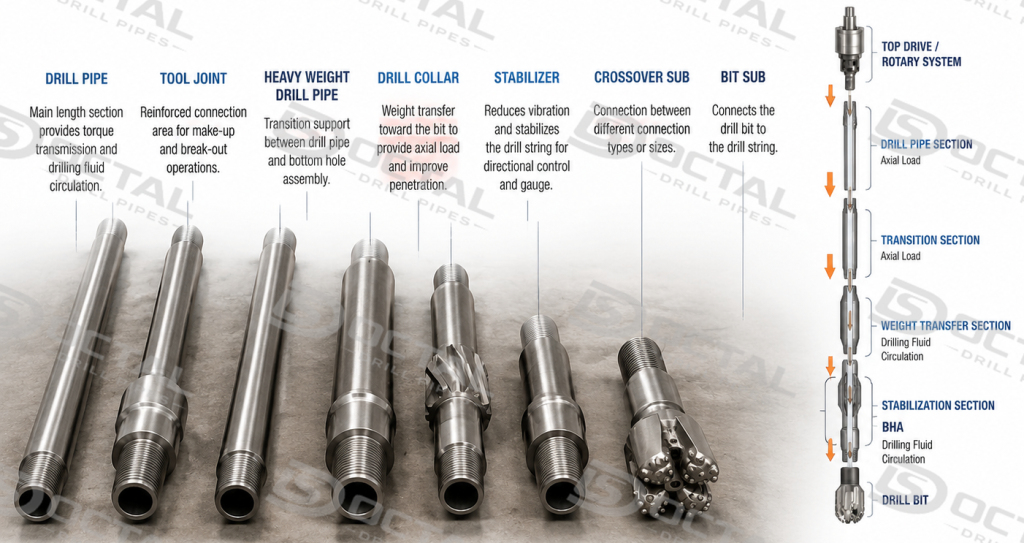
A typical arrangement includes:
Top Drive / Rotary System
↓
Drill Pipe
↓
Heavy Weight Drill Pipe
↓
Drill Collar
↓
Stabilizer and Bottom Hole Assembly Components
↓
Drill Bit
In vertical drilling, the assembly may focus on efficient weight transfer and torque transmission. In directional and horizontal drilling, additional attention is required for bending stress, fatigue loading, stabilization, and connection durability.
The correct arrangement of drill string components helps maintain drilling efficiency while reducing risks related to excessive vibration, connection damage, and premature wear.
Drill String Design Considerations
Drill String Design is based on the actual drilling environment, operating loads, and required performance of each component. A suitable drill string configuration is selected by considering how the assembly will handle torque, tension, bending, and drilling fluid circulation throughout the well section.
The main factors affecting drill string design include:
- Well depth and hole size — deeper wells generally increase tensile loading, while different hole sizes require suitable component dimensions and BHA configurations.
- Drilling direction and well trajectory — vertical, directional, and horizontal wells create different bending conditions and fatigue risks for the drill string.
- Torque requirements — the connection system and tool joint design must provide sufficient torque transfer capability during rotation.
- Axial and bending loads — drill string components must withstand the combined effects of weight, tension, compression, and repeated bending during operation.
- Hydraulic requirements — internal bore design affects drilling fluid flow efficiency, pressure loss, and cleaning performance at the bit.
- Component compatibility — drill pipe, tool joints, subs, and BHA components must have matching connection types and dimensions to ensure reliable assembly.
In directional and horizontal drilling, the drill string repeatedly passes through curved well sections, causing cyclic bending loads on the pipe body and connection areas. For these applications, connection geometry, tool joint design, and inspection control become important factors in reducing fatigue damage and maintaining operational reliability.
A properly designed drill string is not selected by one performance value alone. It requires a balanced combination of component strength, connection compatibility, hydraulic performance, and field operating conditions to achieve stable drilling performance.
Drill String vs Drill Pipe: Structure and Function Differences
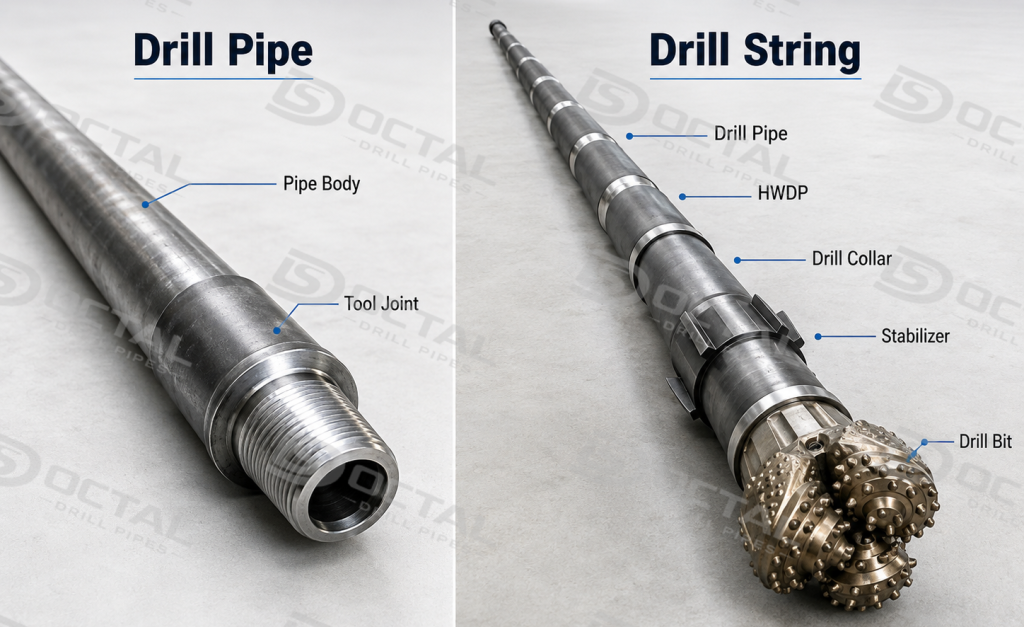
Although drill pipe is one of the main components of a drill string, the two terms describe different engineering concepts. Drill pipe refers to the individual tubular component used to transmit rotation and drilling fluid, while drill string is the complete assembled system consisting of drill pipe, tool joints, heavy weight drill pipe, drill collars, stabilizers, subs, and other bottom hole assembly (BHA) components.
The primary difference is that drill pipe mainly provides the extended connection between the surface equipment and the bottom hole assembly, whereas the drill string is designed as a complete load-carrying and drilling system. During drilling operations, the drill string transfers torque from the top drive to the bit, applies controlled weight toward the formation, and provides a continuous circulation path for drilling fluid.
| Comparison Item | Drill Pipe | Drill String |
|---|---|---|
| Definition | Individual tubular drilling component | Complete assembled drilling system |
| Main Components | Pipe body and tool joints | Drill pipe, HWDP, drill collars, stabilizers, subs, BHA and bit |
| Primary Function | Transmits rotation and drilling fluid circulation | Transfers mechanical loads and performs drilling operations |
| Load Handling | Mainly carries tensile load and rotational torque | Handles combined torque, tension, compression, bending and hydraulic loads |
| Application Role | Forms the long connection section of the drilling assembly | Determines overall drilling performance and wellbore control |
A properly designed drill string requires selecting suitable drill pipe specifications together with other components according to well depth, hole size, trajectory, torque requirements, hydraulic conditions, and connection compatibility. Therefore, drill pipe should be considered as an essential building block of the drill string rather than an independent replacement for the complete assembly.
Drill String Connection and Drill Pipe Threads
The connection system is one of the most important parts of a Drill String because it links individual drilling components together and transfers the loads generated during drilling. Although drill pipes provide the main length of the drill string, the connection areas are responsible for transmitting torque, maintaining sealing performance, and supporting repeated make-up and break-out operations in the field.
A typical drill string connection is built around a rotary shouldered connection, which is commonly used to connect drill pipe, tool joints, subs, and other drilling components. The tool joint is the reinforced section at the end of a drill pipe, providing the larger threaded connection area required to handle higher mechanical loads during drilling.
The main connection features include:
- Pin and Box — the male and female threaded sections that connect individual components.
- Thread Profile — controls how the connection engages and transfers mechanical loads.
- Shoulder Surface — provides metal-to-metal contact for torque transmission and connection stability.
- Sealing Area — helps maintain pressure integrity during drilling fluid circulation.
- Connection Geometry — determines whether different components can be safely matched and assembled.
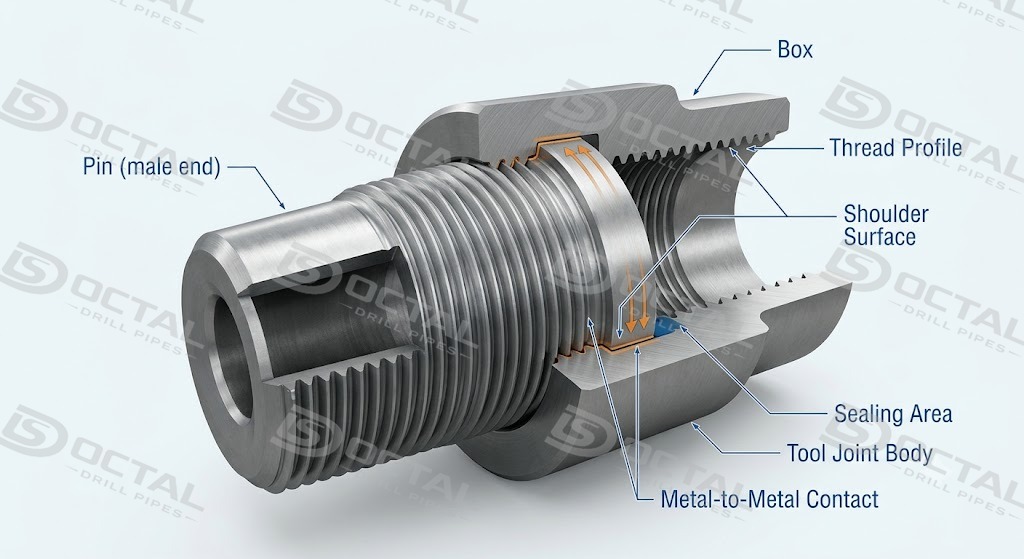
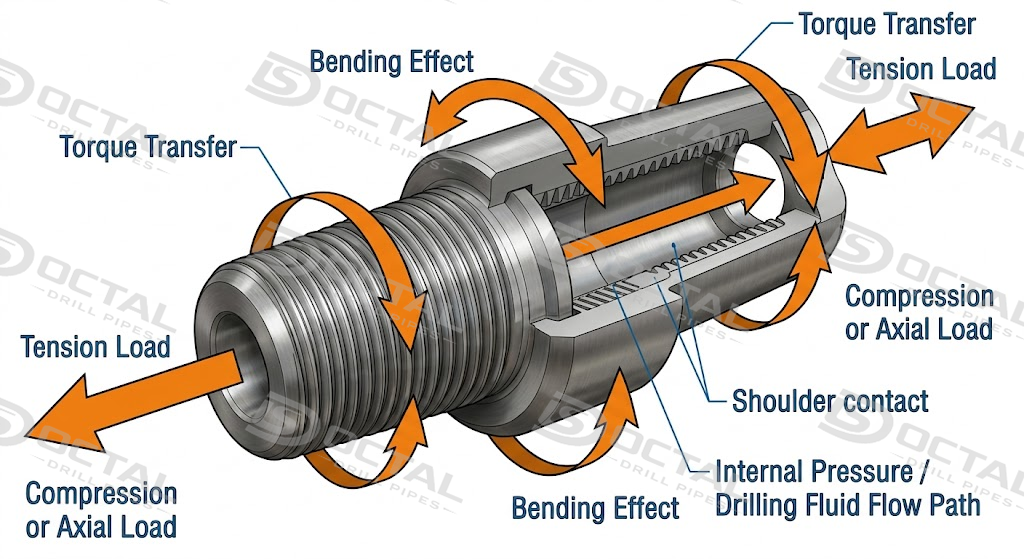
Drill Pipe Threads require precise machining and inspection because incorrect thread matching or damaged connection surfaces can lead to make-up problems, leakage, premature wear, or connection failure. For this reason, drill string selection should consider not only the nominal connection size, but also thread profile, tool joint dimensions, shoulder design, and inspection requirements.
API standard connections and premium connection designs are selected according to drilling conditions. API connections provide standardized compatibility for general drilling applications, while premium designs typically use optimized thread and shoulder geometry for more demanding conditions, such as higher torque requirements, directional drilling, or repeated loading cycles.
Drill String Manufacturing Process and Quality Control
The manufacturing control of a Drill String is focused on producing multiple high-load drilling components that can operate together as a complete system. Unlike a single tubular product, a drill string combines drill pipes, tool joints, heavy weight drill pipes, drill collars, stabilizers, and connection subs, where differences in material properties, machining accuracy, or connection dimensions may affect overall drilling performance.
Because drill string components are exposed to continuous rotation, axial tension, bending stress, and repeated make-up and break-out cycles, manufacturing quality directly influences connection reliability, fatigue resistance, and service performance in the field.
Component Manufacturing and Material Control
The manufacturing process begins with steel materials selected according to the mechanical requirements of each drill string component. Drill pipe bodies, tool joints, and other load-bearing components require controlled material properties to withstand the combined stresses generated during drilling operations.
Material control typically includes:
- Verification of steel grade and material identification
- Heat treatment control according to applicable requirements
- Mechanical property verification
- Heat and lot traceability throughout production
Maintaining material consistency is essential because different drill string components transfer loads together during operation. A mismatch in material condition or mechanical performance may increase the risk of premature fatigue or connection damage.
Precision Machining of Connection Areas
The connection section is one of the most critical manufacturing areas in a drill string. Tool joints and connection subs contain precision-machined pin and box sections that must maintain accurate thread geometry, proper shoulder contact, and reliable sealing performance during repeated make-up and break-out operations.
The machining process controls the critical features of the connection area, including thread profile accuracy, shoulder surface condition, connection dimensions, sealing area integrity, and compatibility between different drilling components. These factors directly influence torque transmission, pressure containment, load distribution, and the long-term reliability of the drill string under complex drilling conditions.
Quality Control and Traceability
Quality control for Drill String components focuses on maintaining consistency from material selection to final connection inspection. Since drill strings are assembled from different components, accurate dimensions and reliable connection conditions are required to ensure proper assembly and stable operation in the field.
Key quality controls include:
- Material verification and traceability to confirm steel grade, production records, and component identification.
- Dimensional inspection to ensure drill pipe, tool joints, and connection components meet required specifications.
- Thread and connection inspection to verify thread profile, shoulder condition, and connection fit.
- Final inspection records to document manufacturing status and inspection results before delivery.
Quality documentation can include material certificates, dimensional reports, thread inspection records, and traceability documents according to applicable API specifications, project requirements, and approved ITP requirements.
Standards and Technical Compliance
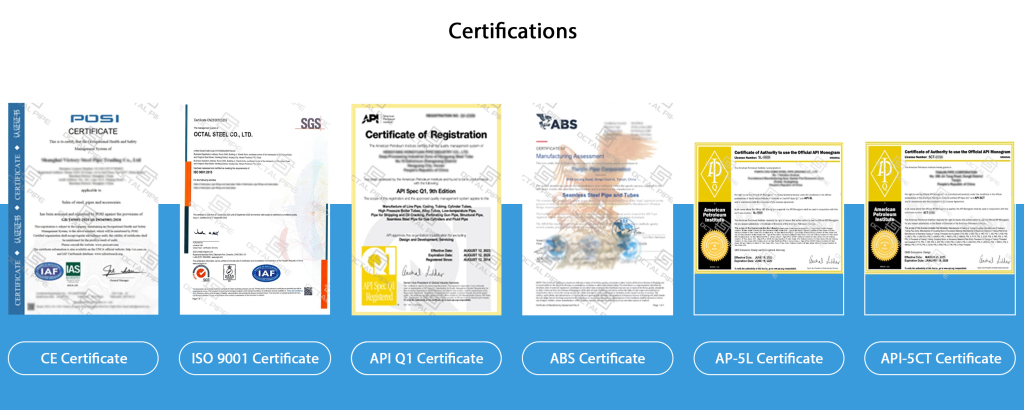
Drill String components are manufactured and inspected according to applicable drilling industry standards, including API Spec 5DP for drill pipe requirements, API Spec 7-1 for rotary drilling equipment, and API Spec 7-2 for rotary shouldered connection design, threading, gauging, and inspection requirements. Additional requirements may be applied according to project specifications, customer requirements, and approved Inspection and Test Plans (ITP).
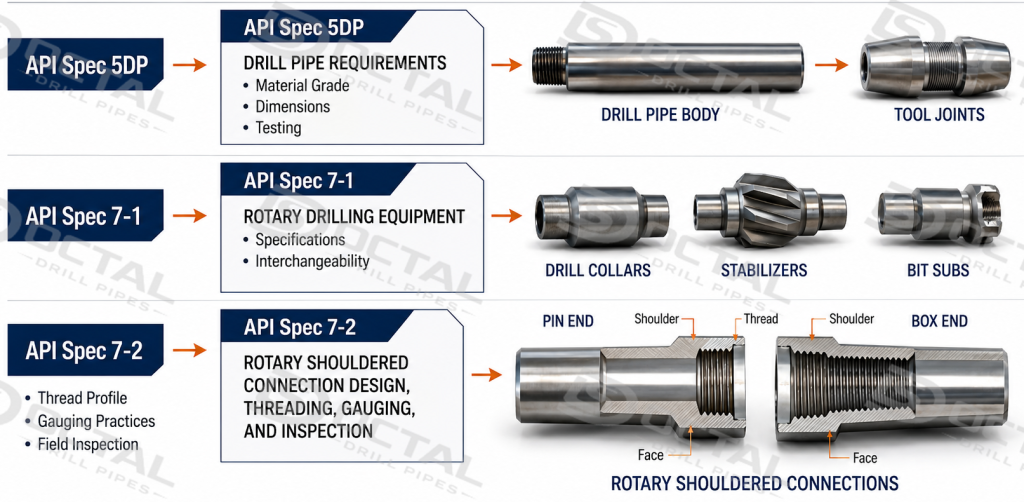
Because a drill string is assembled from multiple components such as drill pipe, tool joints, heavy weight drill pipe, and connection subs, compliance with these standards helps maintain consistency between different components. Proper control of dimensions, materials, and connection requirements is essential for reliable assembly and stable drilling performance.
For specific drilling projects, the applicable standards, inspection scope, and documentation requirements should be confirmed based on operating conditions, connection types, and customer specifications.
Drill String Applications
A Drill String is used in drilling operations where torque transmission, load transfer, and drilling fluid circulation are required between the surface rig and the bottom hole assembly. Different drilling environments place different demands on drill string configuration, connection performance, and component selection.
Directional and Horizontal Drilling
Directional and horizontal wells require careful drill string configuration because curved well sections increase bending stress and repeated fatigue loading on the pipe body and connection areas. Components such as stabilizers, suitable connection systems, and properly selected drill pipe sections help maintain drilling control and improve operational reliability during complex well trajectories.
Deep Well Drilling
Deep well applications place higher demands on drill string strength and connection reliability because the assembly must withstand increased tensile loads, extended operating time, and repeated drilling cycles. Proper material selection, connection compatibility, and manufacturing quality are important factors for maintaining stable performance in deeper well sections.
Drill String Supply Scope and Configuration
A Drill String is configured from multiple drilling components based on well conditions, drilling requirements, and bottom hole assembly (BHA) design. Octal provides a range of drill string components that can be supplied individually or combined into a suitable drilling assembly according to specific application requirements.
Octal’s drill string supply scope includes:
- Drill Pipe
- Heavy Weight Drill Pipe
- Drill Collars
- Tool Joint Components
- Stabilizers
- Crossover Subs
- Bit Subs
- Other Rotary Shouldered Connection Components
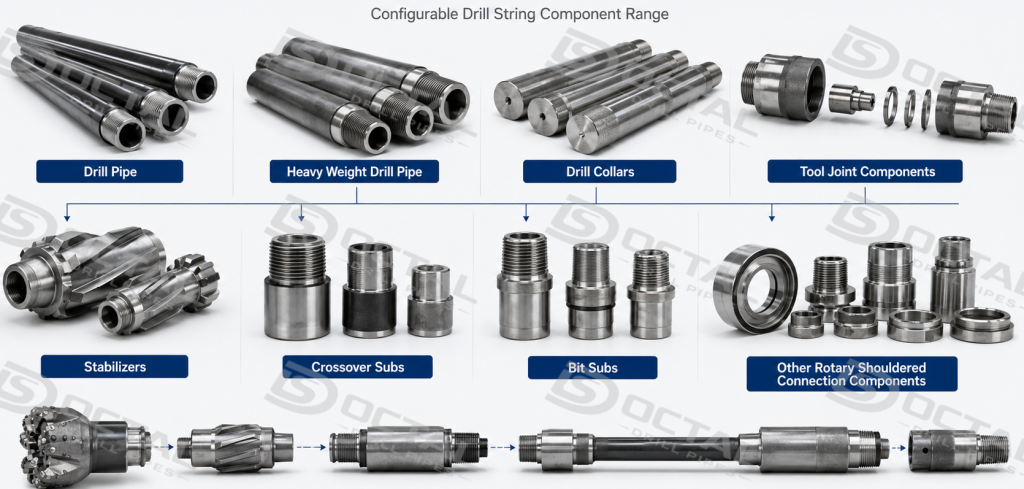
Different components can be configured according to drilling depth, well trajectory, connection requirements, and BHA arrangement. Proper selection of component type, connection design, and dimensional compatibility helps ensure reliable load transfer and stable performance during drilling operations.
Octal can also support technical requirements related to product specifications, connection compatibility, inspection documentation, and project-specific requirements. Supply scope and documentation can be adjusted according to applicable standards, customer specifications, and approved Inspection and Test Plans (ITP).
FAQ
What components are included in a drill string?
A Drill String typically includes drill pipe, tool joints, heavy weight drill pipe, drill collars, stabilizers, and connection components. The exact configuration depends on drilling conditions and BHA requirements.
How does a drill string transfer torque to the drill bit?
Torque is transmitted from the surface rotary system through the drill string connections to the bottom hole assembly and drill bit. Connection geometry, shoulder contact, and thread design influence load transfer performance.
What factors affect drill string selection?
Drill String selection depends on well depth, drilling direction, torque requirements, hydraulic conditions, connection compatibility, and bottom hole assembly configuration.
How is drill string quality controlled during manufacturing?
Quality control includes material traceability, dimensional inspection, thread verification, connection inspection, and production documentation according to applicable specifications and project requirements.