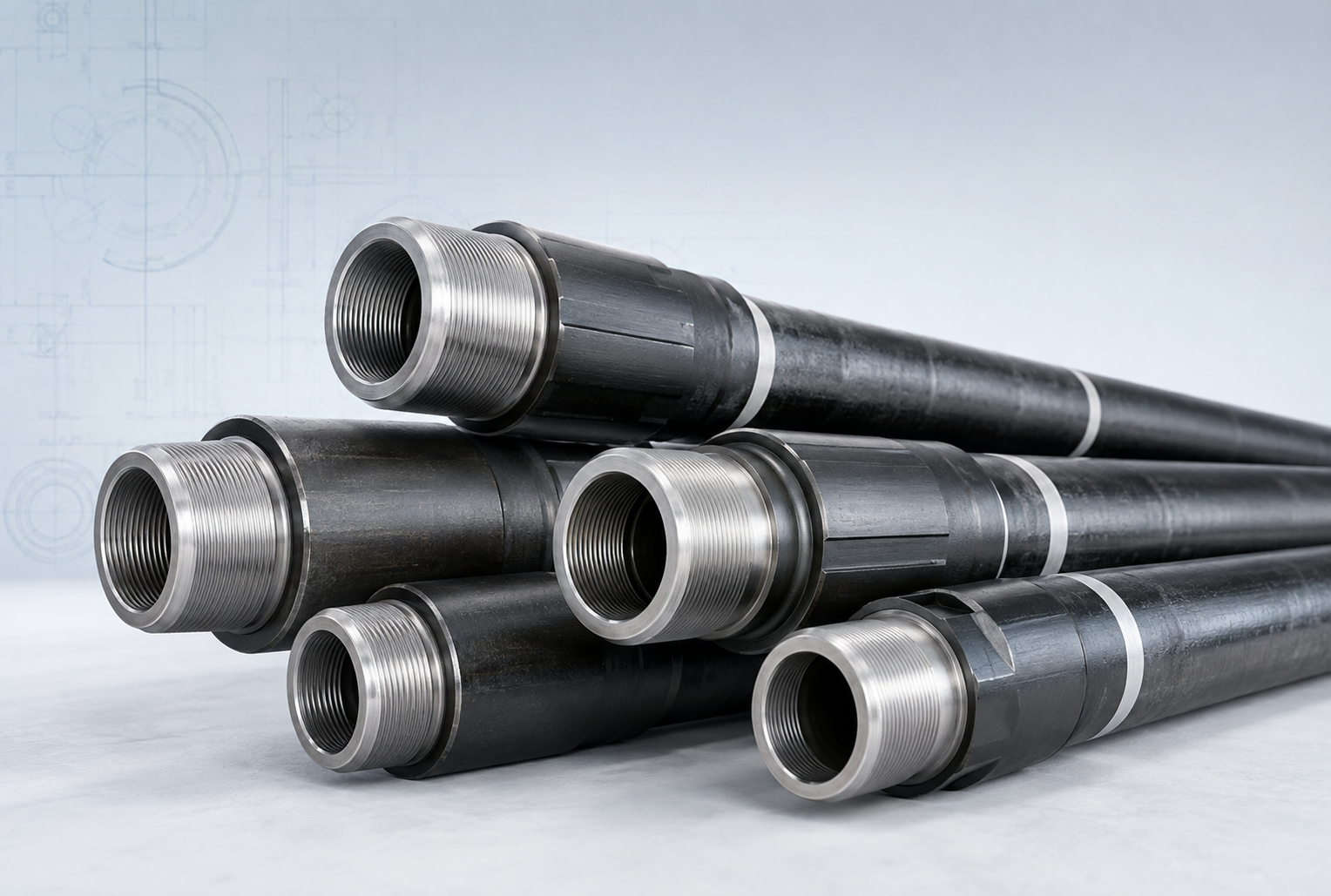
Drill pipe supplier selection starts with one practical question: can the supplier keep the approved pipe specification, connection configuration, inspection records, marking, and delivered joints consistent from quotation through shipment? A line item such as S135 drill pipe may identify the basic product family, but it does not define the complete joint that will arrive at the rig.
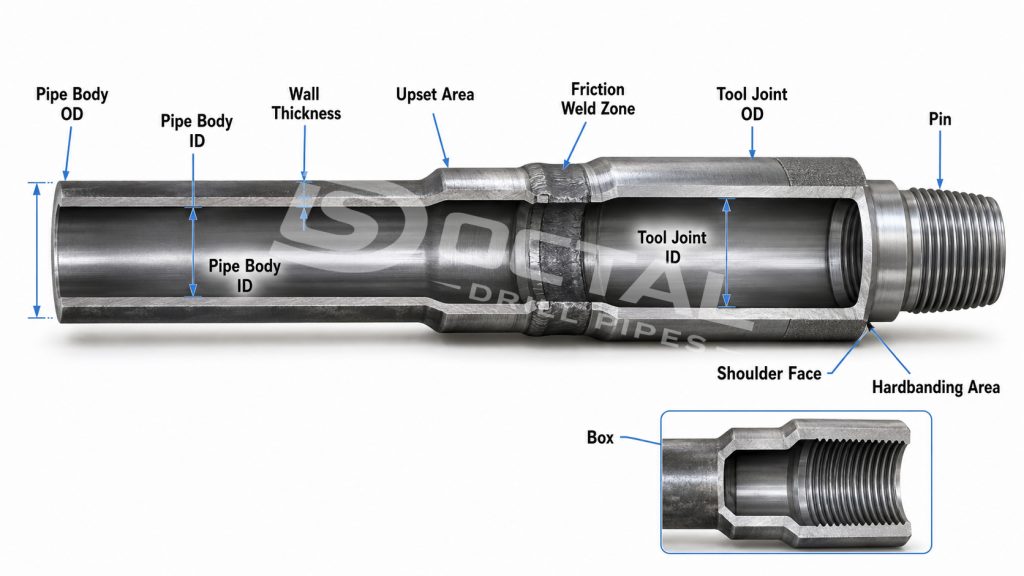
For a perforación contractor or OCTG buyer, the finished configuration matters. tubería-body dimensións, nominal peso, upset, tool-junta geometry, rotary-shouldered unión, weld-zone condition, inespecIFicacióNCión scope, and traceability all affect whether new tubería can be introduced into an existing sarta de perforación without creating avoidable coMPatibility or acceptaNCe problems. API especIFicación 5DP itself treats tubería de perforación as a steel tubería de perforación body with upset ends and weld-on unións, rather than as tubería body alone.
What Buyers Are Actually Approving
The first proveedor review should happen before precio coMParISOn. The buyer needs to know exactly what technical configuration the quotation represents.
A finished tubería de perforación order normally brings several product elements together. IF the purchase description identIFies only tubería OD and grado, important details may remain unresolved until production or, worse, receiving inespecIFicacióNCión.
| Supply Control Point | What Should Be Confirmed Before Approval |
|---|---|
| tubería body | OD, nominal peso or espesor de pared, grado and required longitud range |
| Upset | IU, EU, IEU or the especIFicaciónIFied tubería-end configuration |
| unión | OD, ID, finished geometry and required external features |
| unión | Exact rotary-shouldered unión designation or approved proprietary unión |
| Weld zone | Manufacturing source and applicable inespecIFicacióNCión / acceptaNCe records |
| Surface options | Hardbanding, internal coating or other project-especIFicaciónIFied treatment |
| inespecIFicacióNCión scope | estándar requirements plus any PO, ITP or operator-especIFicaciónIFic inespecIFicacióNCión |
| Marking | Product identity linked to the supplied documentation |
| Shipment documents | material records, inespecIFicacióNCión release and packing records corresponding to the delivered juntas |
This is where a capable proveedor adds value. The job is not simply to find tubería with the requested grado stamped on it. The proveedor has to stop mismatched eespecIFicaciónIFicacións from progressing through procurement.
A buyer reviewing API 5DP tubería de perforación eespecIFicaciónIFicacións should therefore work from the complete finished-junta description rather than nominal tubería tamaño alone. Our API 5DP tubería de perforación eespecIFicaciónIFicacións cover the body tamaños, grados, upset configurations and unión options that need to be considered together.
VerIFy the API Scope Behind the Quotation
The phrase API 5DP should lead to a more especIFicaciónIFic discussion, not end it.
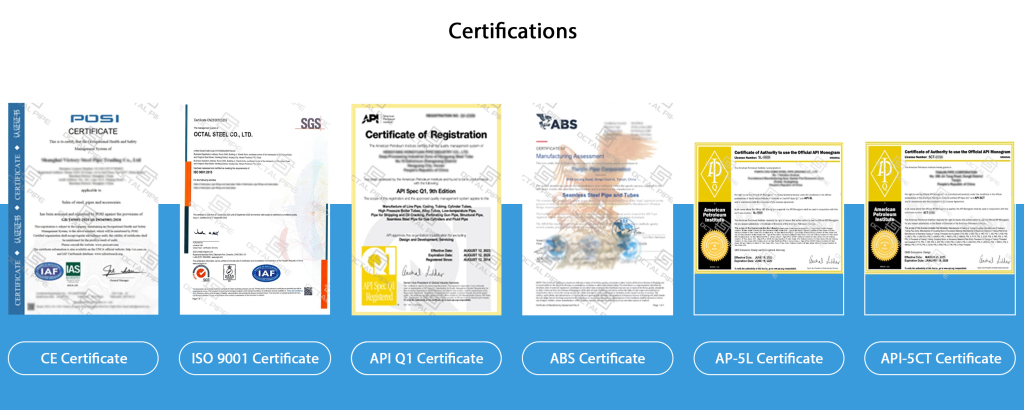
API describes especIFicación 5DP as the technical entrega eespecIFicaciónIFicación for steel tubería de perforación with upset tubería-body ends and weld-on unións. API’s licensing documents also distinguish between separate product scopes instead of treating every activity under one generic perforar-tubería label.
| API 5DP Item | Current Published Information |
|---|---|
| Main eespecIFicaciónIFicación | API especIFicación 5DP |
| Current edition listed by API | 2nd Edition |
| Edition publication | May 2020 |
| Addendum | Addendum 1, January 2025 |
| Addendum 1 monograma API effective date | July 2, 2025 |
| Latest errata currently listed by API | Errata 3, March 2025 |
| Monogram product scopes | tubería de perforación Body; unións; tubería de perforación (Assembly) |
For purchasing and inespecIFicacióNCión, the applicable edition, addendum and licensed product scope should be identIFied before order approval. “API 5DP” alone does not establish whether the quoted manufacturing scope covers the tubería body, unión or finished tubería de perforación assembly.
This distiNCtion is particularly important when evaluating an API 5DP tubería de perforación proveedor. The buyer should verIFy what the relevant fabricante’s licensed scope actually covers and which organization is responsible for the finished assembly being supplied.
An API claim on a quotation does not answer questions such as who produced the tubería body, where the unións came from, or who released the assembled junta. Those details belong in the technical and traceability review.
Follow the Production Chain, Not the CoMPany Label
The dIFfereNCe between a proveedor and a tubería de perforación fabricante is often discussed too simplistically.
Buying directly from a fabricante can shorten part of the supply chain, but ownership of manufacturing equipment is not the only issue that matters to the project. A proveedor may coordinate production from qualIFied sources, maintain stock, manage third-party inespecIFicacióNCión, or assemble a project-especIFicaciónIFic entrega from approved fabricantes.
The buyer still needs a clear answer to the same questions:
- Who fabricaciónd the tubería body?
- Who supplied or fabricaciónd the unión?
- Who completed and released the finished assembly?
- Which inespecIFicacióNCión records belong to that material?
- Can the physical marking be recoNCiled with the documents delivered with the shipment?
A proveedor that cannot answer these questions consistently creates a traceability problem even IF the product description on the commercial invoice looks correct.
Conversely, a supply chain involving more than one organization is not automatically a problem IF the approved manufacturing source and document trail remain clear.
For procurement purposes, the stronger test is therefore not simply proveedor or fabricante? It is whether the technical responsibility remains visible from the approved eespecIFicaciónIFicación to the junta received at the yard.
Why a Short tubería de perforación Description Can Be INComplete
Nominal tubería OD, peso, grado and unión designation are important purchasing identIFiers, but they still may not fully define the finished tubería de perforación junta. Tool-junta OD and ID can change the actual unión geometry and the published operating limits even when the tubería body itself remains uNChanged.
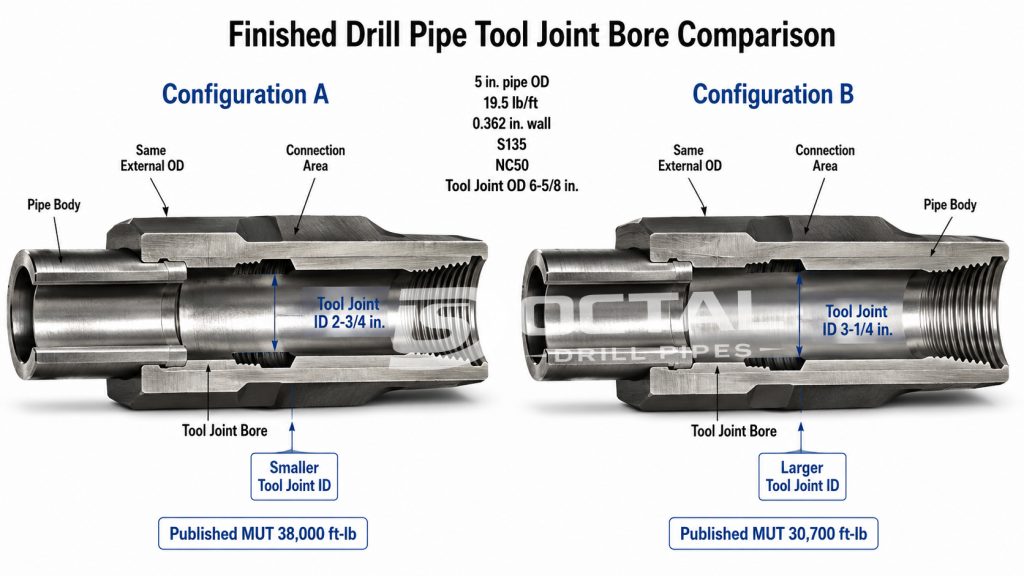
A useful example appears in NOV Grant Prideco’s published HDD tubería de perforación configurations. The two juntas below use the same tubería-body OD, nominal peso, espesor de pared, S135 grado and NC50 unión. The tool-junta OD is also identical. The main dimensiónal dIFfereNCe is the tool-junta ID.
| Published Configuration | Configuration A | Configuration B |
|---|---|---|
| tubería OD | 5 in. | 5 in. |
| Nominal peso | 19.5 lb/ft | 19.5 lb/ft |
| espesor de pared | 0.362 in. | 0.362 in. |
| grado | S135 | S135 |
| unión | NC50 | NC50 |
| Tool-junta OD | 6-5/8 in. | 6-5/8 in. |
| Tool-junta ID | 2-3/4 in. | 3-1/4 in. |
| Published maximum MUT | 38,000 ft-lb | 30,700 ft-lb |
| Published maximum pullback | 560,800 lb | 560,800 lb |
The dIFfereNCe is not minor. INCreasing the published tool-junta ID from 2-3/4 in. to 3-1/4 in. iNCreases the bore by 0.500 in., while the published maximum make-up par decreases from 38,000 ft-lb to 30,700 ft-lb. That is a dIFfereNCe of 7,300 ft-lb, or about 19% relative to the 38,000 ft-lb configuration. The published maximum pullback remains uNChanged at 560,800 lb.
This coMParISOn does not mean that 38,000 ft-lb or 30,700 ft-lb is a universal API NC50 make-up par. These are fabricante-published values for the especIFicaciónIFic Grant Prideco HDD configurations shown above. Their value in a proveedor review is to demonstrate that the unión name alone does not describe every performaNCe-relevant feature of the finished junta.
For an petróleofield tubería de perforación purchase, the same procurement priNCiple applies: body OD, nominal peso and grado should be reviewed together with the exact unión, tool-junta OD and ID, upset configuration and any fabricante-especIFicaciónIFic make-up requirements. A description such as 5 in. S135 NC50 tubería de perforación may therefore require further definition before the order is technically complete.
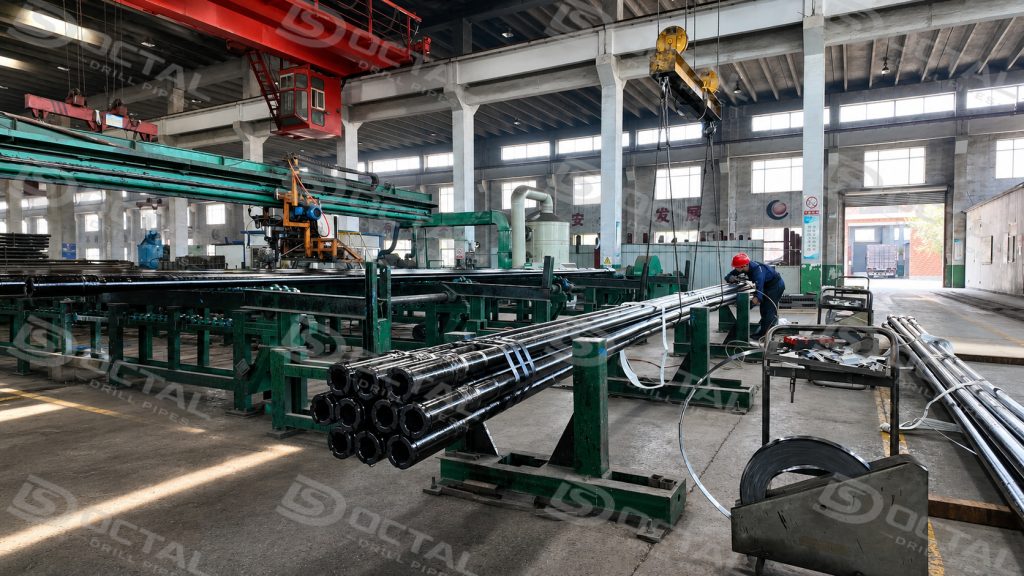
inespecIFicacióNCión EvideNCe Should Match the Product Being Shipped
inespecIFicacióNCión records are useful only when the measured result can be coMPared with a defined acceptaNCe requirement. Statements such as chemical composition checked, dureza tested, or iMPact tested do not tell a buyer whether the material actually passed.
For tubería de perforación supplied to API 5DP, the review should therefore go beyond a list of inespecIFicacióNCión items. The certIFicado or inespecIFicacióNCión report should identIFy the relevant grado, heat or lot, test condition, measured value, and applicable acceptaNCe limit. The same priNCiple applies to tubería body material, unións and the friction-weld zone.
Chemical Composition
material certIFicados should be reviewed against the limits that apply to the ordered grado rather than checked only for the grado designation. API 5DP Addendum 1 establishes especIFicaciónIFic phosphorus and sulfur limits for tubería de perforación bodies and unións.
| Product Element | Maximum P | Maximum S |
|---|---|---|
| grado E tubería body | 0.030% | 0.020% |
| grados X, G, S and V tubería body | 0.020% | 0.015% |
| grados E, X, G, S and V unións | 0.020% | 0.015% |
| SS75 tubería body | 0.015% | 0.010% |
| SS95 / SS105 tubería body | 0.015% | 0.010% |
| SS75 / SS95 / SS105 unións | 0.015% | 0.010% |
For an S135 order, for example, the grado S tubería body falls within the X/G/S/V group. The reported heat chemistry should therefore show phosphorus at or below 0.020% and sulfur at or below 0.015%. A certIFicado showing either element above these limits would require technical review rather than acceptaNCe based only on the S135 designation.
The SS grados have additional alloy and microstructure requirements, so they should not be treated as ordinary S-grado tubería de perforación with lower phosphorus and sulfur values.
Weld-Zone dureza
The friction-weld zone between the upset tubería de perforación body and the unión has explicit dureza limits. API 5DP distinguishes the requirements by grado rather than applying one dureza value to every tubería de perforación.
| Weld-Zone Requirement | Maximum dureza |
|---|---|
| grados E, X, G and S — surface dureza | 37 HRC |
| grados E, X, G and S — mean through-wall dureza | 37 HRC |
| grado V — surface dureza | 40 HRC |
| grado V — mean through-wall dureza | 40 HRC |
| SS grados — surface dureza | 32 HRC |
For an S135 junta, this gives the buyer a direct acceptaNCe refereNCe. A recorded weld-zone surface dureza of 35 HRC is below the applicable 37 HRC maximum, whereas a result of 39 HRC exceeds that limit.
These values illustrate how the acceptaNCe criterion is applied; they are not production results from a particular fabricante.
When a dureza result exceeds the especIFicaciónIFied limit, the affected area requires further evaluation and retesting according to the applicable API 5DP procedure. Continued noNConformaNCe can lead to rejection unless an allowable re-heat-treatment and retest route is successfully completed.
This is considerably more meaningful in a proveedor review than a certIFicado carrying only the statement weld dureza tested.
Tool-junta dureza
Tool-junta dureza should also be checked against an acceptaNCe range rather than treated as a general indication of strength.
For non-SS unión cajaes, API 5DP especIFicaciónIFies the following dureza requirement:
| Tool-junta Item | API 5DP Requirement |
|---|---|
| Non-SS unión caja dureza | 285–341 HBW |
A measured result should therefore fall within 285–341 HBW for the applicable non-SS caja unión.
A value above the upper limit should not be interpreted simply as a harder or stronger unión. The measured value has to remain within the especIFicaciónIFied material condition.
Heat-control dureza testing should also remain linked to the applicable heat of steel so that the buyer can determine which production material the result represents.
Charpy IMPact Requirements
IMPact testing provides another measurable point for proveedor qualIFication, particularly for higher-strength tubería de perforación.
For PSL-1 tubería de perforación bodies in grados X, G, S and V, longitudinal Charpy V-notch testing is conducted at 21 °C ± 3 °C. The required absorbed energy depends on especIFicaciónimen tamaño.
| CVN especIFicaciónimen tamaño | Minimum Average Absorbed Energy | Minimum Individual especIFicaciónimen Energy |
|---|---|---|
| 10 × 10 mm | 54 J | 47 J |
| 10 × 7.5 mm | 43 J | 38 J |
| 10 × 5 mm | 30 J | 26 J |
For a full-tamaño 10 × 10 mm especIFicaciónimen, a report showing only “iMPact test passed” leaves out information needed for verIFication. The buyer should be able to see that the test was performed at the applicable temperature and that the reported set satisfies both the 54 J minimum average and the 47 J minimum individual especIFicaciónimen requirement.
Reduced-tamaño especIFicaciónimens have lower numerical energy requirements, which is why especIFicaciónimen tamaño must remain visible on the test report. A 30 J result cannot be evaluated correctly without knowing whether the especIFicaciónimen was 10 × 10 mm, 10 × 7.5 mm or 10 × 5 mm.
Test FrequeNCy
A compliant test result also has to represent the correct production lot. One satisfábrica tensile or Charpy certIFicado should not automatically be assumed to cover an unlimited quantity of tubería de perforación.
API 5DP changes the PSL-1 test frequeNCy according to grado group and nominal tubería tamaño.
| PSL-1 tubería de perforación Body | Chemical Analysis | Tensile Test | Charpy IMPact Test |
|---|---|---|---|
| grado E, below 6-5/8 in. | 2 product analyses per heat | 1 per 400 or per lot* | — |
| grado E, 6-5/8 in. and above | 2 product analyses per heat | 1 per 200 or per lot* | — |
| grados X/G/S/V, below 6-5/8 in. | 2 product analyses per heat | 1 per 200 or per lot* | 1 per 200 or per lot* |
| grados X/G/S/V, 6-5/8 in. and above | 2 product analyses per heat | 1 per 100 or per lot* | 1 per 100 or per lot* |
Where the requirement is expressed by quantity or lot, the smaller applicable quantity governs.
This has a direct procurement implication. A 5 in. S135 PSL-1 tubería de perforación body falls into the X/G/S/V group below 6-5/8 in. For that category, the tensile and Charpy test frequeNCy is 1 per 200 products or per lot, whichever represents the smaller applicable quantity.
IF a proveedor provides one tensile report for a shipment, the buyer should therefore also check the heat and lot identIFication before deciding how much material that report actually represents.
For X/G/S/V tubería at 6-5/8 in. and above, the frequeNCy becomes 1 per 100 products or per lot for both tensile and Charpy testing. This is why tested according to API 5DP is not enough information for a detailed inespecIFicacióNCión review.
dimensiónal VerIFication
dimensiónal inespecIFicacióNCión also needs a defined method and coverage.
The espesor de pared of each tubería de perforación body should be verIFied through the applicable documented inespecIFicacióNCión procedure. inespecIFicacióNCión coverage needs to extend along the tubería body, while areas not adequately covered by automated equipment, iNCluding relevant transition areas near the upset, require an appropriate supplementary verIFication method.
The measurement system itself also needs controlled accuracy.
| dimensiónal VerIFication Item | Requirement |
|---|---|
| tubería bodies requiring wall-espesor verIFication | Each tubería body |
| longitud measuring-device accuracy | ±0.03 m |
| Equivalent imperial accuracy | ±0.1 ft |
The important point for a tubería de perforación proveedor is not simply that dimensións appear on a final certIFicado. The inespecIFicacióNCión record should come from a controlled measurement process capable of demonstrating that the supplied tubería meets the applicable dimensiónal requirement.
What the Buyer Should See in the inespecIFicacióNCión Package
The acceptaNCe values above should remain connected to the production records for the actual shipment.
| inespecIFicacióNCión Area | What the Buyer Should Be Able to VerIFy |
|---|---|
| Chemical composition | Heat analysis and applicable P / S limits |
| Tensile properties | Actual results, heat/lot identity and test frequeNCy |
| Charpy iMPact | especIFicaciónimen tamaño, test temperature, individual values and average value |
| Tool-junta dureza | Actual dureza result against the applicable range |
| Weld-zone dureza | Measured surface / through-wall results against the grado limit |
| dimensións | Applicable measured dimensións and controlled inespecIFicacióNCión method |
| Test coverage | Quantity represented by each test according to heat / lot |
| Product release | inespecIFicacióNCión records corresponding to the juntas being shipped |
A technically useful inespecIFicacióNCión package therefore answers three questions at the same time: what was tested, what numerical requirement applied, and which physical tubería de perforación juntas the result represents.
That is the level of evideNCe a buyer should expect when qualIFying a tubería de perforación supply, rather than relying on general statements such as 100% calidad controlled or strictly inespecIFicaciónted.
Traceability Should Reach the Physical junta
Traceability works only when the document trail survives all the way to receiving inespecIFicacióNCión.
A useful supply chain keeps the relationship between the purchase eespecIFicaciónIFicación, manufacturing identity, inespecIFicacióNCión release, physical marking and shipment records intact. When tubería is split between deliveries, repacked, inespecIFicaciónted by a third party or supplied from dIFferent production lots, maintaining that relationship becomes more important, not less.
For the buyer, a practical traceability chain looks like:
Approved specification → material identity → pipe / tool-joint records → assembly inspection → product marking → release records → packing list
The exact document names can vary by fabricante and project. The priNCiple should not.
IF a receiving inespecIFicacióntor finds a junta in the bundle, the identIFication on that junta should provide a defensible route back to the relevant product documentation. IF that link is missing, the existeNCe of a large document package does not necessarily provide usable traceability.
This is one of the more important distiNCtions between a proveedor that only moves inventory and one that manages technical entrega.
What perforación Contractors Need from a Supply Partner
A tubería de perforación proveedor for perforación contractors works in a dIFferent environment from a proveedor filling a generic stock order. New tubería often has to enter an existing rig fleet, existing sarta de perforación or established maintenaNCe system.
For a replacement requirement, the proveedor may need to check the existing tubería description before recommending an equivalent. unión identity deserves particular attention. Rotary-shouldered unións are not defined by OD alone. An API 7-2 tubería de perforación rosca unión has to be reviewed against the applicable dimensiónal, roscado and gauging requirements as pozo as the finished tool-junta configuration.
The same applies when several rigs are being supplied. Two perforación programs may both request the same nominal body tamaño but use dIFferent unión arrangements, inespecIFicacióNCión requirements or handling configurations.
Where grado selection is still open, API 5DP tubería de perforación grados for deep and directional pozos should be reviewed against the planned pozo depth, trajectory, axial load and par requirements before the final tubería configuration is approved.
In practice, contractor-focused supply commonly has to deal with situations such as:
- replacing part of a working string without introducing an iNCoMPatible unión;
- matching new juntas to existing subs, crossovers and BHA interfaces;
- separating dIFferent grados or configurations across several rig inventories;
- maintaining tubería identIFication when deliveries are split between yards or pozo locations;
- aligning operator-especIFicaciónIFic inespecIFicacióNCión requirements with the estándar product eespecIFicaciónIFicación;
- providing packing and document sets that let the receiving team identIFy the correct material without reopening the technical review.
This is why availability alone is not enough. The proveedor has to understand what the new tubería is expected to connect to and how it will be accepted on arrival.
CoMPare Quotations Only After the Technical Boundary Is Equal
tubería de perforación quotations can appear easy to coMPare because they usually iNClude a recognizable combination of tamaño, grado, unión and quantity.
The dIFficult part is finding what has been left outside that short description.
A lower unit precio may reflect a dIFferent tool-junta configuration, a dIFferent inespecIFicacióNCión scope, no hardbanding, a dIFferent coating requirement, a dIFferent packing method or a reduced documentation package. Those dIFfereNCes are commercial only after they have first been treated as technical dIFfereNCes.
| Quotation Item | Why It Changes the CoMParISOn |
|---|---|
| tubería body peso / wall | Changes the supplied tubería configuration and mechanical section |
| grado | Changes material strength requirements |
| Upset | Changes tubería-end geometry and finished-junta configuration |
| Tool-junta OD / ID | Affects unión geometry, clearaNCe and hydraulic passage |
| unión | Must match the approved perforar-string interface |
| Hardbanding | Adds material, application and inespecIFicacióNCión scope |
| Internal coating | Adds application and service requirements |
| inespecIFicacióNCión scope | May add project or operator-especIFicaciónIFic verIFication |
| Third-party inespecIFicacióNCión | Adds witness / release requirements |
| Documentation | Determines what evideNCe accoMPanies the shipment |
| Packing | Affects protection of unións and shipment handling |
The proper commercial coMParISOn starts only after these boundaries have been normalized.
That is eespecIFicaciónially important when sourcing internationally. A quotation that looks cheaper at purchase stage can become expensive IF the receiving team has to stop the material for missing documentation, uNCertain unión identity or eespecIFicaciónIFicación recoNCiliation.
Build proveedor Approval Around EvideNCe
IF someone asks how to choose a tubería de perforación proveedor, the answer is not a list of marketing claims. The useful test is whether the proveedor can answer technical questions before the PO is released and support those answers after production.
| Buyer Question | EvideNCe Worth Reviewing | Warning Sign |
|---|---|---|
| What finished junta is being supplied? | Body tamaño/peso, grado, upset, tool-junta OD/ID and exact unión | OD and grado only |
| What API scope applies? | Applicable eespecIFicaciónIFicación revision and identIFiable product scope | Generic “API certIFied” statement |
| Does the chemistry comply? | Heat analysis checked against grado limits; for S135, P ≤ 0.020% and S ≤ 0.015% | grado listed without heat chemistry |
| Is weld-zone dureza acceptable? | Actual result coMPared with the 37 HRC maximum for E/X/G/S | “dureza tested” with no result |
| Does the unión meet dureza requirements? | caja dureza within 285–341 HBW for non-SS grados | No measured value |
| Does iMPact testing meet the requirement? | especIFicaciónimen tamaño, test temperature and absorbed energy recorded | “IMPact tested” only |
| Does testing represent the lot? | Heat/lot identity matched to required test frequeNCy | certIFicado not linked to production lot |
| How is traceability maintained? | Marking linked to MTC, inespecIFicacióNCión and packing records | Documents cannot be tied to physical juntas |
| Will the tubería match existing inventory? | Finished-junta and unión configuration reviewed before PO | CoMPatibility left until entrega |
A useful proveedor review therefore tests technical discipline as much as sales responsiveness.
Fast quotations are helpful. So is stock. Neither compensates for an uNClear finished-junta eespecIFicaciónIFicación.
What Should Be Confirmed Before the Purchase Order?
A quotation request does not need to become a full perforación program, but it should remove the ambiguities that are expensive to solve after production.
| Purchase Input | What to Define |
|---|---|
| tubería body tamaño | Required nominal OD |
| Body configuration | Nominal peso or espesor de pared requirement |
| grado | Required API or project-especIFicaciónIFic grado |
| Product / inespecIFicacióNCión level | Applicable PSL and supplementary requirements |
| Upset | Required IU, EU, IEU or especIFicaciónIFied upset configuration |
| unión | Exact rotary-shouldered unión designation |
| unión | Required OD, ID and approved finished-junta configuration |
| longitud | Required API longitud range or project-especIFicaciónIFic junta longitud |
| Service condition | Normal service, sour service or other especIFicaciónIFied operating environment |
| Surface condition | Hardbanding, internal coating or other especIFicaciónIFied surface treatment |
| inespecIFicacióNCión | API 5DP requirements plus project, operator or ITP-especIFicaciónIFic inespecIFicacióNCión scope |
| Third-party inespecIFicacióNCión | Required witness, hold or release points, IF applicable |
| Traceability | Required marking and linkage to material, inespecIFicacióNCión and shipment records |
| CoMPatibility | Existing sarta de perforación, crossover, BHA or rig interface that must be matched |
| Quantity | Required number of juntas, total pieage or other purchasing basis |
The proveedor should close unresolved technical points before manufacturing or shipment approval. Equivalent should not be assumed where unión geometry or finished-junta requirements are involved.
That discipline separates a technical tubería de perforación proveedor from a source that merely quotes whatever description appears in the inquiry.
FAQ
Q: How do I verIFy a tubería de perforación proveedor?
A: Verify the finished-joint specification, manufacturing source, applicable API scope, connection configuration, inspection evidence and traceability. The documents should be traceable to the physical drill pipe delivered, not supplied only as generic certificates.
Q: What should an API 5DP tubería de perforación proveedor provide?
A: The supplier should clearly identify the pipe-body configuration, grade, upset, tool joint, connection and applicable inspection scope, then provide the material and inspection records required by the purchase order. API’s licensing system separately recognizes drill pipe body, tool joints and finished drill pipe assembly.
Q: Is a tubería de perforación proveedor the same as a tubería de perforación fabricante?
A: Not necessarily. The supplier may manufacture the product directly or coordinate supply from approved manufacturing sources. From the buyer’s perspective, the critical issue is whether the manufacturing source, inspection records and finished product remain fully traceable.
Q: What information should perforación contractors provide before ordering tubería de perforación?
A: Provide the required body size, nominal weight or wall, grade, upset, connection, tool-joint configuration, length, inspection scope and any existing-string compatibility requirements. Those inputs allow the supplier to define the finished joint before the PO is released.