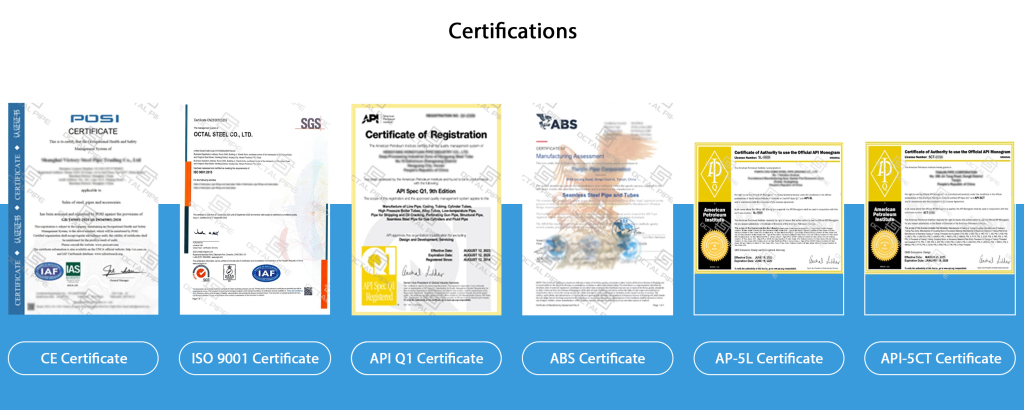
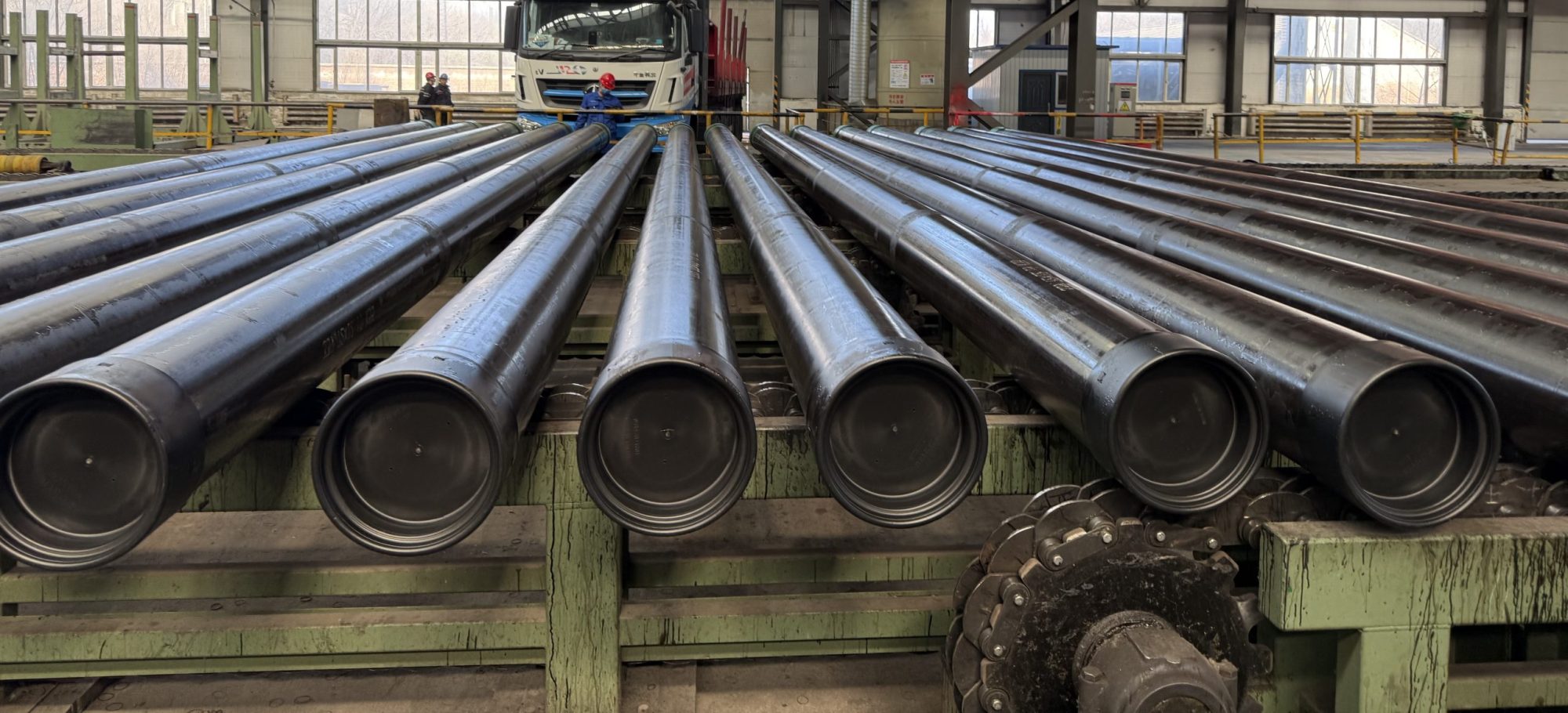
An R2 drill pipe order has been released for shipment after material certificate review, NDT record verification, marking check and packing confirmation. R2 refers to a common drill pipe length range, typically used where rig handling, pipe rack arrangement and drilling preparation require standard joint length control. MTC, or Material Test Certificate, confirms the pipe grade, heat number, chemical composition and mechanical properties, while NDT records show that the required non-destructive inspection has been completed without damaging the pipe.
For drill pipe delivery, release does not simply mean the cargo is ready in the yard. It means the R2 length range, grade, connection, inspection status, marking, packing list and document package have been checked together before cargo movement. When MTC and NDT records are matched with pipe marking and packing details, the buyer receives a traceable delivery package instead of only a physical cargo lot.
This step matters because drill pipe works under repeated torque, tension, bending load and downhole vibration. A pipe may look acceptable from the outside, but field acceptance depends on whether the material certificate, inspection results, marking and packing list describe the same order without broken traceability.
MTC Is the Material Identity of the Drill Pipe
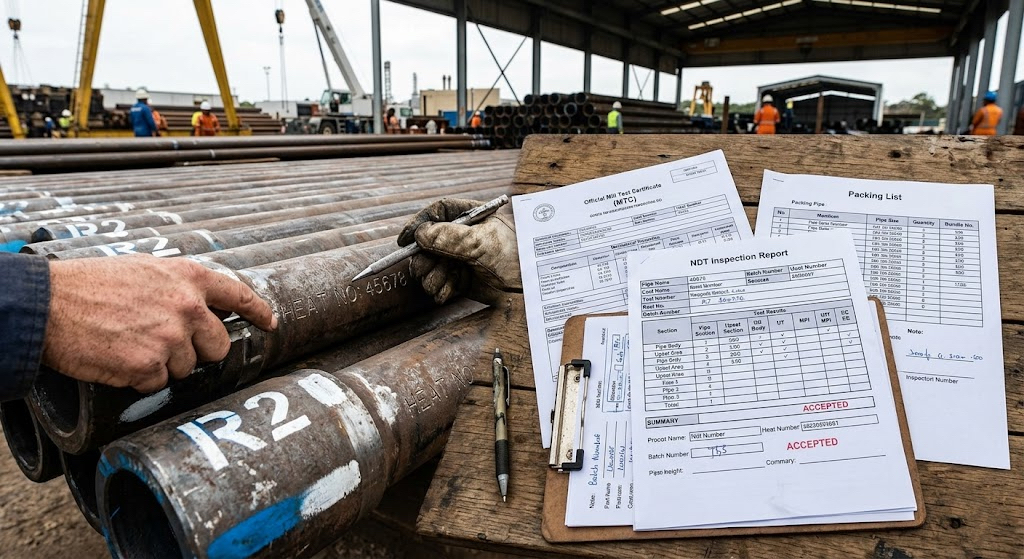
The MTC is not just a certificate attached after production. For drill pipe orders, it is the material identity record. It should show the grade, heat number, chemical composition, tensile properties and other required test results according to the order and applicable specification.
For buyers, the key is not only whether the MTC is available. The key is whether the MTC can be matched to the actual cargo. The heat number or lot reference on the certificate should connect with pipe marking, inspection records and packing list lines. If that chain is clear, the buyer can verify the shipment more quickly.
This is especially important for drill pipe because the product is reused, inspected, tracked and managed through drilling operations. A weak document chain creates risk long after the shipment has left the supplier’s yard.
NDT Records Support Inspection Confidence
NDT records give the buyer evidence that the pipe has passed the required inspection scope before release. Depending on the order requirement and inspection plan, NDT may include methods such as ultrasonic testing, magnetic particle inspection, electromagnetic inspection or other project-specified checks.
For R2 drill pipe, NDT review is important because the pipe body, upset area, tool joint weld zone and connection-related areas may face repeated stress in service. A final NDT record review helps confirm that the inspection result is closed before shipment, not left as a pending item after loading.
A practical release file should show the test method, inspection scope, acceptance result, date, batch or pipe reference, and inspector / equipment record where applicable. This helps the buyer understand not only that inspection was done, but also what was inspected and how it was accepted.
Why MTC and NDT Records Matter Before Release
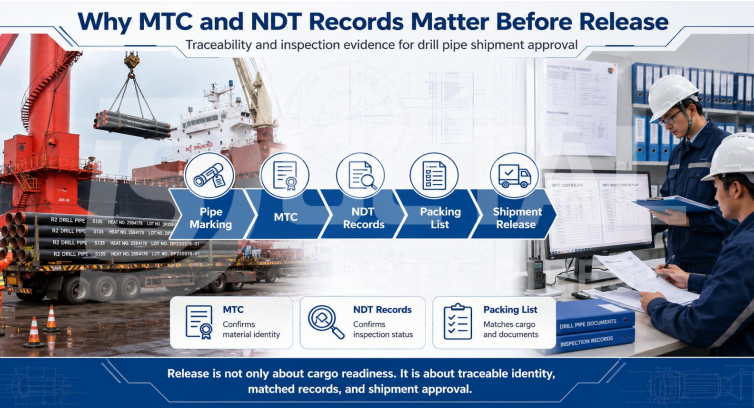
MTC and NDT records are not the same type of document. The MTC confirms the material identity of the drill pipe, including grade, heat number, chemical composition, mechanical properties and applicable standard reference. NDT records confirm the inspection status, showing whether the pipe body, upset area, tool joint weld zone or other required sections have passed the agreed non-destructive testing scope.
For an R2 drill pipe order, both records are needed before release because they answer different questions. The MTC answers: what material is this pipe made from and does it meet the ordered grade? The NDT record answers: has the required inspection been completed and accepted before shipment?
| Document | Main Purpose | Key Information | Buyer Review Focus |
|---|---|---|---|
| MTC | Confirms material identity and grade performance | Heat number, grade, chemical composition, tensile properties, standard reference | Does the material match the PO and pipe marking? |
| NDT Records | Confirms inspection completion and acceptance status | Test method, inspection scope, result, batch / pipe reference, inspector record | Was the required inspection completed before release? |
| Packing List | Confirms shipment identity and quantity | Bundle number, quantity, size, connection, shipment line item | Does the cargo match the documents? |
| Pipe Marking | Connects physical pipe to documents | Grade, size, connection, heat / lot reference | Can each pipe be traced back to the certificate and inspection record? |
In project delivery, the risk is rarely that a document is completely missing. The bigger risk is inconsistency. For example, the MTC may show one heat number, while the pipe marking or packing list uses a different lot reference. The NDT report may cover the correct grade but fail to clearly match the shipment batch. These details can delay buyer approval, receiving inspection or final document submission.
For this R2 drill pipe order, the release review focused on closing that gap before shipment. The pipe, marking, MTC, NDT records and packing list were checked as one delivery package. This helps the buyer trace the order from physical pipe to material certificate, inspection evidence and final shipment file without rebuilding the record chain after arrival.
For this R2 drill pipe order, the release review focused on closing that gap before shipment. The pipe, marking, MTC, NDT records and packing list were checked as one delivery package. This helps the buyer trace the order from physical pipe to material certificate, inspection evidence and final shipment file without rebuilding the record chain after arrival.
Key Release Items for the R2 Drill Pipe Order
Release Means Pipe, Records and Packing Are Aligned
For drill pipe export delivery, the best release sequence is simple: inspect the pipe, verify the records, check the marking, then release the cargo.
Before shipment, the release team should confirm:
- R2 length range and quantity match the order;
- grade and connection description match the PO;
- MTC heat / lot references match pipe marking;
- NDT records are complete for the required inspection scope;
- thread protectors and end areas are suitable for handling;
- packing list line items match bundle identity;
- shipment documents are ready for buyer review.
This process reduces the chance of last-minute correction. It also gives the buyer a clearer basis for payment release, cargo receiving and internal technical approval.

How MTC and NDT Records Support R2 Drill Pipe Release
For procurement teams, an R2 drill pipe order released with MTC and NDT records means the shipment has passed both material and inspection-document review before cargo movement. It supports smoother approval, easier receiving inspection and fewer document questions after arrival.
For engineering teams, the value is more technical. The MTC supports material verification, while NDT records support inspection confidence. When both are connected to pipe marking and packing list identity, the buyer can trace the order from physical pipe to test evidence without rebuilding the record chain.
For export delivery, this is the practical difference between cargo that is merely packed and cargo that is ready for acceptance.
Final Review Before R2 Drill Pipe Shipment Release
R2 drill pipe is not released only by counting pieces in the yard. A reliable release depends on matching the physical pipe with the evidence package behind it.
When MTC, NDT records, pipe marking, packing list and shipment files are aligned before loading, the buyer receives a controlled delivery rather than a loose set of pipes and papers. For drill pipe orders, that document discipline is part of quality, not an office-side formality.
FAQ
F1:What is R2 drill pipe?
Q1:R2 drill pipe refers to a standard drill pipe length range used for rig handling, pipe rack arrangement and drilling preparation.
F2:Why are MTC records important for drill pipe?
Q2:MTC records confirm the pipe grade, heat number, chemical composition and mechanical properties.
F3:What do NDT records show?
Q3:NDT records show that required non-destructive testing has been completed and accepted before release.
F4:Why check MTC and NDT records before shipment?
Q4:They help verify that the pipe marking, heat number, inspection results and packing list match the same cargo.
F5:What documents are included in a drill pipe release package?
Q5:A typical package includes MTC, NDT records, dimensional report, packing list, marking details and shipment documents.