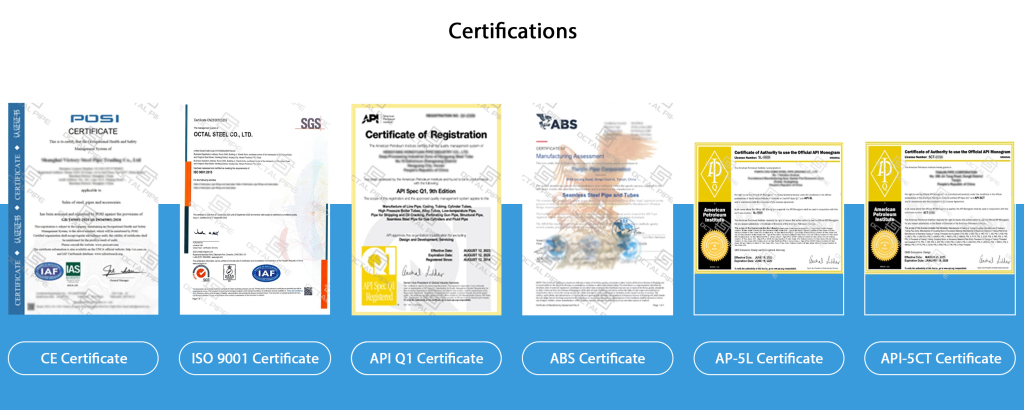

Octal pipes completed an API 5CT seamless casing shipment for an oilfield project in Luanda, Angola. The order included several casing sizes and grades, covering K55, L80 and P110 seamless casing in R3 length.
For mixed-size OCTG shipments, the key work is not only manufacturing the pipe. The casing must be clearly separated by grade, checked against the packing list, protected at the thread and pipe ends, and released with documents that support receiving inspection at the destination port.
Order Overview
| Item | Details |
|---|---|
| Standard | API 5CT |
| Product | Seamless Casing |
| Length | R3 |
| Grades | K55, L80, P110 |
| Destination Port | Luanda, Angola |
| Shipment Focus | Bundle identification, thread protection, packing-list review, export documents |
Main Supplied Items
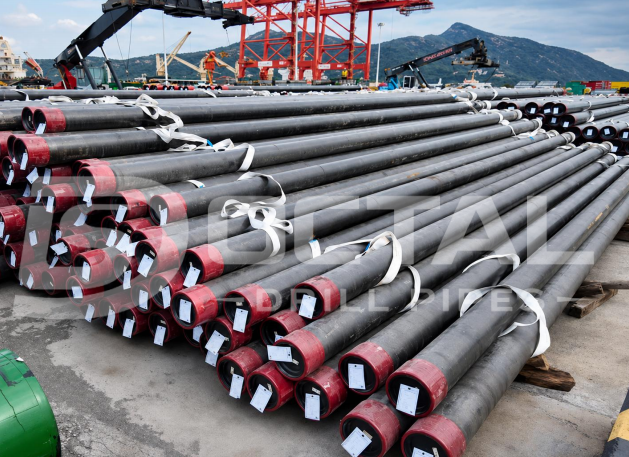
API 5CT Seamless Casing for Oilfield Use
API 5CT seamless casing is used to support well construction where pipe body strength, connection condition, grade identification and document traceability all affect field acceptance. In this shipment, the casing package covered large-size surface casing and smaller high-strength casing items for project use.
The supplied grades included K55, L80 and P110. Since each grade has different mechanical-property requirements and field-use conditions, grade separation and clear bundle marking were important before shipment release.
Pre-Shipment Checking and Export Preparation
Before vessel loading, Octal Pipe arranged bundle staging, quantity checking and packing-list review for the API 5CT seamless casing shipment. The delivered size, grade, weight, connection type and R3 length were checked against the project order to reduce receiving mismatch at the destination port.
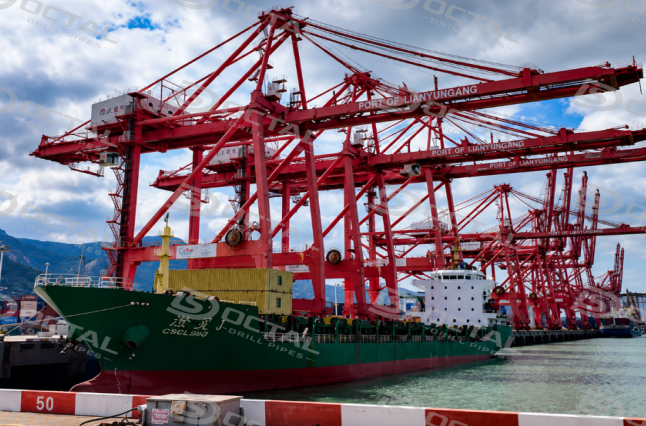
Octal Pipe also provided thread protection and end protection before shipment. For API 5CT casing, connection condition is one of the key receiving points, because thread damage may affect makeup preparation, field installation and final site acceptance.
For export delivery, Octal Pipe supported the shipment with a complete document package, including MTC, packing list, inspection records, heat or lot traceability, bundle identification records and shipment documents. When required, third-party inspection coordination and pre-shipment photo records can also be arranged to help the client verify cargo condition before release.
This service helps project teams receive the casing with clearer product identity, traceable documents and fewer handover problems during port receiving or site inspection.
Why Shipment Control Matters for Mixed Casing Orders
Mixed casing shipments require tighter control than single-size orders. A receiving team may need to check several grades, different weights, different connections and multiple bundle identities during port or site handover.
Clear marking, grade separation, thread protection and document consistency reduce the risk of receiving errors. They also help the project team connect the physical pipe with the packing list, MTC and inspection records before field use.
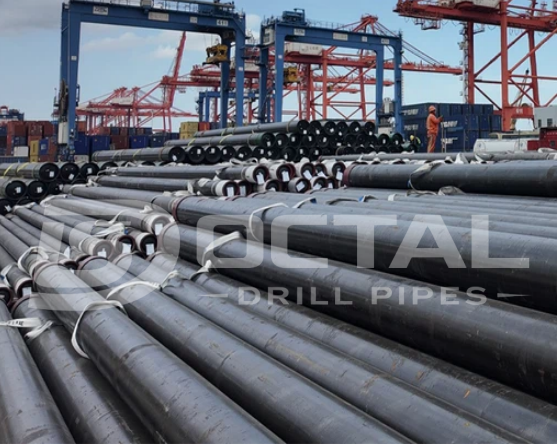
Export Delivery Support for OCTG Casing Projects
This shipment to Luanda, Angola shows Octal Steel’s ability to prepare API 5CT seamless casing orders with practical export control. The project covered K55, L80 and P110 R3 casing, with bundle checking, thread protection, packing-list review and shipment documentation arranged before delivery.
For similar OCTG projects, buyers should confirm grade, size, weight, connection type, length, inspection scope, marking requirement, packing method and document package before shipment release.
FAQ
F1:What casing grades were supplied in this shipment?
Q1:The shipment included API 5CT K55, L80 and P110 seamless casing in R3 length.
F2:Why is thread protection important for API 5CT casing?
Q2:Thread protection helps reduce connection damage during bundling, port handling and sea transportation.
F3:What should be checked before casing export release?
Q3:Key checks include grade marking, bundle identification, packing list, thread/end protection and shipment documents.
F4:What documents are usually provided with API 5CT casing?
Q4:Common documents include MTC, packing list, inspection records, heat or lot traceability and shipment documents.
F5:Why separate K55, L80 and P110 during shipment?
Q5:Each grade has different mechanical-property requirements, so clear separation helps reduce receiving errors at the destination site.