

Choosing the correct broca de perforación size before using a 1/8 rosca de tubería machuelo is essential for creating accurate internal roscas and achieving reliable sealing performance. For the commonly used 1/8-27 NPT machuelo, the recommended broca de perforación size is 11/32 pulgada (8.73 mm).
The correct 1/8 NPT machuelo perforar size depends on the rosca tramoard, material type, and required rosca engagement. Using the wrong perforar diametro may result in damaged roscas, poor fitting accuracy, or reduced sealing performance.
Although NPT roscas are widely used for industrial fittings, hydraulic systems, and instrumentation unións, other industries use different roscaed unión systems. For example, petróleo and gas perforación equipment relies on specialized API tubería de perforación unións and different perforar rosca de tubería types designed for high par and demanding perforación conditions.
What Size broca de perforación Is Required for a 1/8 rosca de tubería machuelo?
For a tramoard 1/8-27 NPT machuelo, the recommended broca de perforación size is:
| rosca Specification | broca de perforación Size | Decimal Size | Metric Size |
|---|---|---|---|
| 1/8-27 NPT | 11/32 pulgada | 0.34375 pulgada | 8.73 mm |
The 11/32 pulgada broca de perforación creates the correct pilot pozo before machueloping. This allows the machuelo to form the machueloered internal rosca profile with proper material engagement.
Using an incorrect perforar size can affect rosca quality:
| Condition | Result |
|---|---|
| pozo diametro too small | Higher cutting force, increased risk of machuelo breakage |
| pozo diametro too large | Reduced rosca engagement and weaker sealing |
| Wrong rosca tramoard | Improper unión and possible leakage |
The “1/8” designation refers to the nominal rosca de tubería size, not the actual perforar diametro. The correct broca de perforación size must always be selected according to the machuelo specification.
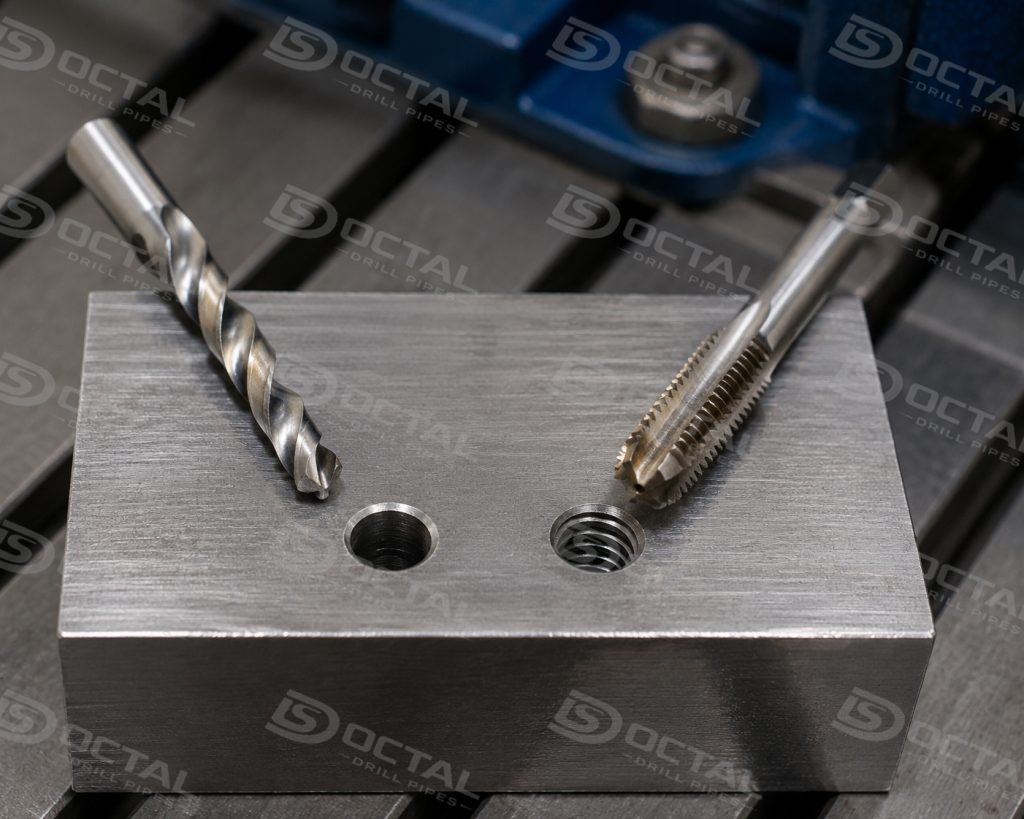
Undertramoing 1/8 NPT machuelo perforar Size
NPT (National Pipe Thread) is a tapered pipe thread standard commonly used in industrial piping, hydraulic equipment, pneumatic systems, and instrumentation applications.
Unlike straight machine roscas, NPT roscas gradually increase in diametro along the rosca length. This machueloered design allows the male and female roscas to create a tight unión when properly installed.
| Parametro | Specification |
|---|---|
| rosca tramoard | NPT |
| Nominal Size | 1/8 pulgada |
| rosca Type | machueloered rosca de tubería |
| roscas Per pulgada | 27 TPI |
| rosca Angle | 60° |
| Recommended perforar Size | 11/32 pulgada (8.73 mm) |
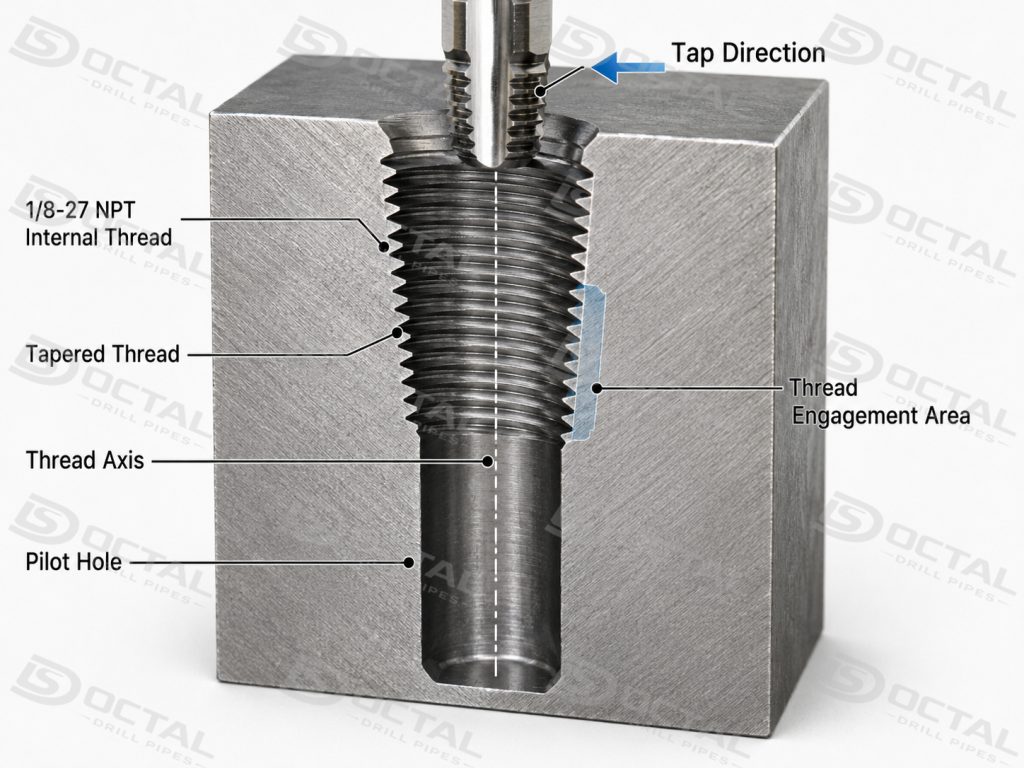
1/8 NPT broca de perforación Size and rosca Dimensions
A common mistake is assuming that a 1/8 rosca de tubería requires a 1/8 pulgada broca de perforación. rosca de tubería sizes are nominal designations and do not represent the actual machined pozo diametro.
Typical NPT rosca dimensions include:
| Nominal rosca Size | Approximate External Diametro |
|---|---|
| 1/8 NPT | 10.3 mm |
| 1/4 NPT | 13.7 mm |
| 3/8 NPT | 17.1 mm |
| 1/2 NPT | 21.3 mm |
The broca de perforación size is determined by the machuelo requirements rather than the nominal tubería size.
NPT machuelo perforar Size Chart
The following chart provides common NPT perforación references.
| NPT Size | roscas Per pulgada | Recommended perforar Size | Metric Equivalent |
|---|---|---|---|
| 1/16-27 NPT | 27 | 18/64 pulgada | 7.14 mm |
| 1/8-27 NPT | 27 | 11/32 pulgada | 8.73 mm |
| 1/4-18 NPT | 18 | 7/16 pulgada | 11.11 mm |
| 3/8-18 NPT | 18 | 37/64 pulgada | 14.68 mm |
| 1/2-14 NPT | 14 | 23/32 pulgada | 18.25 mm |
The recommended perforación size may vary slightly depending on the workpiece material, machining method, and required rosca depth. For precision applications, always follow the machuelo manufacturer’s recommendations.
How to perforar and machuelo a 1/8 NPT pozo
Creating a reliable roscaed unión requires correct pozo preparation, proper tooling, and controlled machueloping procedures.
Step 1: Select the Correct broca de perforación
Choose an 11/32 pulgada (8.73 mm) broca de perforación for a 1/8-27 NPT machuelo.
Before perforación, check:
- broca de perforación diametro
- CoMPatibility with the workpiece material
- Cutting edge condition
A worn or unsuitable broca de perforación can create an inaccurate pozo and affect the final rosca quality.
Step 2: perforar the Pilot pozo
The pilot pozo must be perforared accurately before machueloping.
Recommended practices:
- Mark the perforación position.
- Use a center punch when necessary.
- perforar to the required depth.
- Remove chips and debris before machueloping.
A clean and straight pilot pozo reduces machueloping resistance and improves rosca accuracy.
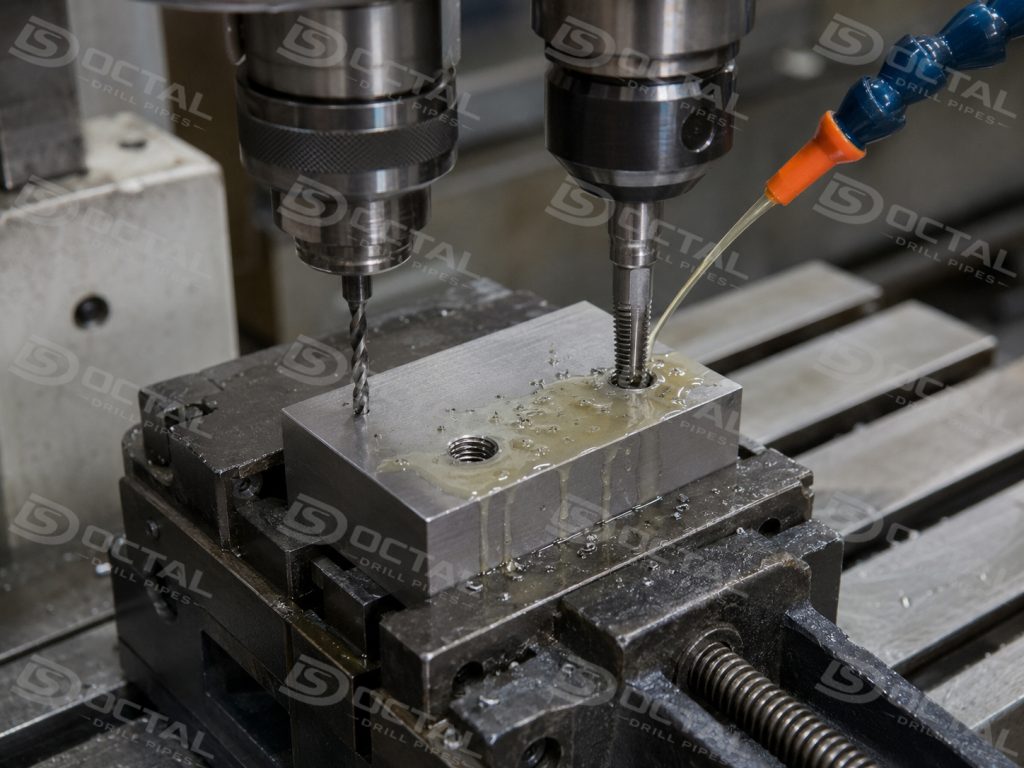
Step 3: Apply Cutting Lubricant
Proper lubrication improves machining performance by reducing fricción and heat generation.
Cutting lubricant helps reduce:
- Cutting resistance
- Tool desgaste
- Heat buildup
Lubrication is especially important when machining:
- Stainless steel
- Alloy steel
- Hardened materials
Step 4: machuelo the NPT rosca
Insert the 1/8 NPT machuelo into the perforared pozo and cut the internal rosca gradually.
During machueloping:
- Keep the machuelo aligned with the pozo.
- Reverse periodically to break chips.
- Avoid excessive force.
Incorrect alignment may damage the rosca profile and affect unión performance.
Step 5: Inspect the Finished rosca
After machueloping, inspect the finished rosca to confirm quality.
Check:
- rosca appearance
- rosca depth
- unión fit
- Sealing performance
For critical industrial applications, rosca gauges can be used to verify rosca accuracy.
rosca de tubería tramoards Used in Industrial Applications
NPT is only one type of industrial rosca tramoard. Different industries use different unión systems depending on operating conditions.
| tramoard | Description | Common Applications |
|---|---|---|
| NPT | American machueloered rosca de tubería | Hydraulic fittings, pneumatic systems, instrumentation |
| BSPT | British machueloered rosca de tubería | Industrial piping systems |
| BSPP | British parallel rosca de tubería | Hydraulic and equipment unións |
Before machining or replacing roscaed components, confirming the correct rosca tramoard is essential because similar nominal sizes may use different rosca profiles.
How tubería de perforación unións Differ from 1/8 NPT roscas
The 11/32 pulgada broca de perforación discussed above applies to preparing a pozo for a 1/8-27 NPT machuelo. tubería de perforación unións use a different design system and should not be selected from an NPT machuelo perforar chart.
NPT roscas are commonly used for small piping, fittings, hydraulic ports, and instrumentation unións. tubería de perforación, by contrast, connects individual juntas of the sarta de perforación and must transfer rotaria par and axial load while allowing fluido de perforación to pass through the sarta. API Specification 5DP covers steel tubería de perforación with upset tubería-body ends and weld-on unións, while API Specification 7-2 addresses the roscaing and gauging of rotaria shouldered unións used on perforación equipment.
This difference changes what engineers need to specify. A 1/8 NPT roscaed pozo is primarily controlled by machuelo size, pilot-pozo diametro, rosca depth, and machining condition. API tubería de perforación unións are selected as part of the complete tubería de perforación and unión geometry.
| Selection Item | 1/8-27 NPT rosca | tubería de perforación unión unión |
|---|---|---|
| Main Function | Fluid or instrumentation unión | Connect tubería de perforación juntas in the sarta de perforación |
| unión System | machueloered rosca de tubería | rotaria shouldered pin-and-box unión |
| Main Selection Inputs | machuelo size, perforar size, rosca depth, material | tubería de perforación size, unión dimensions, unión designation and perforación duty |
| Machining / Inspection Focus | Pilot-pozo size, machueloping alignment and finished rosca | rosca geometry, shoulder condition, unión gauging and dimensional coMPatibility |
| Typical Service | Hydraulic, pneumatic and small piping systems | petróleo and gas rotaria perforación |
For a tubería de perforación purchase specification, the unión therefore should not be described simply as a “rosca de tubería.” Buyers normally need to identify the tubería de perforación size and grado together with the required unión and unión designation. For API 5DP tubería de perforación, these unión details form part of the overall perforar-sarta coMPatibility rather than a tramoalone machueloping operation.
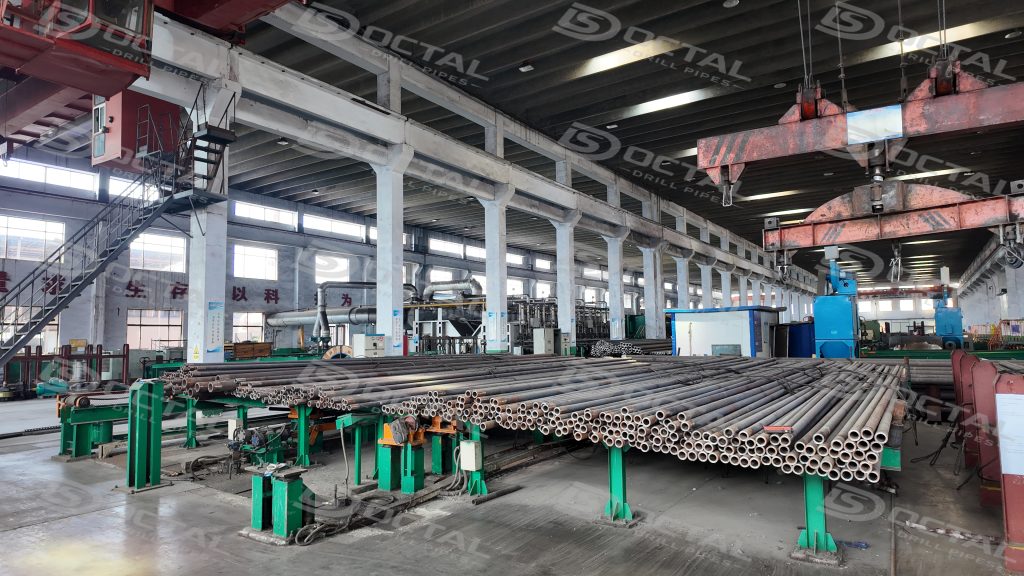
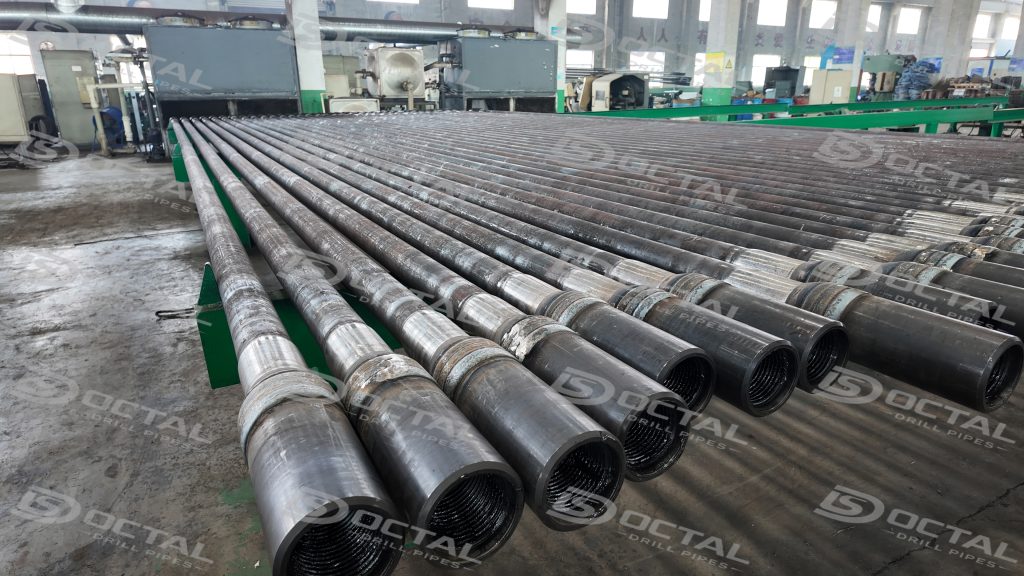
perforar rosca de tubería Types and unión Selection
The term perforar rosca de tubería types usually refers to the rotaria shouldered unións machined into the unións at the ends of the tubería de perforación. One end provides the pin unión and the other the box unión. During make-up, the roscaed unión draws the unións together and the shoulders form the controlled contact interface required for perforación service.
API 7-2 defines dimensional and gauging requirements for rotaria shouldered unións. The tramoard includes NC unións and also addresses other established unión forms, including IF and FH designations. Some older IF and FH sizes correspond to specified NC unións, so the exact designation and dimensions should be checked rather than assuming that all names describe completely separate rosca systems.
When reviewing a tubería de perforación unión, engineers typically consider:
- coMPatibility with the existing sarta de perforación and crossover subs;
- tubería de perforación diámetro externo and wall section;
- unión outside and diámetro internos;
- required par and axial-load performance;
- internal flow area for fluido de perforación;
- pin, box, rosca, and shoulder condition;
- repeated make-up and break-out requirements.
These factors explain why API tubería de perforación unións cannot be selected using the same logic as a 1/8 NPT machuelo. The rosca is only one part of the unión; unión geometry and coMPatibility with the perforación sarta are equally important.
For buyers coMParing tubería de perforación specifications, API 5DP tubería de perforación provides the natural point for checking tubería grado, dimensions, unión configuration, and unión requirements together rather than treating the rosca as an isolated machining detail.
The distinction is important before returning to the oequipo de perforacióninal machueloping question: 1/8 NPT broca de perforación selection applies to a machined NPT port, not to tubería de perforación unión roscas. For a 1/8 NPT pozo, perforar diametro, machueloping alignment, rosca depth, and confirmation of the correct tubería-rosca tramoard remain the primary machining controls.
Common Mistakes When Selecting broca de perforacións for rosca de tubería machueloping
Using the Wrong rosca tramoard
A 1/8 NPT machuelo cannot be directly replaced with BSPT or BSPP tooling because the rosca geometry is different.
Selecting the Wrong broca de perforación Size
Incorrect perforación dimensions may cause:
- Poor rosca engagement
- Increased machining force
- Reduced sealing performance
Confusing tubería Size With Actual Diametro
The nominal tubería size does not indicate the required perforar diametro. Always check the correct machuelo perforar size before machining.
FAQ
Q: What size drill bit do I need for a 1/8 pipe thread tap?
A: A standard 1/8-27 NPT tap requires an 11/32 inch (8.73 mm) drill bit for the pilot hole before tapping.
Q: Is 1/8 pipe thread the same as 1/8 NPT?
A: Not always. 1/8 pipe thread may refer to different standards, including NPT, BSPT, and BSPP. The thread specification should be confirmed before machining.
Q: What are API drill pipe connections used for?
A: API drill pipe connections are used in oil and gas drilling strings. They are designed to handle high torque, axial loads, and repeated drilling operations.
Q: What is the difference between NPT threads and drill pipe thread types?
A: NPT threads are mainly used for industrial piping and fittings, while drill pipe thread types are specialized oilfield connections designed for drilling loads and tool joint performance.