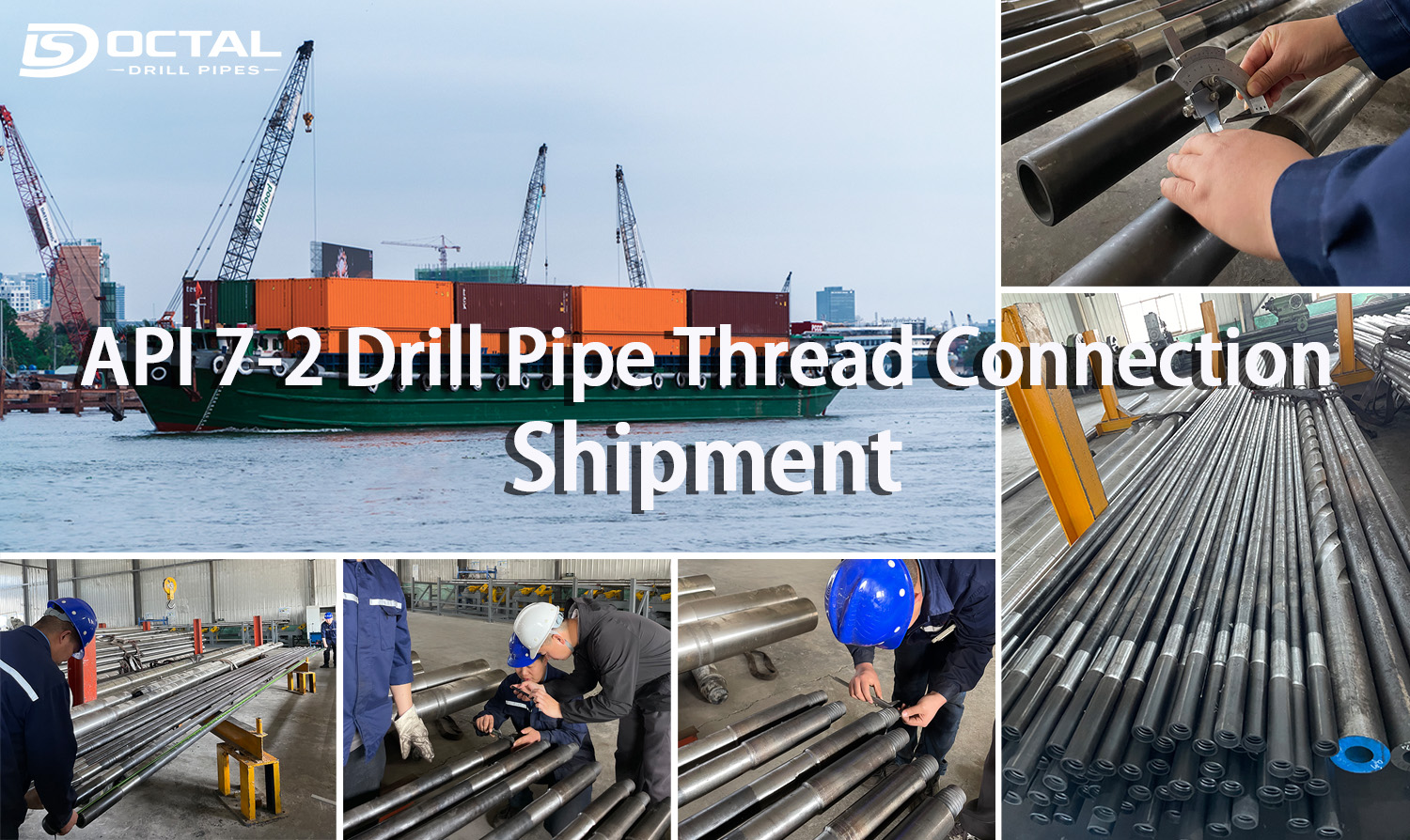
API 7-2 Drill Pipe Thread Connection is a rotary shouldered connection used on drill pipe tool joints, where the pin and box are made up through controlled thread engagement and shoulder contact to transfer rotary torque during drilling, workover, and service operations. For this shipment, the connection was applied to 2-3/8 inch E75 drill pipe with a delivered body size of 60.33 mm OD × 7.11 mm wall thickness. The pipe body follows API 5DP drill pipe requirements, while the pin and box connection is controlled by API 7-2 threading and gauging to verify thread form, gauge basis, shoulder condition, make-up compatibility, and thread protection. The actual make-up torque and torsional capacity should be confirmed according to the approved connection data, tool joint OD/ID, NC connection type, and project requirement.
Octal Drill Pipes supplied this small diameter drill pipe E75 order for Korea / Iran. Before loading, the pipe body size, thread connection condition, protected pin and box ends, marking, inspection records, and packing list were checked for shipment release.
2-3/8 Inch E75 Specification
| Item | Shipment Specification |
|---|---|
| Product | 2-3/8 inch E75 drill pipe |
| Metric Size | 60.33 mm OD × 7.11 mm WT |
| Inch Size | Approx. 2-3/8 inch OD × 0.280 inch WT |
| Steel Grade | E75 |
| Pipe Body Standard | API 5DP drill pipe requirement |
| Thread Connection Basis | API 7-2 threading and gauging |
| Product Type | Small diameter drill pipe with welded tool joints |
| Connection Area | Pin thread, box thread, shoulder face, tool joint OD/ID |
| Key Shipment Control | Thread condition, protector fit, marking, MTC, packing list |
| Application Direction | Oilfield drilling, workover strings, replacement drill pipe, export project supply |
The delivered 60.33 mm OD × 7.11 mm WT body size corresponds to 2-3/8 inch drill pipe. For this small diameter drill pipe E75 shipment, the size, grade, tool joint condition, and API 7-2 threading and gauging basis were checked before loading to support receiving inspection after arrival.
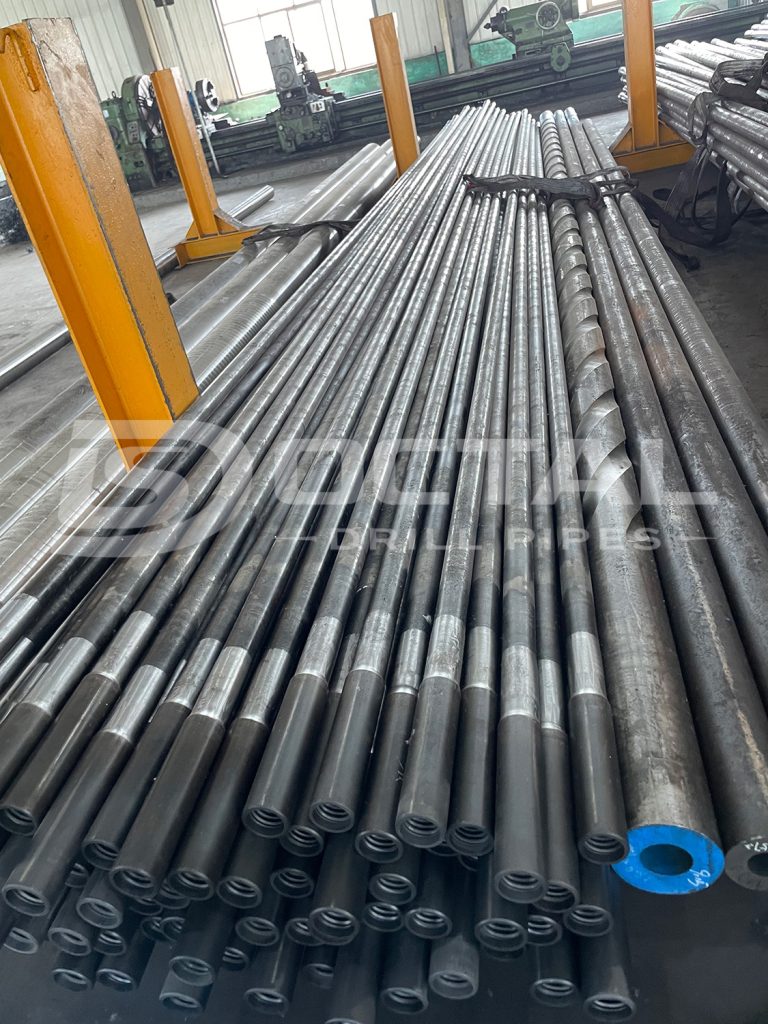
API 5DP and API 7-2 Standards
This 2-3/8 inch E75 drill pipe shipment was controlled by two technical layers. API 5DP drill pipe requirements were used for the pipe body, E75 grade, upset end, welded tool joint and traceability basis. API 7-2 threading and gauging requirements were used for the rotary shouldered connection, including pin and box thread form, gauge basis and shoulder contact area.
Both standards were reviewed before loading. The pipe body confirms size, grade and material traceability. The thread connection confirms whether the joint can be made up correctly with the drilling string.
Shipment Standard Review
| Standard / Requirement | Applied Area | Release Focus for This Shipment |
|---|---|---|
| API 5DP | Drill pipe body, E75 grade, OD, wall thickness, upset end, welded tool joint and product traceability | Confirms the supplied 60.33 mm OD × 7.11 mm WT body size, E75 grade marking, pipe body condition, tool joint welding area, heat number, MTC and dimensional records. |
| API 7-2 | Rotary shouldered connection threading, gauges, gauging practice and inspection basis | Controls the pin and box thread connection, thread geometry, shoulder face, gauge requirement and visual thread condition before shipment. |
| Project Order Requirement | Order No. 51013-15, destination, marking, packing and document release | Confirms that the shipped quantity, product marking, packing list, thread protector condition and inspection records match the order before loading. |
| Connection Compatibility Review | Drill pipe NC thread connection, tool joint OD/ID, pin/box type and matching drill string requirement | Used when the project reviews NC26 drill pipe connection, NC31 drill pipe connection, or other rotary shouldered connection types. The connection should match the tool joint design and approved gauge basis. |
For this shipment, the standards were reviewed together with the actual cargo condition, not only as document references. The release check focused on whether the delivered 2-3/8 inch E75 drill pipe could be matched from physical marking to MTC, inspection records, packing list and protected API 7-2 drill pipe thread connections.
API 7-2 Thread Connections
API 7-2 drill pipe thread connections are rotary shouldered connections used on drill pipe tool joints and other drill string components. For drill pipe, this connection is not just a threaded end. It is the load-transfer area that carries rotary torque, keeps shoulder contact under make-up load, and allows repeated make-up and break-out during drilling, workover, or service operations.
For this 2-3/8 inch E75 drill pipe shipment, API 7-2 threading and gauging was reviewed together with the tool joint design and order requirement. The pipe body confirms the supplied 60.33 mm OD × 7.11 mm WT size and E75 grade, while the thread connection confirms whether the pin and box ends can match the required rotary shouldered connection basis.
This separation is important for shipment release. API 5DP drill pipe requirements support the pipe body, upset end, welded tool joint, and traceability basis. API 7-2 supports the connection side, including thread form, gauge basis, shoulder contact area, and inspection method. A complete drill pipe shipment needs both parts to be consistent before loading.
For small diameter drill pipe, the connection end is often the area that affects receiving inspection most directly. If the thread connection is unclear, incorrectly identified, damaged at the shoulder face, or shipped without proper thread protection, the pipe may pass body inspection but still face delay when it reaches the project site. For this reason, API 7-2 drill pipe thread connections were treated as a practical acceptance point before loading, not only as a standard name in the order.
Pipe Body and Tool Joint
For 2-3/8 inch API 5DP drill pipe, body size and tool joint condition should be checked together. The pipe body confirms the basic size and grade, but the welded tool joint and connection area decide whether the joint can be handled, made up, protected and accepted in field operation.
The supplied E75 drill pipe grade should match the material certificate, pipe marking and order requirement. E75 is generally used where the drilling or workover program requires a moderate-strength drill pipe grade rather than higher-strength grades such as X95, G105 or S135. Final grade acceptance should be based on the MTC and project specification, not only the grade marking on the pipe body.
| Acceptance Item | What Should Be Reviewed |
|---|---|
| Body OD and WT | Confirm the delivered 60.33 mm OD × 7.11 mm WT body size and dimensional record. |
| Grade Identification | Check E75 grade marking against the MTC and order requirement. |
| Tool Joint Area | Review tool joint OD/ID, shoulder area, weld zone, tong space, and surface condition. |
| Pin / Box Ends | Confirm that pin and box ends are correctly identified and protected before shipment. |
| Body Surface | Check for harmful handling damage, heavy rust, deformation, or surface defects before loading. |
| Marking and Traceability | Confirm that heat number, order number, size, grade, and packing records remain consistent. |
For this shipment, the inspection was not limited to measuring the pipe body. The tool joint area, connection end, marking and documents were reviewed together because these are the parts most likely to create receiving questions after long-distance transport.
NC Drill Pipe Connection Review
A drill pipe NC thread connection should be reviewed as part of the tool joint design. It should not be selected only by pipe body size. NC connections are widely used in rotary shouldered drill string components, but the correct connection depends on several details. These include tool joint OD, tool joint ID, bore requirement, pin/box form, shoulder design, gauge basis, make-up torque data, and compatibility with the existing drilling string.
Connection Matching for Existing Strings
For 2-3/8 inch API 5DP drill pipe, connection matching is especially important when the pipe is supplied for replacement strings, workover operations, or rig-side inventory matching. The new joints may need to connect with existing subs, collars, jars, saver subs, handling tools, or other drill string components already used on site. In this case, the connection name alone is not enough for acceptance.
A NC26 drill pipe connection or NC31 drill pipe connection should be confirmed against the approved drawing, tool joint dimensions, and API 7-2 threading and gauging basis before production or shipment release. If the project already has a specified connection record, the supplied pin and box ends should match that record exactly. If the connection is being selected for a new supply, the tool joint design and rig-side compatibility should be reviewed before machining.
NC Connection Review Checklist
| NC Connection Review Item | Practical Check Point |
|---|---|
| Connection Type | Confirm the required NC connection name and pin/box form against the order or approved drawing. |
| Tool Joint OD / ID | Check whether the tool joint size supports the required connection, bore passage, and handling condition. |
| Existing String Compatibility | Confirm matching with subs, collars, jars, saver subs, and rig-side tools where applicable. |
| Gauge Basis | Verify that the connection can be inspected under the required API 7-2 threading and gauging basis or approved project data. |
| Shoulder and Make-up Requirement | Review shoulder design and make-up torque basis before production or shipment release. |
| Shipment Record | Make sure connection information, marking, inspection record, and packing list are consistent before loading. |
The key point is that NC connection review should happen before the pipe reaches the rig site. A connection mismatch may not be found from pipe body dimensions. However, it can stop the pipe from being used when the receiving team checks pin/box compatibility or matches the pipe with existing drill string components.
Thread Inspection Before Loading
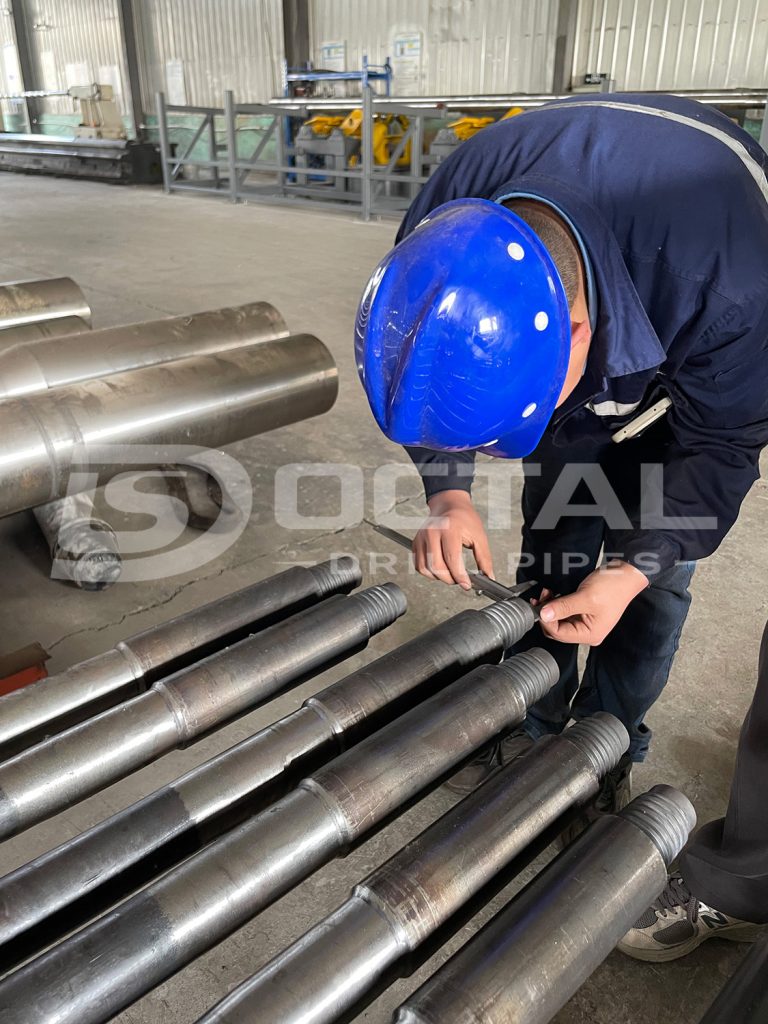
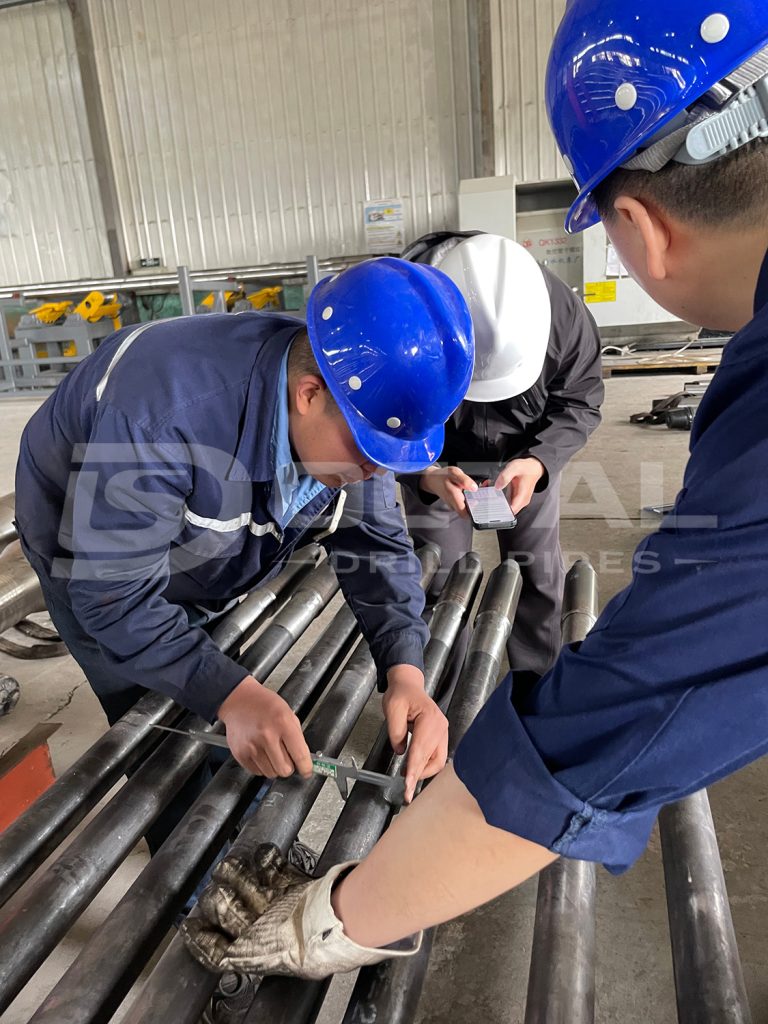
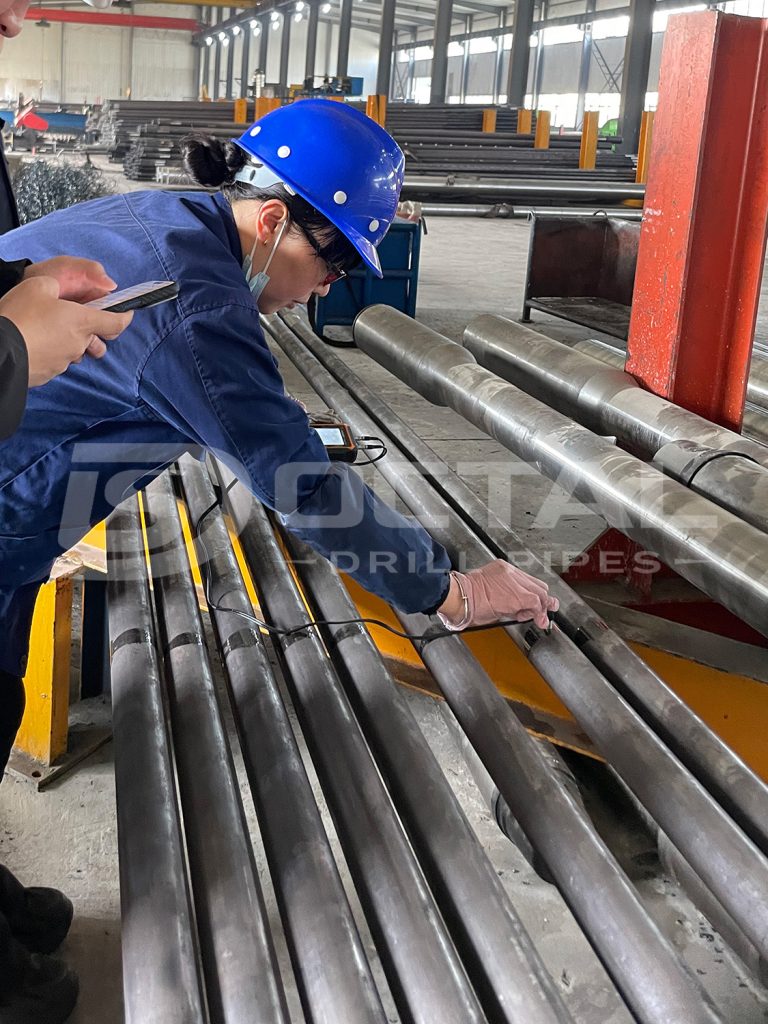
Before loading, the thread area was checked as a shipment release item, not only as a packing detail. For API 7-2 drill pipe thread connections, small damage on the pin, box, or shoulder face can affect make-up condition after the pipe reaches the project site.
| Inspection Area | What Was Checked Before Loading |
|---|---|
| Pin End | Pin thread crest, pin nose, shoulder face, rust, impact marks, dents, galling, and protector fit. |
| Box End | Box entry, internal thread surface, shoulder area, cleanliness, corrosion, handling marks, and protector condition. |
| Shoulder Face | Smooth contact surface, no visible dents, deformation, heavy scratches, or damage that may affect torque transfer. |
| Tool Joint Area | Tool joint OD/ID, tong space, pin/box length, weld zone condition, and surface condition against order requirement. |
| Gauging Basis | Connection identification and API 7-2 threading and gauging basis checked according to project requirement or approved drawing. |
| Marking Check | Size, grade, heat number, order number, connection information, and bundle marking matched with shipment records. |
| Protector Condition | Pin and box protectors installed firmly, with no loose, cracked, missing, or incorrect protectors before loading. |
| Document Matching | MTC, inspection record, packing list, marking photos, and loaded quantity checked for consistency. |
For this 2-3/8 inch API 5DP drill pipe shipment, the inspection focus was practical: the pipe body, tool joint, thread ends, protectors, marking, and documents had to match before dispatch. This helps reduce receiving problems caused by thread damage, unclear connection information, or mismatch between physical cargo and shipment records.
Packing and Shipment Protection
For export delivery, drill pipe ends face repeated handling: yard transfer, crane lifting, truck movement, port loading, sea freight vibration, unloading and storage before rig use. For API 7-2 drill pipe thread connections, this means the pin and box ends must be protected before the cargo leaves the warehouse.
Shipment protection should include:
• Thread protectors installed on both ends
Each pin and box end should be protected with suitable thread protectors. The protector should fit securely and should not expose the shoulder or thread crest.
• Bundle stability
Bundles should be prepared to reduce pipe movement during handling and sea transport. Excessive movement can damage thread protectors or pipe marking.
• Clear bundle identification
Each bundle should show order information, size, grade and quantity so the receiving team can separate cargo without confusion.
• Moisture and surface protection
For long-distance shipment, thread area and tool joint surfaces should be protected from rust and contamination according to the packing requirement.
• Packing list matched to actual loading
The packing list should match the actual shipped quantity, size, grade and order number.
For this shipment, the key quality target was to make sure the delivered drill pipe arrived with correct body size, protected pin and box ends, and traceable shipment documents.
Application of 2-3/8 Inch E75 Drill Pipe
2-3/8 inch E75 drill pipe is used where the drilling or workover program requires a smaller drill string size, controlled handling weight, and reliable connection compatibility. With a body size of 60.33 mm OD × 7.11 mm WT, this type of small diameter drill pipe E75 is suitable for service operations, replacement drill pipe supply, small-hole drilling, and overseas project inventory matching.
The main application concern is not only pipe size. The drill pipe should also match existing subs, jars, collars, handling tools, thread connection records, and rig-side acceptance requirements.
Workover and Service Operations
In workover jobs, small-diameter drill pipe is often used for cleanout, milling, fishing, circulation, light drilling support, and service-string operations. The pipe is easier to handle than larger drill pipe, but it still needs to meet API 5DP drill pipe body requirements.
Site acceptance usually depends on more than OD and wall thickness. The tool joint OD/ID, pin and box condition, shoulder face, and thread protector condition should be checked before dispatch, especially when the pipe will be used with existing workover tools.
Small-Hole and Light-to-Medium Drilling Programs
For wells that do not require high-strength grades such as X95, G105, or S135, 2-3/8 inch E75 drill pipe can be used as a practical small-size drill pipe option. It is suitable where lower string weight, smaller bore requirement, and existing rig compatibility are important.
The final selection should still be reviewed against expected tensile load, rotary torque, dogleg severity, hydraulic program, and make-up connection requirement.
Replacement Drill Pipe for Existing Strings
Replacement orders are often more sensitive than new-string orders. The delivered pipe must connect with equipment already on site. In this case, the drill pipe NC thread connection should be confirmed before production and shipment.
A NC26 drill pipe connection or NC31 drill pipe connection should not be selected by name alone. It should be checked together with tool joint OD, tool joint ID, pin/box type, shoulder design, and approved API 7-2 threading and gauging basis.
Rig-Side Connection Compatibility
For small diameter drill pipe, connection mismatch can delay use even when the pipe body is correct. The receiving team may check whether the pin and box threads match existing subs, drill collars, jars, saver subs, or handling tools.
This is why the connection record, thread inspection, protector condition, and marking should be prepared together with the MTC and packing list.
Export Project Supply
For overseas shipments, the application is not complete when the pipe leaves the warehouse. The pipe must arrive with readable marking, protected threads, matching packing records, and documents that allow the receiving team to verify size, grade, connection, and quantity.
For this type of 2-3/8 inch API 5DP drill pipe shipment, clear traceability helps reduce receiving delays caused by unclear thread details, mixed bundles, or damaged pin and box ends.
Quality Documents for This Drill Pipe Shipment
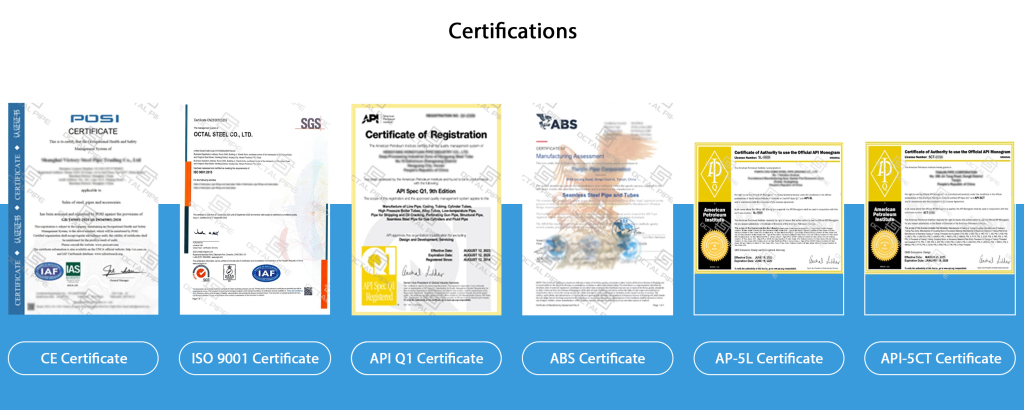
For this 2-3/8 inch E75 drill pipe shipment, the document package was prepared around the actual release points of the cargo: pipe body specification, API 5DP drill pipe basis, API 7-2 drill pipe thread connections, thread protection, packing quantity, and shipment traceability. The documents should allow the receiving team to match the physical pipe with the order requirement before the drill pipe enters yard inventory or rig-side preparation.
| Document / Record | What It Verifies for This Shipment |
|---|---|
| Material Test Certificate | Confirms the E75 grade, heat number, chemical composition, mechanical properties, and material traceability for the supplied drill pipe. |
| Dimensional Inspection Record | Confirms the delivered 60.33 mm OD × 7.11 mm WT body size, pipe body condition, tool joint area, and dimensional control items required for the order. |
| Thread Inspection / Gauging Record | Supports the inspection basis for API 7-2 threading and gauging, including pin and box thread condition, shoulder face, and connection acceptance points. |
| Packing List | Confirms order number, product name, size, grade, quantity, bundle information, destination, and shipment details. |
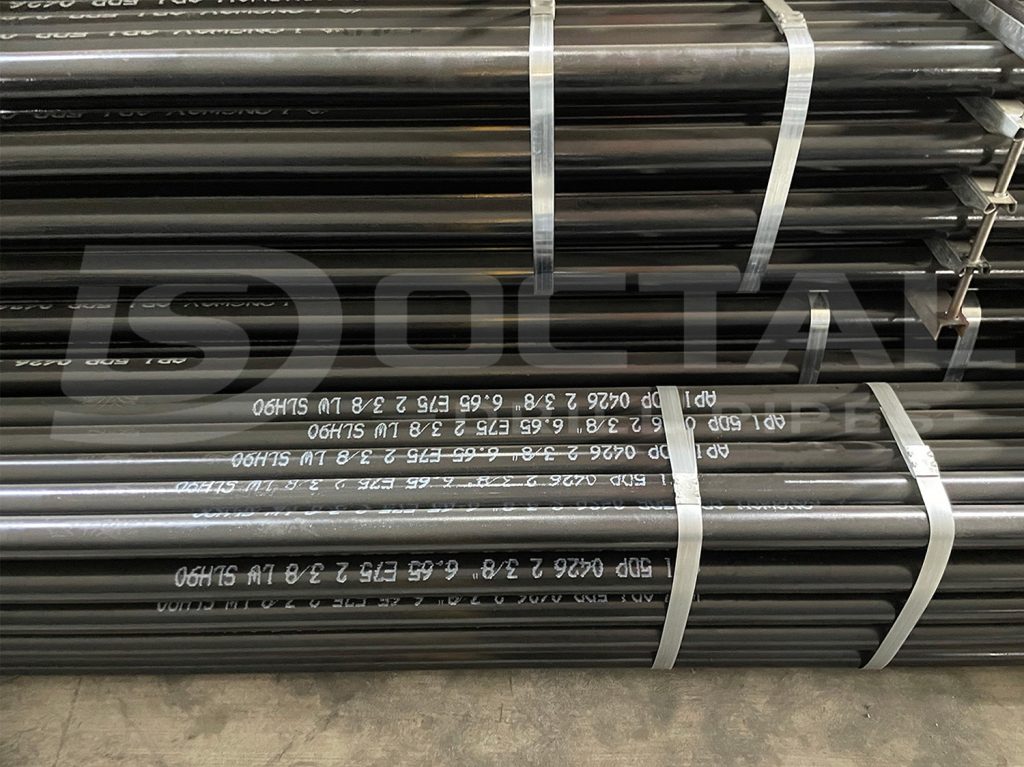
| Pipe Marking Photos | Shows that the physical marking matches 2-3/8 inch API 5DP drill pipe, E75 grade, heat number, order information, and shipment records. |
| Thread Protector Check | Confirms that pin and box ends were protected before loading to reduce the risk of thread or shoulder damage during transport. |
| Loading Photos | Records cargo condition, bundle arrangement, visible marking, and end protection before dispatch. |
| Third-Party Inspection Record | Added when required by the project or customer inspection plan, especially for witness inspection, document review, or final release before shipment. |
Why Choose Octal Drill Pipes
Octal Drill Pipes supports drill pipe orders where API 7-2 drill pipe thread connections must match the pipe body, tool joint design, and field connection requirements. For 2-3/8 inch API 5DP drill pipe and other small diameter drill pipe E75 orders, we review the pipe size, grade, tool joint OD/ID, NC connection type, thread basis, protector requirement, and inspection documents before shipment, so the delivered joints are easier to verify during receiving inspection.
Our advantage is connection-focused shipment control. Before loading, we check the pin and box thread condition, shoulder face, tool joint area, thread protector fit, pipe marking, MTC, packing list, and loading condition. For shipments such as 60.33 mm × 7.11 mm E75 drill pipe to Korea / Iran, the cargo is prepared with protected ends, readable marking, clear bundle identification, and matching shipment records, helping reduce the risk of thread damage, mixed bundles, or document mismatch after arrival.
FAQ
Q1:How do I avoid ordering the wrong API 7-2 drill pipe thread connection?
F1:Do not order only by thread name. For API 7-2 drill pipe thread connections, the inquiry should include connection type, tool joint OD/ID, pin/box form, gauge basis, and existing string compatibility. This is especially important when the pipe needs to match current subs, collars, jars, or rig-side tools.
Q2:Can 2-3/8 inch E75 drill pipe be supplied with different NC connections?
F2:Yes, but the connection must match the tool joint design and project requirement. A 2-3/8 inch E75 drill pipe order may involve an NC connection review, but NC26 drill pipe connection or NC31 drill pipe connection should be confirmed by drawing, gauge basis, and make-up compatibility rather than selected by size name alone.
Q3:What is the biggest receiving risk for small diameter drill pipe E75?
F3:The biggest risk is usually not the pipe body size, but connection mismatch or thread-end damage. For small diameter drill pipe E75, receiving inspection should pay close attention to pin/box condition, shoulder face, thread protector condition, marking clarity, and whether the documents match the actual cargo.
Q4:Why should thread connection details be checked before production?
F4:Thread connection details affect rig-side make-up, torque transfer, and compatibility with existing drill string components. If API 7-2 threading and gauging requirements, NC connection size, or tool joint dimensions are unclear before production, the pipe may pass body inspection but still fail receiving or rig compatibility checks.